
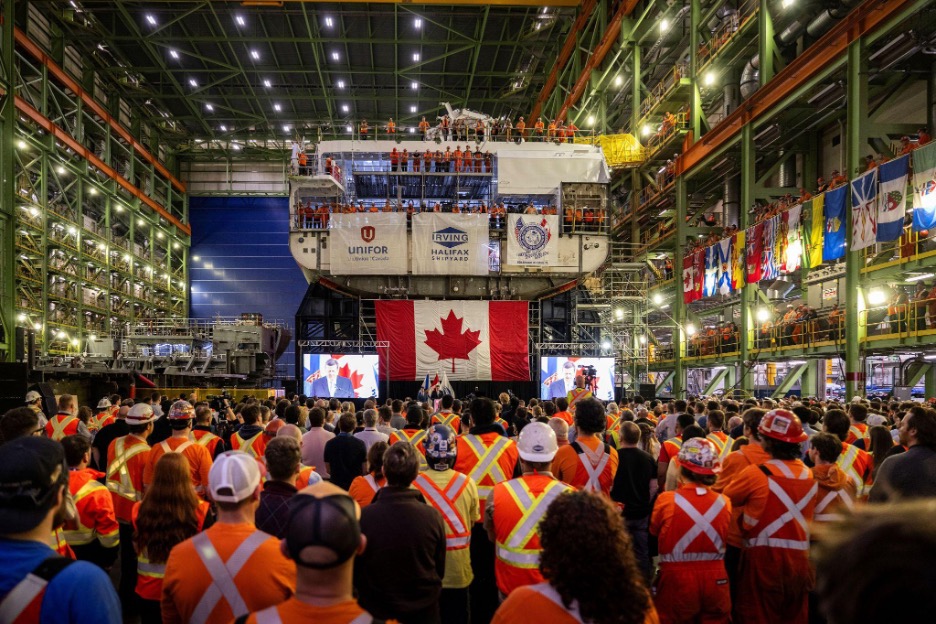

Irving Shipbuilding marks a generational transition at Halifax Shipyard as the Navy’s next major surface combatant takes shape.
On June 12, Irving Shipbuilding laid the keel for the future HMCS Fraser at Halifax Shipyard, marking the formal start of construction on the first of up to 15 River-class destroyers for the Royal Canadian Navy. The ceremony also recognized two related milestones: delivery of the sixth and final Arctic and Offshore Patrol Vessel to the RCN, and the launch of the first AOPS variant for the Canadian Coast Guard.
A tradition with stakes
Keel laying is one of the oldest traditions in naval shipbuilding. The coin for the future HMCS Fraser was presented by Vice-Admiral Angus Topshee, Commander of the Royal Canadian Navy, then welded in place by Brandon VanHeighten, a Red Seal welder, and fitted by Jaeson Fredericks, a Red Seal metal fabricator at Halifax Shipyard. Topshee declared the hull “well and truly laid.” The coin features explorer Simon Fraser traversing a gorge carved by the river that later took his name.

“This is a great day for the Royal Canadian Navy as it marks a major milestone in the production of the destroyers the Royal Canadian Navy urgently needs to protect Canadian waters and Canadian interests in an increasingly unpredictable and threatening world.” — Vice-Admiral Angus Topshee, Commander of the Royal Canadian Navy.
What it replaces
The River-class destroyer will replace both the retired Iroquois-class destroyers and the Halifax-class frigates with a single modern platform, consolidating two separate fleets into one and streamlining training, maintenance, and operations. Full-rate construction has been underway since April 2025. Delivery of the future HMCS Fraser is expected in the early 2030s.
The industrial picture
Irving’s NSS programs are projected to sustain an average of 10,600 full-time jobs annually and contribute nearly $17 billion to Canada’s GDP between 2013 and 2027. The RCD implementation contract alone is estimated to support approximately 5,250 jobs annually through 2039, with almost $720 million contributed to Canada’s GDP over the same period.
