


Canada’s aerospace sector added $33.1 billion to GDP and supported 218,700 jobs in 2025, according to a report from the Aerospace Industries Association of Canada (AIAC) and Innovation, Science and Economic Development Canada (ISED).
Why it matters: The industry keeps growing faster than the rest of Canadian manufacturing on R&D, exports and defence revenue, even as its workforce shrinks in some segments.
By the numbers:
- $33.1B: GDP contribution in 2025, up $630 million (+1.9%) from 2024.
- 218,700: jobs supported, up 4,700 (+2.2%).
- $1.8B+: R&D spending, up 37% year over year. Aerospace remains Canada’s most R&D-intensive manufacturing industry — 4.5x the manufacturing average.
- $28.2B: manufacturing exports to 170+ countries, up 9.7%. More than half were supply-chain parts, not finished aircraft.
- Top 5: Canada’s global ranking in civil flight simulators, engines and aircraft. It’s #1 worldwide in simulators and turboprop engines.
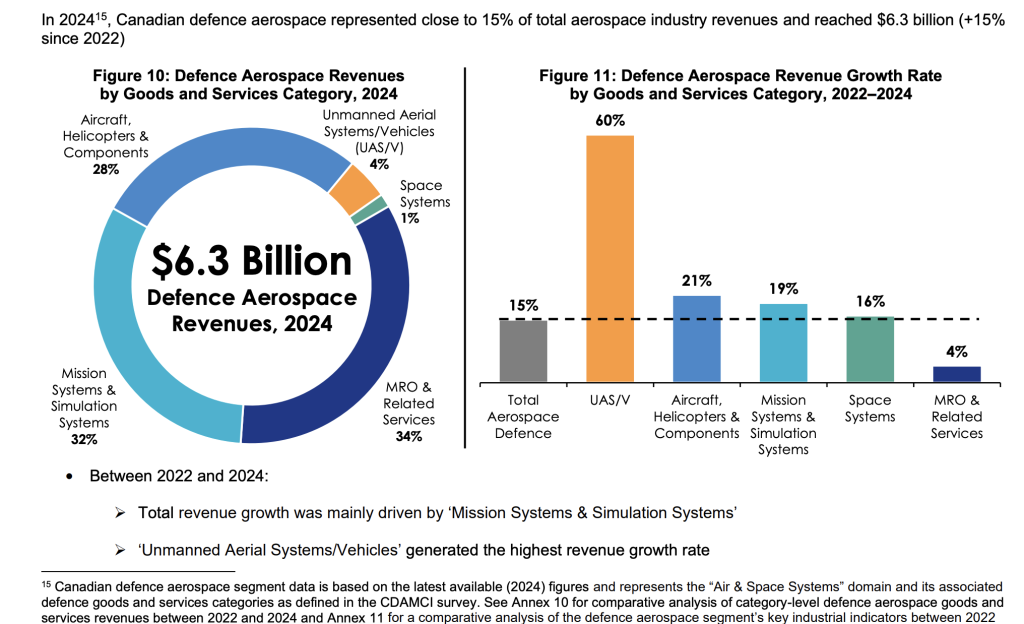
Zoom in — defence: Defence aerospace is smaller than civil but growing fast.
- Revenue hit $6.3 billion in 2024, up 15% from 2022.
- Mission systems and simulation drove most of that growth in dollar terms.
- Unmanned systems (UAS/V) grew fastest of any category — up 60%, though still just $271 million.
- Defence exports rose 17.4%, to nearly $4.1 billion.
- The catch: defence aerospace jobs fell 4.6% over the same period, to 13,093 — revenue and R&D grew while headcount didn’t.
The big picture — civil: Civil aerospace is still the giant, at $35.8 billion in 2024 revenue (85%+ of the industry), up 39% since 2022, led by aircraft and helicopter production.
Regional snapshot:
- Quebec anchors manufacturing with 61% of jobs, though its share has slipped slightly since 2021.
- Ontario’s manufacturing share is climbing — now 24%.
- Western and Northern Canada leads MRO work, with 40% of those jobs.
Worth noting: Average aerospace manufacturing salaries hit $88,000 in 2025 vs. $71,000 industry-wide in manufacturing. But the share of women in the aerospace workforce dropped to 18%, down from 24% in 2024 and below the 28% manufacturing average.
Bottom line: Canada’s aerospace industry is growing on nearly every financial metric — GDP, R&D, exports, defence revenue — but workforce trends, especially in defence and gender representation, are moving the opposite direction.
