
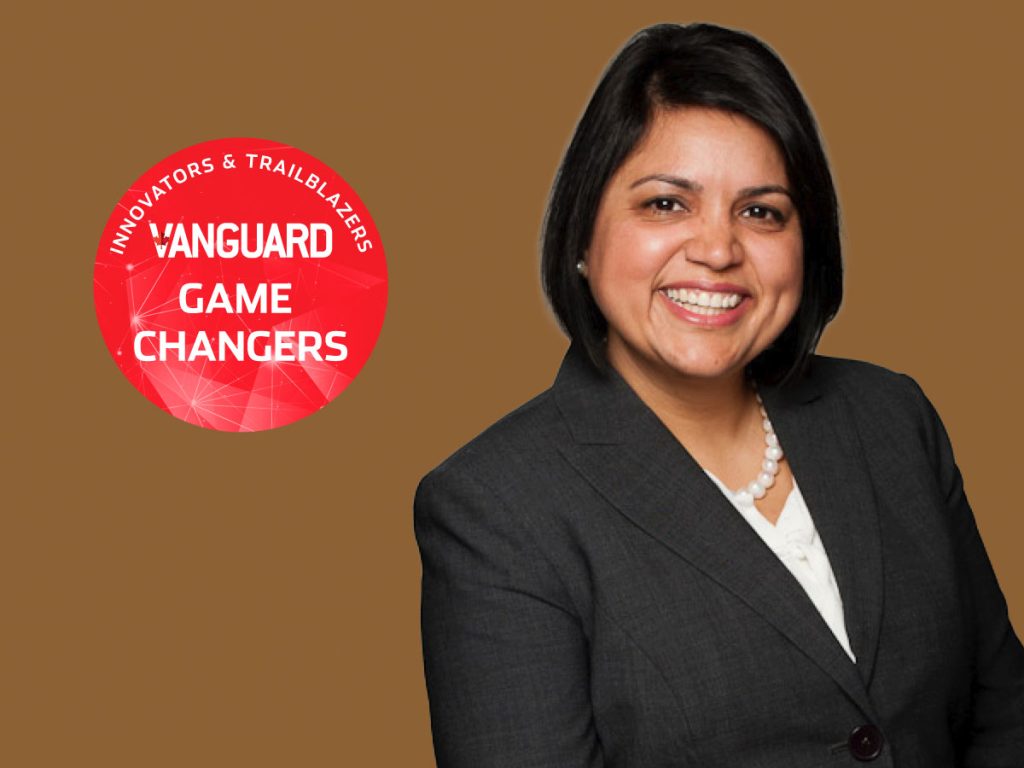

Annu Vaidya has a simple theory about why defence sustainment keeps failing. It is not a technology problem. It is an ownership problem. Nobody is accountable for end-to-end readiness, and until that changes, parts will sit in warehouses while aircraft stay grounded. After 33 years in the industry, she has stopped waiting for someone else to fix it.
At Arcfield Canada, she has found the right platform to act on that conviction. The company has built its reputation supporting the CF-18 fleet, and is now positioning itself as a platform-agnostic sustainment partner across Canada’s next generation of air, land, and maritime programs. The timing, with major fleet decisions being made now, could not be better.
We spoke with Vaidya about the leadership lessons that shaped her thinking, the structural barriers holding defence innovation back, and what it actually takes to build sovereign sustainment capacity in Canada.
Q: How did you start out in this industry and how has it brought you to where you are today?
I started my career as a software engineer building mission systems for Canadian aerospace and defence programs. Working on the technical front lines taught me something fundamental: capability isn’t built in theory. It’s built through precision, discipline, and collaboration in environments where systems must work every single time.
Over time I began to see the bigger picture. The technology is only one piece. Early strategic decisions, government partnerships, and industrial capability ultimately determine whether a nation can sustain its forces. That realization pushed me to broaden my perspective well beyond engineering. Over the past 33 years I’ve worked across Colt Canada, General Dynamics Mission Systems-Canada, and CMC Electronics before joining Arcfield Canada. Across those roles I’ve led complex programs, built new organizational capabilities, and developed long-term technology and operational strategies. Today I apply that systems thinking at a national level, helping shape how Canada builds, sustains, and modernizes the capabilities our forces rely on.
Q: What is your role at Arcfield Canada today?
As Director of Business Development and Growth, I focus on expanding our role in Canada’s defence ecosystem across sustainment, supply chain, logistics, and electronics maintenance, repair, and overhaul (MRO). Arcfield has built a strong reputation supporting the CAF’s CF-18 fleet. My role is to translate that trusted operational experience into a broader, multi-domain sustainment capability supporting Canada’s future fighter, maritime, and submarine programs. The goal is to position Arcfield as a platform-agnostic partner that strengthens Canada’s sovereign sustainment capacity across all domains.
Q: What was your most challenging moment?
The hardest sell in defence is rarely across the table from the customer. It is inside your own organization. Many organizations are built around processes that worked yesterday, and convincing people to see a different future can be difficult. Internal inertia can be the biggest barrier to growth. What I’ve learned is that leadership means helping people see possibilities before they fully exist. It requires persistence, evidence, and sometimes a thick skin. But when the first skeptic becomes a believer, momentum builds quickly. Turning internal resistance into shared vision is one of the most rewarding parts of leadership.
Q: What was your A-HA moment?
Growth doesn’t happen by staying within your comfort zone. I realized that if I wanted to move beyond engineering and into shaping outcomes, I needed to step into unfamiliar territory and build a broader skillset. That led me to complete my EMBA while working full-time. Through that experience I came to understand that growth is rarely linear. It requires reflection, recalibration, and a willingness to align your work with a larger sense of purpose. I moved from focusing on execution to thinking more strategically about where I could have the greatest impact. That shift changed everything about how I approached my career.
Q: What is the one thing that has you most fired up today?
Canada is entering a generational moment in defence sustainment. Major fleet decisions, from fighter aircraft to submarines, will define how we maintain operational readiness for decades. What excites me most is the opportunity to strengthen sovereign sustainment capability inside Canada. When we build the right industrial partnerships, digital infrastructure, and supply chains domestically, we reduce dependency and increase resilience. At Arcfield Canada we’re applying digital tools, advanced logistics, and platform-agnostic sustainment models to help make that possible. Supporting Canada’s operational readiness isn’t just business. It is national capability. That’s what motivates me every day.
Q: What is the best advice you received?
One piece of advice that stayed with me came from a mentor: never shrink yourself to make others comfortable. Great organizations aren’t built by protecting ego. They’re built by surrounding yourself with people who challenge you and make the entire team stronger. If you’re insecure about having smart people around you, you’re in the wrong leadership role. The best leaders create environments where talented people can contribute fully. When that happens, organizations grow faster than any individual could alone.
Q: What habit contributes most to your success?
I make it a habit to stay close to the people doing the work. The most valuable insights rarely come from dashboards. They come from engineers, technicians, logisticians, and operators solving problems in real time. I ask questions constantly and listen carefully, because those perspectives reveal where systems actually succeed or fail. Once I understand the reality on the ground, I act quickly. Listening, deciding, and executing consistently has been one of the most important disciplines throughout my career.
Q: How is Arcfield Canada redefining sustainment?
Arcfield Canada is redefining sustainment through a platform-agnostic, mission-focused approach. Rather than being tied to a single platform, we integrate supply chain management, logistics, and electronics MRO capabilities across air, land, and maritime fleets. Our experience supporting the CF-18 fleet has demonstrated the value of that model. The next step is extending that expertise to future fighter programs, naval platforms, and other complex systems, helping Canada build a stronger, more resilient sustainment ecosystem.
Q: What are the biggest impediments to innovation in your sector?
The biggest barrier to innovation in defence sustainment isn’t technology. It is synchronization. We have no shortage of data or digital tools, but alignment across the ecosystem remains elusive. Each stakeholder optimizes for their own area: supply chain, depots, OEMs, operators. Yet no one is accountable for end-to-end readiness. That’s why parts are available, dashboards show green, and aircraft still don’t fly. This isn’t a data problem. It is an ownership problem, and innovation often stalls at contract boundaries. The real challenge is transforming vast data into readiness decisions without compromising safety, sovereignty, or trust. That’s where Arcfield Canada operates, at the seams between operators, OEMs, depots, and supply chains, integrating those disconnected pieces to deliver true operational readiness.
Q: How has innovation become part of Arcfield Canada’s culture?
At Arcfield Canada, innovation isn’t a slogan. It is a necessity. Because we are not a platform OEM, our value comes from solving complex sustainment problems across multiple systems and partners. That forces us to think creatively about logistics, digital analytics, and operational integration. Our teams are encouraged to challenge assumptions and collaborate directly with operators to improve how sustainment is delivered, faster, smarter, and more efficiently.
Q: What technologies and trends will drive the biggest changes over the next two years?
Defence sustainment is shifting from reactive maintenance to predictive readiness. Digital sustainment, data integration, automation, and AI-driven logistics will all play major roles. But the real disruption will come from how we work together. The future belongs to organizations that break down barriers between operators, OEMs, and service providers, using shared data and transparent collaboration to improve readiness. In Canada, sovereign supply chains and in-country sustainment will be key trends. Technology will enable this shift, but bold leadership and trust across partners will define who truly leads the next generation of defence readiness.
Q: What is your parting advice?
Don’t underestimate your ability to make a difference, especially in defence right now. This is the moment when new thinking and bold leadership can truly shape Canada’s future. Build teams based on potential, not just past performance. When you surround yourself with people who are driven to learn, they’ll surprise you every single time.
