
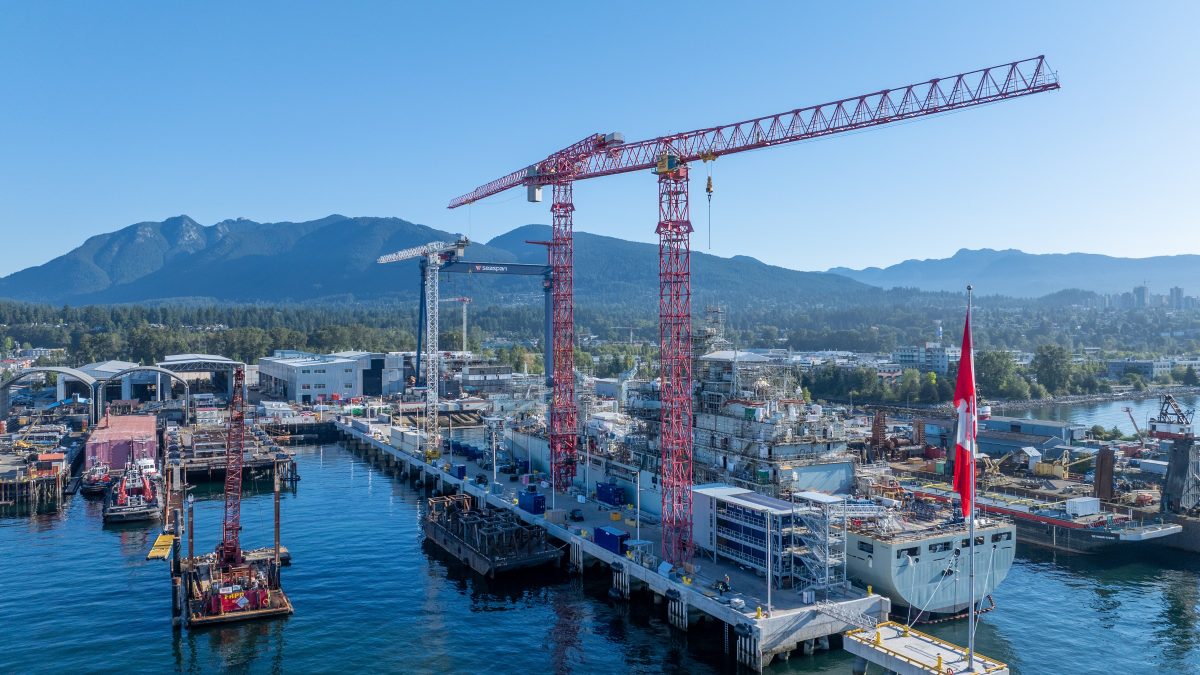

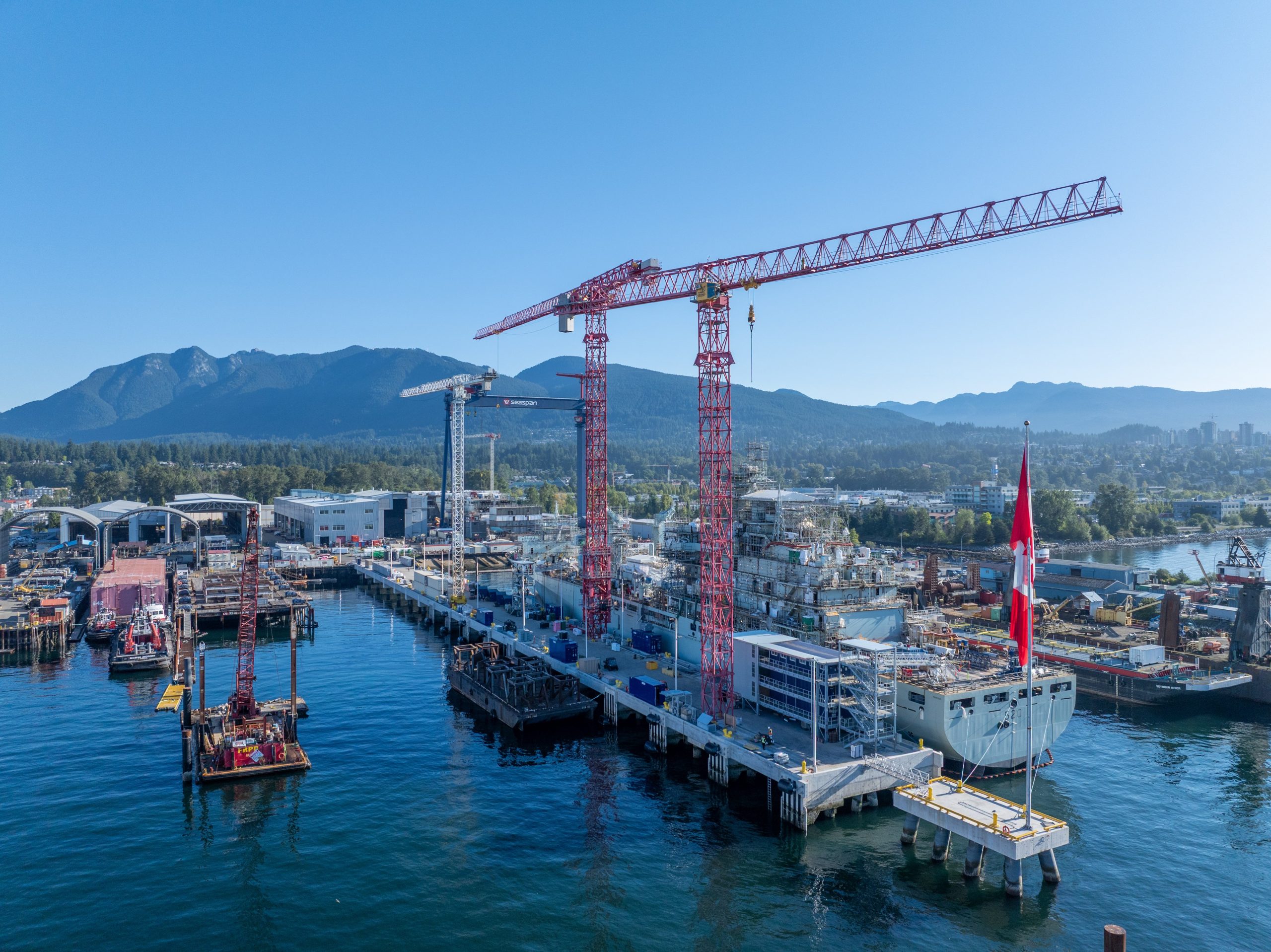
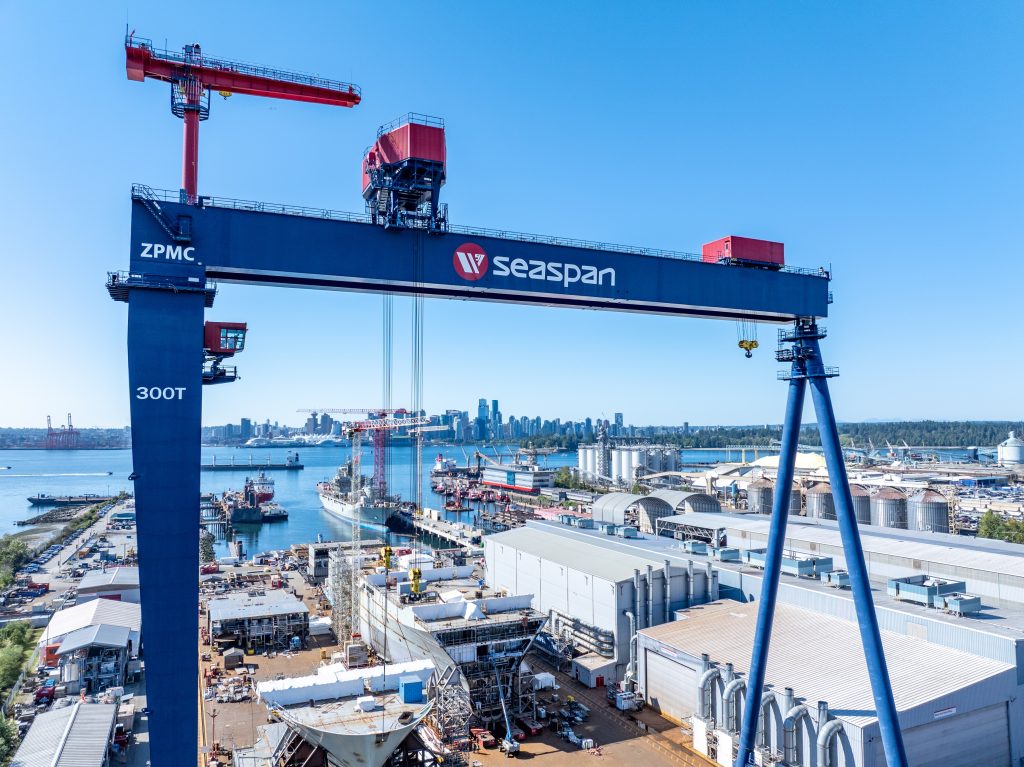
Canada’s National Shipbuilding Strategy (NSS) continues to reshape the nation’s maritime landscape, and one of its most striking symbols of progress now stands in North Vancouver. Seaspan, a central pillar of Canada’s non-combat shipbuilding program, and Stantec, a global leader in sustainable engineering and design, have completed a state-of-the-art outfitting pier at Seaspan’s Vancouver Shipyards. The structure represents more than a construction achievement—it is a cornerstone for the country’s naval and coast guard future.
A Pier Built for the Next Generation of Vessels
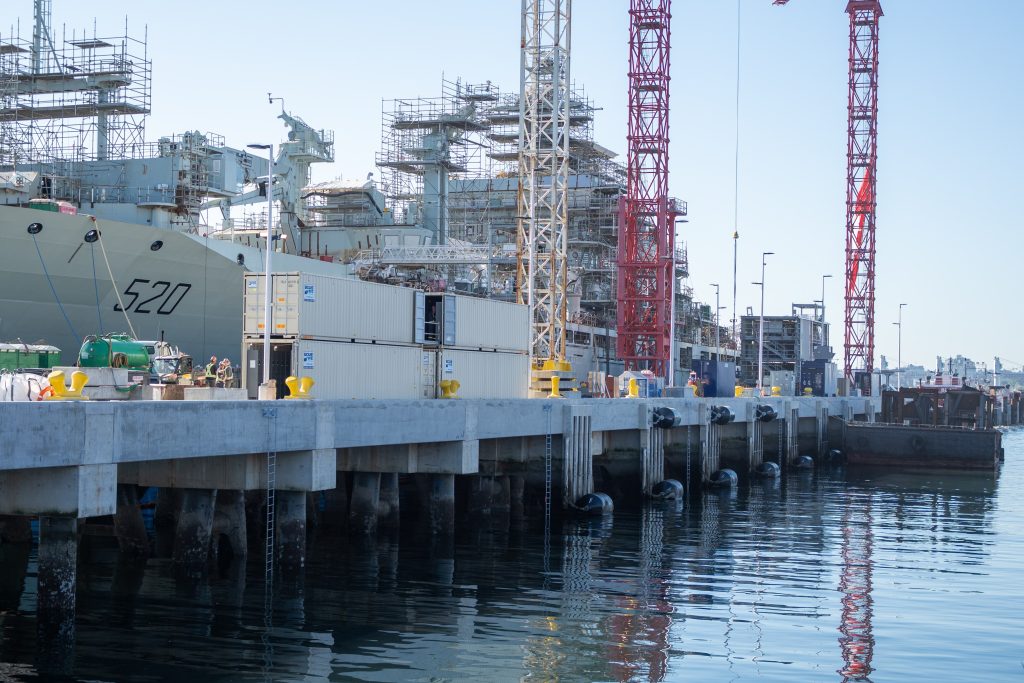
Stretching 272 metres long and 19 metres wide (892 feet by 63 feet), the new steel-and-concrete pier is engineered to handle the massive demands of modern shipbuilding. Already, it is playing a critical role in the outfitting of the Royal Canadian Navy’s Joint Support Ship, HMCS Protecteur—the largest vessel in Canada’s fleet.
The pier is a leap forward from its predecessor: a timber-built structure dating back to 1966. Equipped with modern utilities, heavy-load capacity, and robust environmental safeguards, the pier is designed to meet both today’s needs and tomorrow’s challenges. Resilient against sea-level rise, storm surges, and seismic hazards, it represents a blend of engineering precision and forward-thinking sustainability.
“The new outfitting pier at Seaspan Vancouver Shipyards reflects our continued investment in the future and longevity of shipbuilding in British Columbia,” said Julianne Nezgoda, Director – Facilities, Seaspan Shipyards. “With the new pier already in use, Seaspan continues to show it has the facilities and infrastructure to design, build and deliver ships effectively and efficiently on Canada’s West Coast, ensuring the RCN and Coast Guard have the ships they need to protect Canada’s security and sovereignty.”
“This is a major milestone for shipbuilding in Western Canada, and for Vancouver Shipyards,” said Kip Skabar, Canada Ports and Marine sector leader at Stantec. “We are seeing increased waterfront infrastructure needs on the east, west, and north coasts of Canada, and as one of the few full-service waterfront engineering firms in the nation, we are well positioned to support this growth. It’s an exciting time to be designing significant new facilities that will contribute to our national interest.”
Designed for Heavy Lifting and Future Flexibility
Beyond durability, the pier is designed for flexibility. It can accommodate integrated tower cranes, civil utilities, service towers, vehicle traffic, and specialized equipment required for heavy outfitting operations. Its design also anticipates future needs, featuring configurable crane pockets and multiple shore power capabilities to support a variety of vessel types.
A Pillar of the National Shipbuilding Strategy
The pier project began in 2020 with environmental review and permitting, advancing to construction in 2023. Stantec oversaw planning, permitting, and engineering design while providing ongoing procurement and construction support. Together with Seaspan, the result is a facility tailored to Canada’s 21st-century shipbuilding ambitions.
Seaspan’s role under the NSS, established in 2011, has been transformative. Since being named Canada’s non-combat shipbuilder, Seaspan has launched five vessels and is now building the Canadian Coast Guard’s new heavy polar icebreaker—the most powerful ship in its fleet. Deloitte’s economic analysis highlights the broader impact: Seaspan has contributed more than $5.7 billion to Canada’s GDP since 2012, while sustaining or creating over 7,000 jobs annually.
Growth on the Pacific Coast
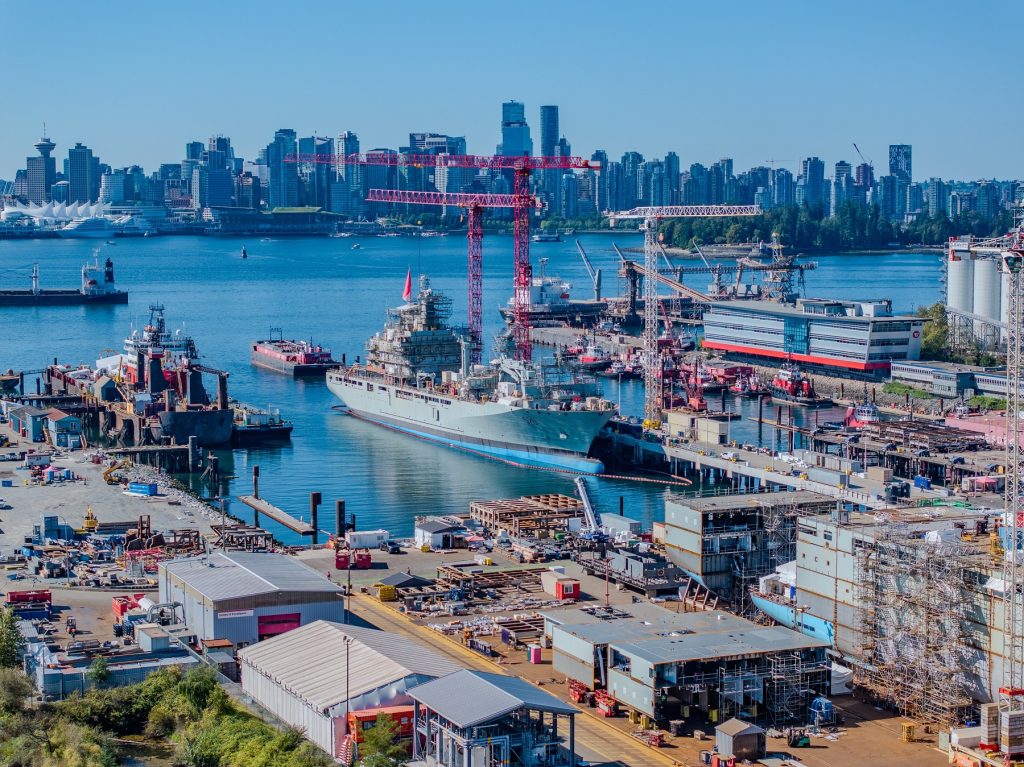
The outfitting pier is part of a wave of maritime infrastructure investment on Canada’s west coast. Under the NSS, approximately $10.25 billion in contracts have flowed to Pacific-based companies, fueling both regional and national economic growth.
Seaspan’s modernization program has turned the Vancouver Shipyards into one of North America’s most advanced facilities, supported by a skilled workforce and specialized infrastructure. This ensures Canada is equipped to deliver complex, large-scale vessels that safeguard the country’s sovereignty while supporting international security obligations.
Building Beyond the Shipyard
Stantec’s contribution underscores its growing footprint in Canada’s marine and port infrastructure. In just the last five years, the firm has completed more than 100 projects across the country, including the Roberts Bank Terminal 2 expansion in Vancouver, LNG Canada in Kitimat, and the B Jetty Replacement at Canadian Forces Base Esquimalt.
Each project extends beyond steel and concrete. Together, they reflect a national strategy to expand port capacity, secure supply chains, and fortify Canada’s position in global trade while protecting its sovereignty.
Anchoring Canada’s Maritime Future
The outfitting pier at Seaspan’s Vancouver Shipyards is more than an engineering accomplishment; it is a strategic asset. With its resilience, flexibility, and forward-looking design, it cements Canada’s ability to build and sustain the vessels that will carry the Royal Canadian Navy and Canadian Coast Guard into the future.
For Seaspan and Stantec, it is both a milestone and a launching point—an enduring foundation for Canada’s next chapter in shipbuilding excellence.
