
A very experienced and capable Master of Ceremonies RAdm (ret’d) Casper Donovan opened the 12th annual C4ISR and Beyond at the National Arts Centre on 27 January 2026. This year’s theme focused on re-imagining a strategic defence innovation and engagement model between the Canadian Armed Forces (CAF) and industry – how can strategic partners leverage investments in defence?
The conference was at capacity for in-person attendance with another 100 joining online. Victor Khoo, representing Platinum sponsor General Dynamics Mission Systems–Canada suggested that sovereignty meant more than where something was built and that exportability was key to maintaining capability at home. In themes that the audience would hear throughout the day, industry is positioned to collaborate, share risk, integrate, scale and sustain at the speed of relevance – in a word – to mobilize, at pace and purpose.
Procurement paralysis to DevOps at pace
LGen (ret’d) Mike Rouleau, Advisory Committee co-chair, promised we would walk away smarter for a day’s investment. He reflected on the very recent and abrupt changes in the geopolitical landscape where historical frameworks for problem solving were dissolving, replaced by arbitrary and unknown conventions – legal or otherwise. He also questioned how we can trade non-value processes for speed, migrate from a federal procurement morass to a leadership model in a supply-side marketplace where innovation is rewarded. Additionally, he noted the need to become more DevOps in nature. This must happen from the top—leadership, regulatory, policy, and process—and from the bottom, driven by technology and those closer to the problem and the decision-makers.
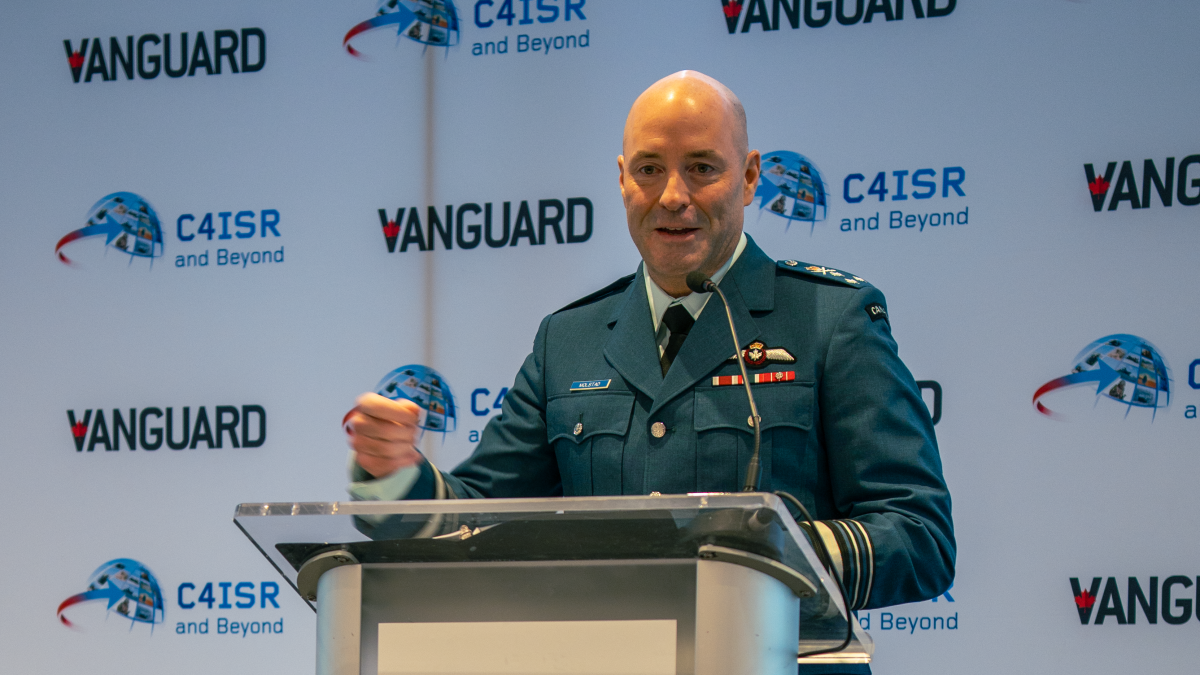
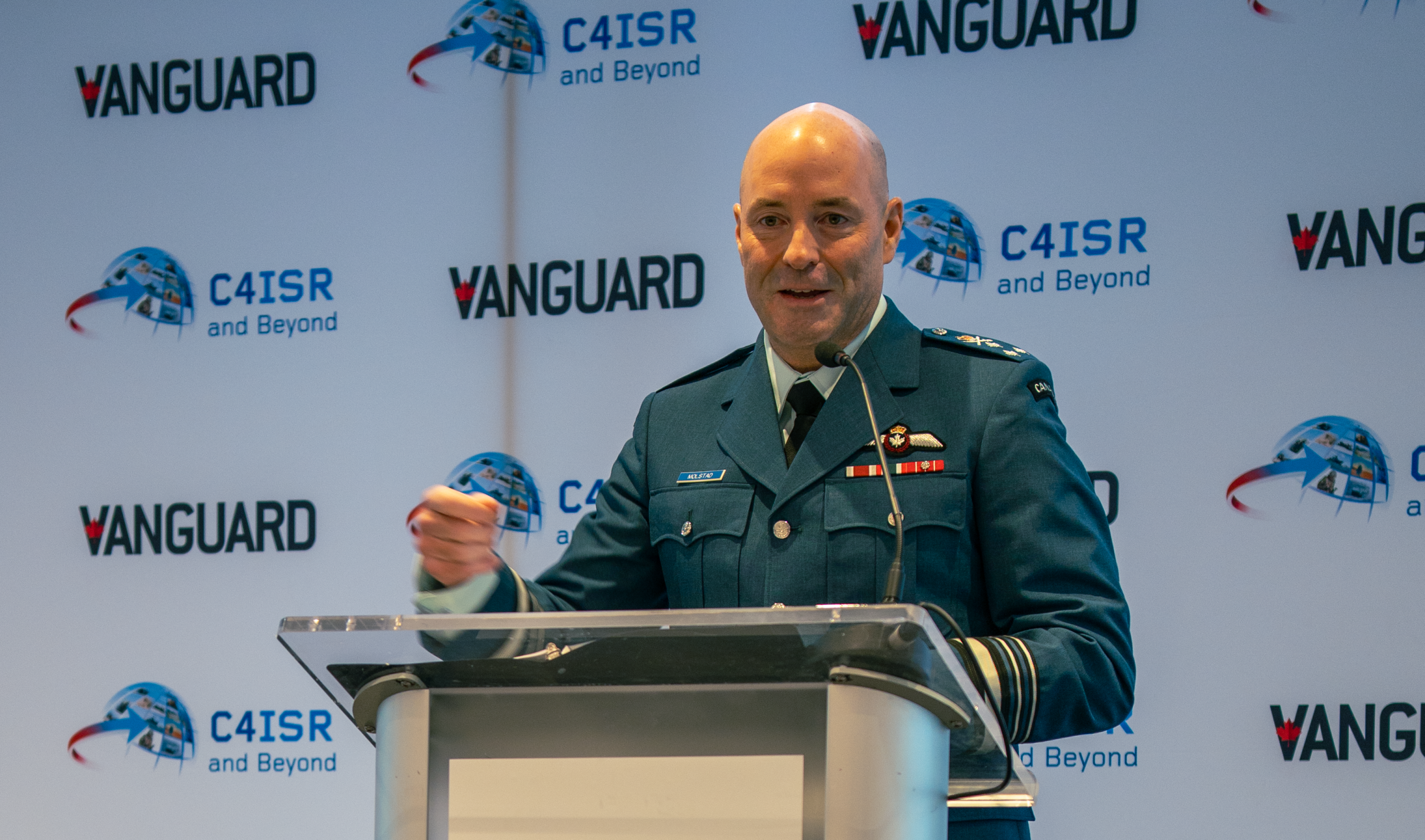
LGen Darcy Molstad, Commander Joint Forces Command (JFC) provided the opening keynote address focused on his mandate to enable decision superiority through capabilities and technology but also integrated C5ISR-T effects. He acknowledged that although recently established, the creation of the Command is timely given recent shocks to the global geopolitical order. He noted that key allies have made similar organizational changes. Under-investment in joint capability was a consequence of our former CAF structure.
He recognized that DND/CAF has rightly been criticized for making procurement complicated and stressed that we must be decisive and pick winners, accepting the resultant churn created by those not selected. Additionally, we need to collaborate with allies/partners and leverage existing capability development for a more rapid adaptation of allied/industry solutions. Canadian Joint Operations Command (CJOC) remains the Joint Employer while the JFC will develop joint capabilities through Joint Cap Integration (JCI), the Joint Intelligence Fusion Centre (JIFC), the Joint Warfare Centre (JWC), Health Services, Military Police and Joint Logistics.
The JFC will not own every joint capability in CAF, rather it will lead integration and deliver joint capabilities that strengthen readiness, pushes power to the edge, and focuses on outcomes over process. Digital Services Group (DSG) will be a critical partner responsible for delivering many enterprise solutions – IDAM/ICAM, secure sovereign cloud, interoperability with CBC2 and CJADC2. Comd CJOC requires a CAF Operational Mission Network, leveraging MC2IS to move information from sensor to decision maker, tactical to strategic. His guidance to developers was as follows: Avoid development stovepipes, engage with industry early and often, accept/create asymmetries, execute and adapt rapidly, contract faster, accept that platforms will never be complete.
Although new to industry, the JFC will connect and communicate regularly with its emerging strategic partners, with clearly stated needs. As an old proverb suggests, “if you want to go fast, go alone. If you want to go far, go together. To do both – go joint”.
Cognitive advantage over platforms
Dr. Rebecca Jensen, assistant professor, Canadian Forces College, provided an academic view of what gaps exist in winning tomorrow’s conflicts. She suggested that wars are not decided by platforms, they are decided by intellectual outcomes, and the CAF needs to better understand how it wants to fight and win. Is mission command or “Auftragstaktik” the philosophy to be embraced across the chain of command – devolution of intent, rapid and decisive advance, greater acceptance of risk, rewarding bold, dynamic actions? If so, how and where is this taught or inculcated to the CAF leadership?
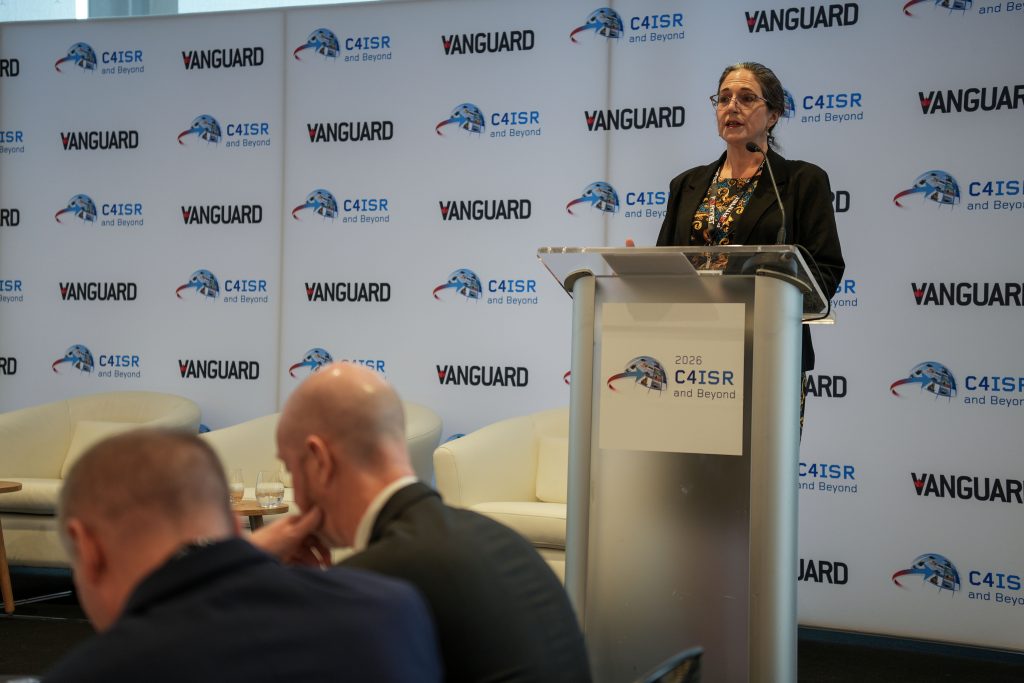
Secondly, in the OODA-loop decision-making model, Orientation is the most important phase for CAF leadership, requiring critical thinking and positioning. While our collective abilities to observe or sense have improved through technology, our formal methods to impart greater degrees of analysis have not kept pace. The CAF must inculcate critical ways of thinking in its leadership and be able to compete and win in a Denied Degraded Interrupted Low Bandwidth (DDIL) environment. Innovation in tactical environments drives institutional change. This requires continuous intellectual development that cannot be episodic or surged.
The profession of arms—like law, medicine, and engineering—must continuously evolve to meet its compact with society. Military leadership must remain at the height of professional development. This can only be achieved through commitment to an ongoing Professional Military Education (PME) that transcends episodic attendance at staff colleges. This is even more important as the complexity of the modern battlespace increases. Mastering the Joint domain is only possible through expertise in environmental operations. The CAF must invest in a cadre of uniformed officers who will lead the PME as professors. The goal must be to make the CAF more cognitively aware and agile in critical thinking, positioned to exploit technology, adapt doctrine and accelerate feedback loops. The responsibility to deter, defend and defeat has returned as a reality, and the profession of arms must adapt.

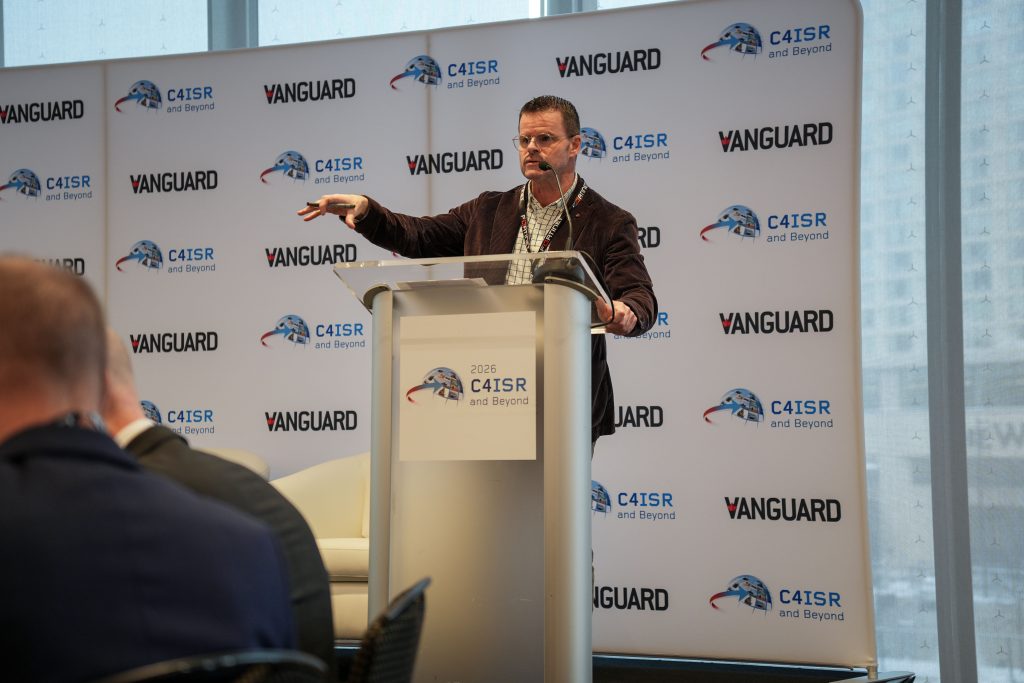
Eliot Pence, founder and CEO, Dominion Dynamics, provided perspectives on a go-to-market (GTM) industry model that is DevOps in motion. He stressed that the future of warfare is networked and entirely technology dependent. It will be disruptive, modular, continuously updated and software defined. Procurement processes that assume stable networks deliver “zombie” or irrelevant requirements.
Modern conflict features fast-changing threats for which requirements cannot be defined years ahead. What works are capabilities built in contact with the user where early deployment beats perfect specs and warfighters are co-developers. Militaries must be able to prototype, deploy, operate, learn and redeploy, focusing resources on success – iterate and integrate in the field. Reducing time through rapid evolution becomes a strategic advantage as delay increases risk just as speed reduces it. Blue-Red team structure in engineering/design, with adversarial engineering is ideal. Complex or major projects need many small bets successfully to advance. Where possible, programs should be portfolios to scale winners fast and eliminate failures early – fail fast. The CAF is burdened with legacy systems and equipment and needs to substitute sustainment with replacement – treat systems as consumable.
To build Canadian economic capacity we need new metrics for procurement based on factors such as deployment time, unit of capability by unit of cost, modular and open architecture with components designed to be lost, scaled or replaced. DND needs to reassess the value of investment and capital – a $10 million contract can lead to a $100 million investment in small to medium-sized businesses (SMBs). The Department needs a national integrator as a strategic partner and reduce or eliminate areas where government competes with industry.
DevOps in practice: From prototype to battlefield
The first panel of the day was moderated by Col Derek Lay, Comd JWC and examined different approaches to DevOps ambition and capability development. Panelists were the Army’s Col Jay Estrela DDACSI & D Sigs, LCol Nicolas Verrault, Head Joint UxS Office and LCol Amanda Whelan, Director RCAF Digital Hub.
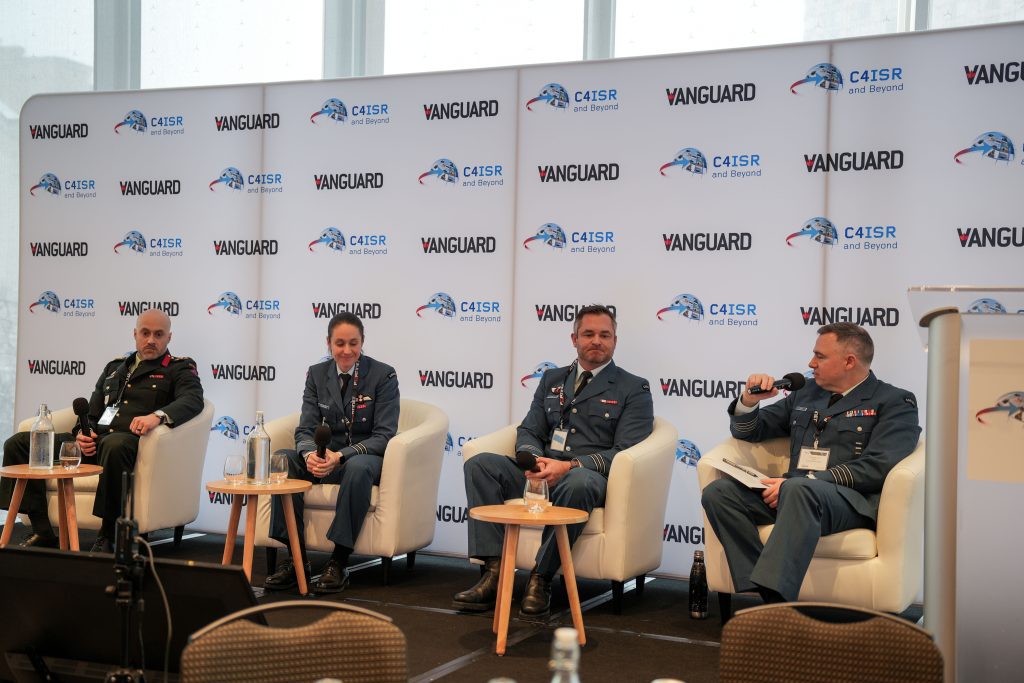
Common themes were the use of data to drive decision-making based on data-portfolio integration, not silos. The agreed premise that we must fight from prototype with rapid iterative development and work with operators at every step. CloudTAK, the Army’s futures network, will guide network development, data team developers and the challenge of scaling innovation in the Army across the Brigades. This initiative seeks tactical compute, to the edge, off-line, with bandwidth/capacity trade-offs against size/weight/power. Develop TTP’s while delivering/deploying a solution. All panelists agreed on innovating and updating the devices going into the tactical environment, beginning with a minimum viable product, iterating based on local conditions. The difficulty for configuration management will be enormous but Modular Open System for Design (MOSD) will mitigate. We must balance the need to function within an enterprise architecture with the need to innovate at the tactical edge.
Lessons from Latvia and the MINERVA Initiative
Panel one was followed by a discussion on the evolving battlefield Army’s focusing on Latvia’s experiences, and the MINERVA Initiative. MGen (ret’d) Colin Keiver, BGen Stéphane Masson, COS Strat and Victor Khoo, Director C5ISRT, GDMS all participated.
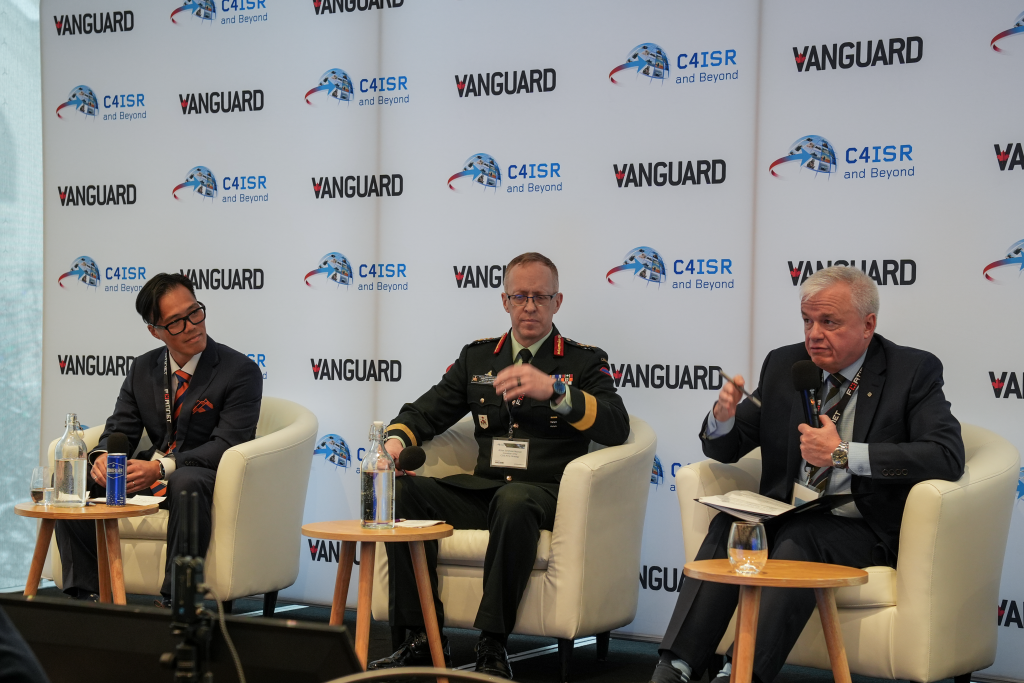
One of the four priorities in the Canadian Army (CA) modernization plan is the deployment of a C4ISR capability at all functional levels – section to division. Current ambition exceeds capacity mainly due to process. All three speakers agreed that speed is more important than completeness and that agility in procurement is more a culture failure than a process. The CA must engage early with industry as most solutions already exist – test, validate, trust. Challenge the requirement and the solution to get a best available product but remain adaptable. Most challenges are not technical, they are people, process, and culture issues. Collectively we are ready to pull together; we don’t know how.
The Comd CA owns the risk, but the liability is shared across multiple organizations – ADM Mat and PSPC. We need better ways to express failure – knowing you will fail is different than advancing with purpose and failing. Too often we are paralyzed by endless studying, assessing, testing, trialing but never delivering a capability! We need small wins that build momentum and the ability to reinforce success.
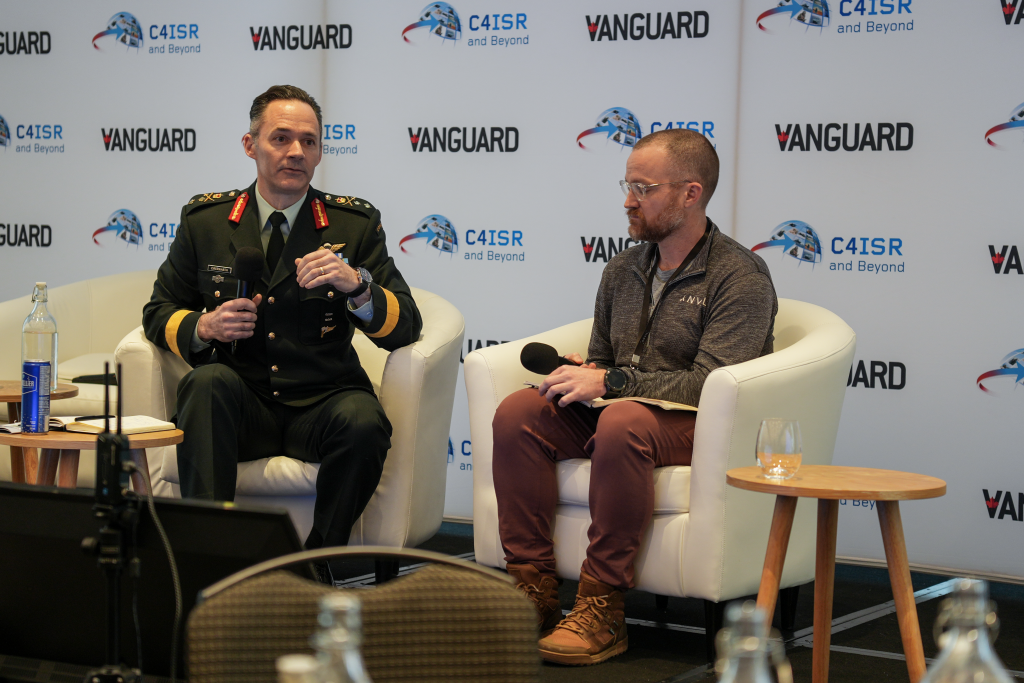
The final discussion of the day focused on the Digital Services Group (DSG) and its mandate to drive digital transformation across the enterprise. MGen Cayle Oberwarth, COS DSG and Sam Witherspoon, CEO of Anvil Intelligence, spoke about the need to position ourselves for success – in military terms, to win. The CAF needs to deter, and as necessary, decisively defeat an opponent in overwhelming victory to limit cost. However, our enterprise C2 has inherent vulnerabilities, is hard to reproduce and is definitely not disposable. We need strategic partners to create more durable systems of systems. The Government of Canada (GoC) is positioned to provide DND/CAF with twice the resources; however, they will expect twice the output/effects. The institution needs to be more decisive at quickly selecting winners and let the other industry partners get up, dust off and move on. Of the resource triangle—people, time, and money—the CAF now has money. It has no time to spare and limited personnel. There is universal agreement that we cannot use traditional procurement processes to acquire digital functions as two-year distant technology cannot be quantified. COS DSG confirmed that Combined Joint All Domain Command and Control (CJADC2) capability development will be owned by CFJC, with the ultimate consumer being Comd CJOC. How the CAF trade structure may need to be adapted was an open-ended question with a broad range of opinions.
The conference struck the right balance of examining how institutional authorities can enable agile tactical responses when all parties seek a common effect – rapid DevOps. With all parties in violent agreement about the need to move decisively and rapidly, the next logical bound is to identify the “how”, which will undoubtedly be the most difficult discussion.