
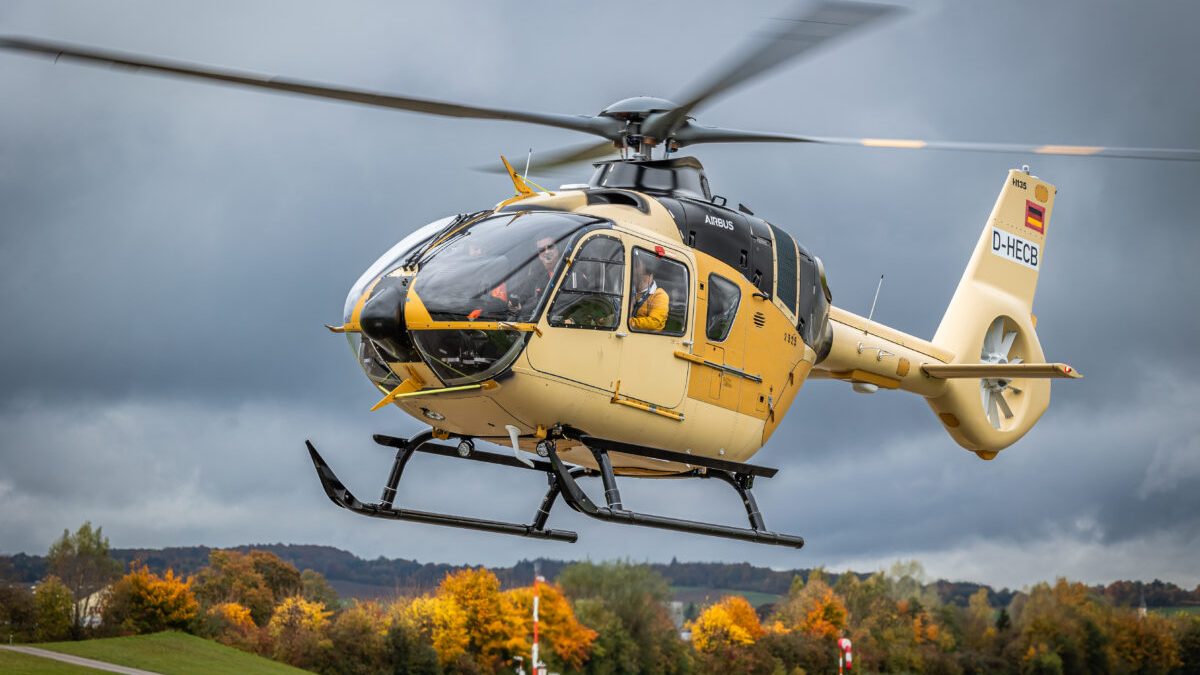

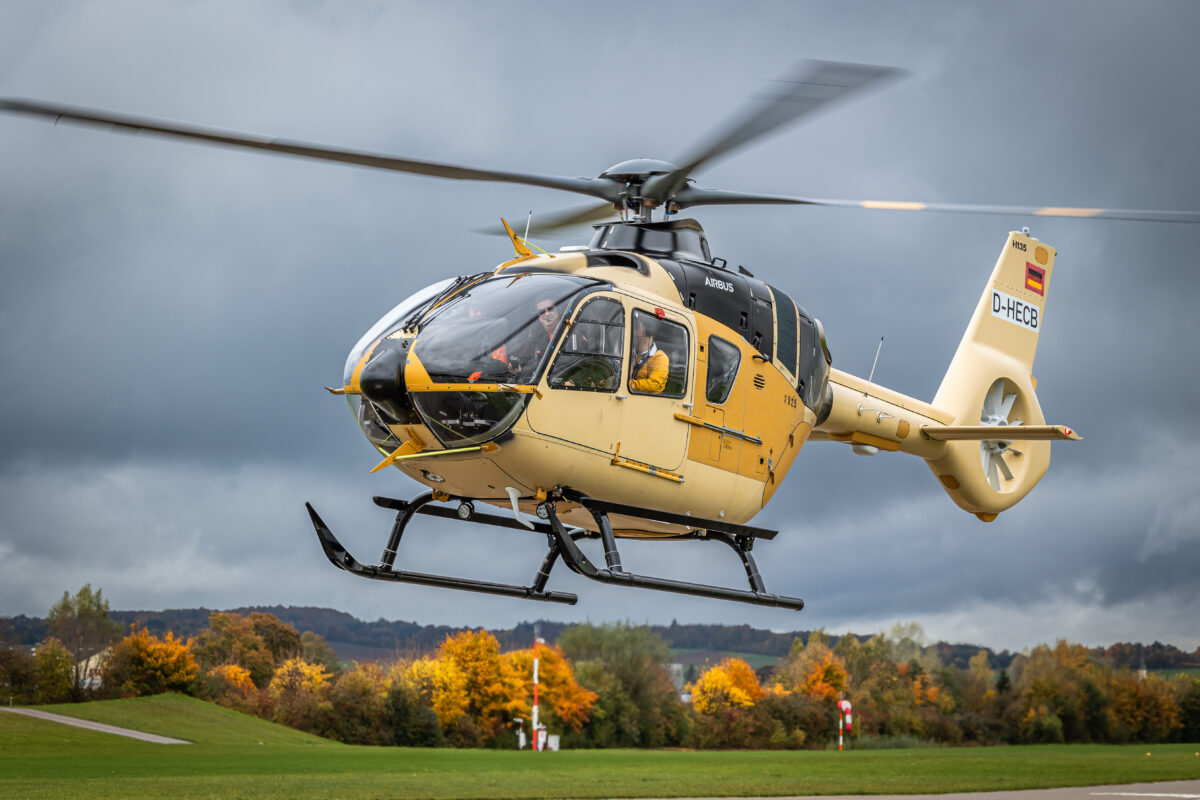
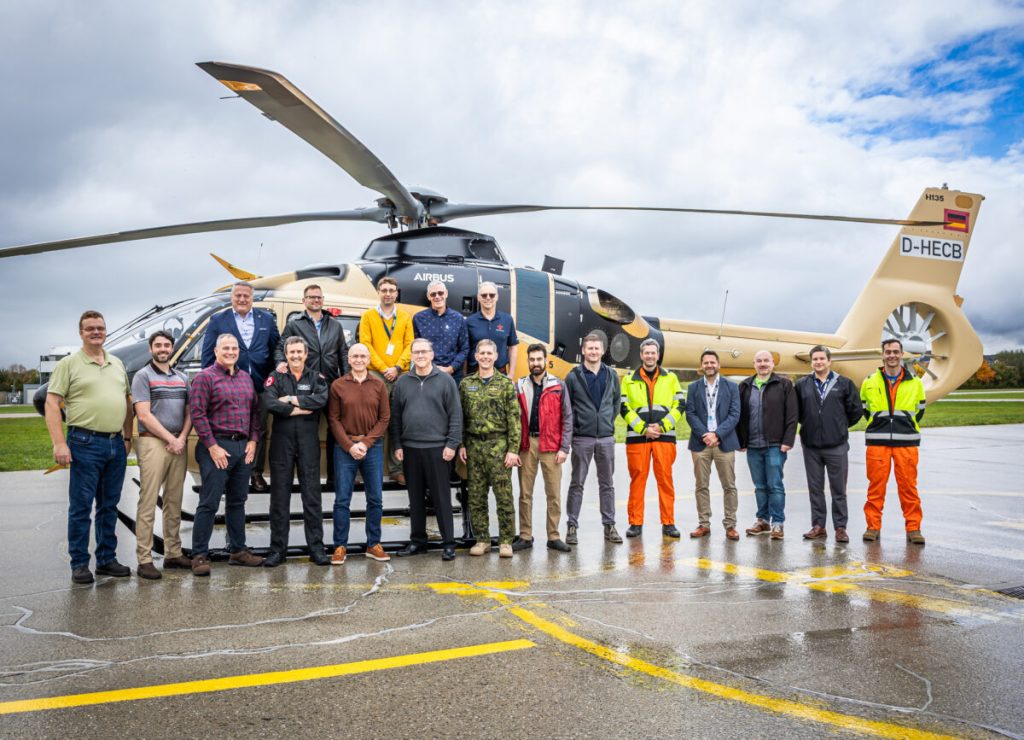
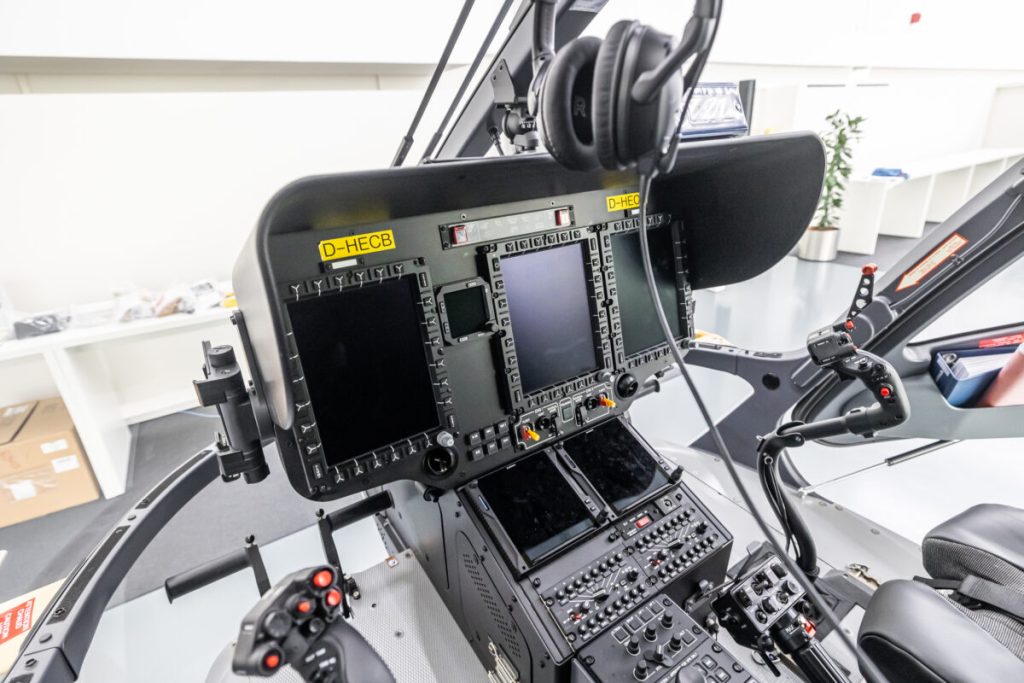
This fall in Donauwörth, Germany, representatives from SkyAlyne, the Royal Canadian Air Force (RCAF), the Government of Canada, and Airbus convened at Airbus Helicopters’ state-of-the-art facility to witness a milestone that signals momentum for Canada’s Future Aircrew Training (FAcT) program: the first assembled CT-153 Juno helicopter, also known as the Airbus H135, has passed manufacturing inspection and acceptance.
The aircraft — the first of 19 — marks the beginning of a major fleet transition that will support the next generation of military aviators. Inspections and test activity on the initial CT-153 have progressed smoothly, meeting expectations as it now makes its way across the Atlantic to Airbus Helicopters’ Canadian operations in Fort Erie, Ontario.
A Journey from Design to Delivery
Once the aircraft reaches Fort Erie, technicians will begin the final completion phase, tailoring the helicopter for RCAF training requirements. Work will include installation of Canadian-developed Supplemental Type Certificate (STC) components, application of the RCAF’s Reflect Forward livery, and final performance testing before handover.
This finishing work represents more than the last tactical steps in the aircraft’s customization. It embodies a larger moment for Canadian industry — one in which Canadian expertise, advanced manufacturing capability, and domestic economic impact intersect.
The Future Workhorse of FAcT
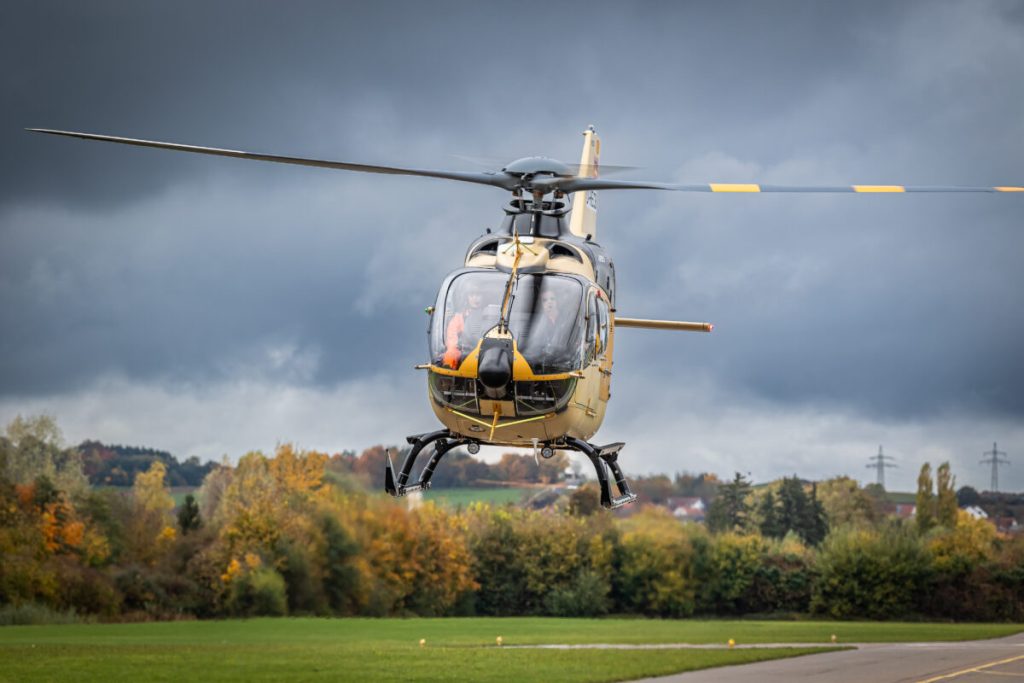
Within the FAcT program, the CT-153 Juno will take on a critical role as the Advanced Flying Training – Rotary Wing platform. Every RCAF pilot participating in advanced rotary-wing training will learn to fly on this aircraft, making it the backbone of multi-year aircrew growth and capability development.
Powered by two FADEC-equipped Pratt & Whitney Canada 206B3 engines, the H135 brings a proven pedigree. Already operating with 12 military forces worldwide — including the Australian and United Kingdom air forces, where it also carries the Juno designation — the aircraft is known for reliability, endurance, and cost-effective performance. It is built for the kind of consistency and responsiveness advanced flight training demands.
Manufacturing Strength at Home
Beyond fleet modernization, this acquisition strengthens Canada’s aerospace sector. Airbus Helicopters in Fort Erie already plays a defining role in global Airbus supply chains, producing composite parts for eight helicopter models and supporting approximately 830 aircraft operated across Canada. The facility stands as an Airbus Centre of Excellence in composite manufacturing, one of the most important technical contributions of its kind in the country.
With each aircraft transfer and completion step, SkyAlyne is not only shaping Canada’s aircrew future but supporting ongoing domestic production activity, workforce demand, and high-value technical work inside Canada’s innovation economy.
Ahead — and Upward
Deliveries of the CT-153 Juno to the RCAF are scheduled to begin in mid-2026. As the first aircraft moves to Canadian soil, it signals the start of a fleet rollout that will help train future generations of RCAF pilots — pilots who will learn, adapt, and lead from the cockpit of a helicopter built to carry them confidently into the decades ahead.
Canada’s next chapter in aircrew development is airborne.
