

LGen Darcy Molstad has the mandate, the budget, and a deadline. A new era of integrated capability is underway
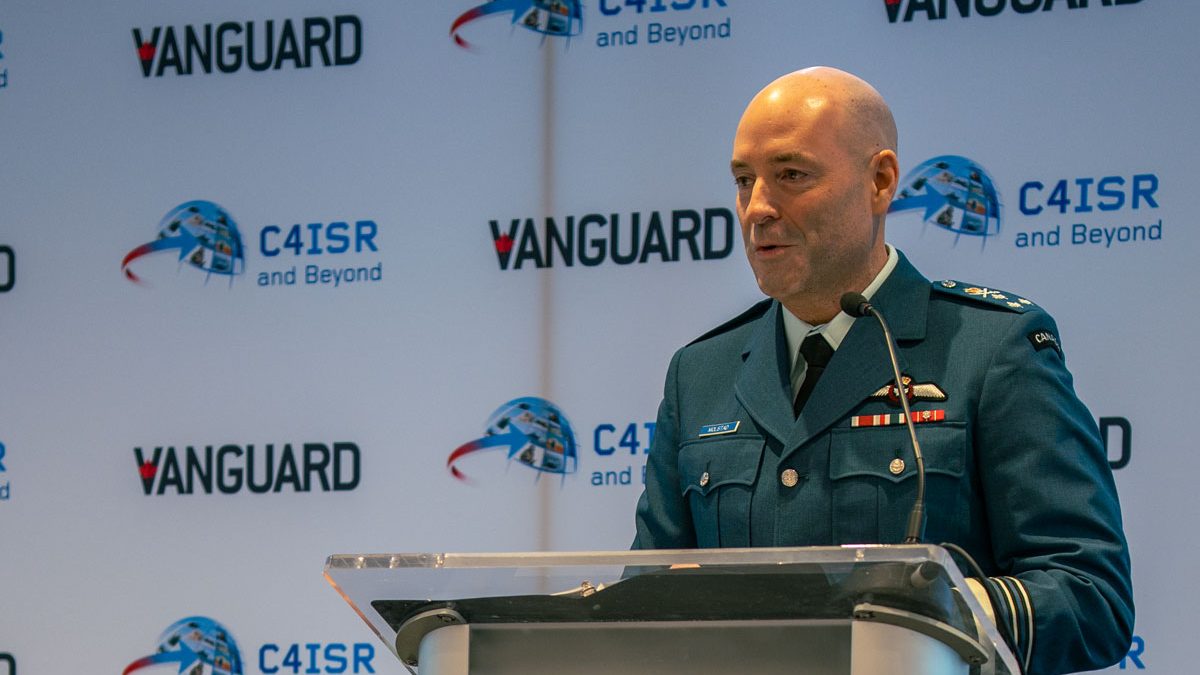
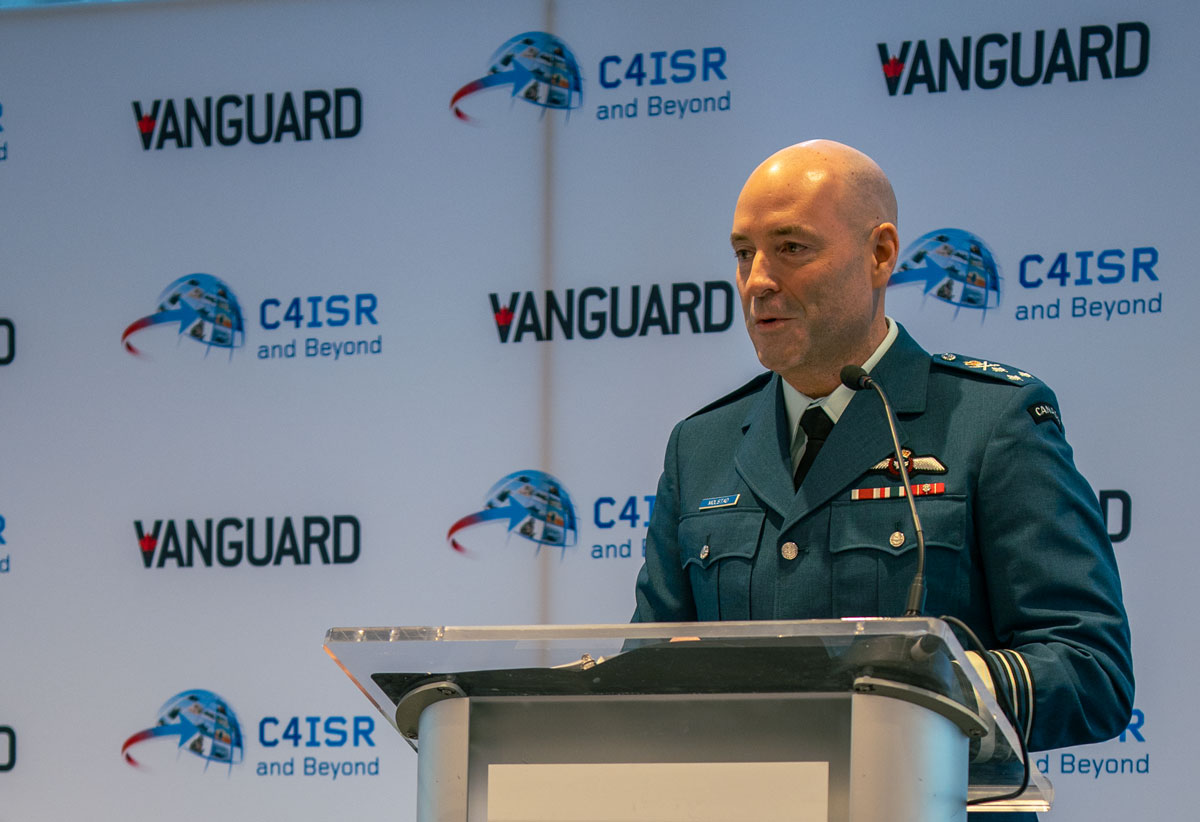
Fifty-seven days into his command, Lieutenant-General Darcy Molstad stood before the C4ISR and Beyond conference in Ottawa and laid out what the Canadian Joint Forces Command (CJFC) is for, what it will build, and how fast he intends to move.
As the inaugural commander of CJFC, LGen Molstad spoke to an audience of operators, industry partners, and officials about the path from concept to fielded joint capability. He opened with a direct assessment of where Canada stands.
“The notion of Canada as a fireproof house far from flammable material and insulated from conflict is behind us. Now is the time to stand on our own two feet and build an agile, self-reliant, and fully integrated joint force.”
A decade in the making
The Canadian Joint Forces Command (CJFC) has been on the agenda of defence planners for close to ten years. The Canadian Armed Forces (CAF) has functions that don’t belong to any single service but are essential to all of them. These capabilities existed across the institution, but no single organization owned them end-to-end or held clear accountability for their readiness.
When the Canadian Joint Operations Command (CJOC) needed to generate force, the first calls went to the Army, the Navy, and the Air Force. CJOC is Canada’s operational command, the organization that plans and runs deployed missions. Joint capabilities were assembled around each mission as needed. LGen Molstad’s job is to change that. CJFC is designed to be one of those first calls: a standing joint capability that is ready before the mission, not assembled for it.
The structure came together quickly once the decision was made. Seven months from ministerial order to operational command. Minister McGuinty signed the order just seven months after an initial briefing to the Chief of the Defence Staff. CJFC currently brings together roughly 10,000 personnel: Joint Logistics, Health Services, the Canadian Joint Warfare Centre, the Joint Information and Intelligence Fusion Centre, the Chief of Joint Capability Integration, and the Military Police Group, which is completing its transition into the command.
Better over bigger
LGen Molstad’s operating philosophy comes down to a few phrases he returned to throughout his address: better over bigger, outcomes over process, governing over governance.
That last one is worth unpacking. Governing means making decisions, setting direction, and holding people accountable. Governance means committees, documentation, and reporting structures. CJFC is focused on the former.
He is also clear about what the command is not. It does not replace CJOC as the force employer. Deployed operations run through the same command chain they always have. What CJFC changes is the quality and readiness of what those deployed forces can draw on.
The connective tissue
C4ISR is one of LGen Molstad’s key preoccupations. He describes it as the connective tissue of modern warfare. Get it right and the joint force multiplies.
The foundational work is already underway. Project Olympus in 2024 demonstrated a secure global mission partner environment built on zero trust architecture. Operation High Mast in 2025 went further: a deployed sovereign solution aboard HMCS Ville de Québec, integrated with the UK’s Prince of Wales Carrier Strike Group, operating as the Five Eyes command and control system of record for the exercise.
Next up is Olympus Fires, planned for fall 2026 in the Indo-Pacific, which will continue advancing pan-domain C2 and allied interoperability.
Valley of death
The rapid capabilities office LGen Molstad is standing up within CJFC, focused initially on C4ISR and counter-uncrewed systems, is designed to close the gap between promising technology and fielded capability. The mandate is to connect warfighters directly with industry and scientists, contract faster, field minimum viable capabilities, and iterate on real feedback. CJFC will use its own spending authorities to accelerate the process.
He also pointed to the IDEaS program, where work is underway on a framework to allow DND to acquire capabilities directly from successful challenge competitions. And he highlighted the Business Development Corporation’s growing investment in Canadian SMEs developing defence and dual-use technologies as part of the broader industrial foundation.
The counter-uncrewed threat response task force is the near-term test case. The government committed to a counter-drone program in 2025. The task force’s initial focus is on detection arrays and rapid fielding, with industry engagement announcements expected soon.
“We have studied this problem long enough,” LGen Molstad said. “Now’s the time to deliver, learn, and adapt.”
The Army angle
CJFC is a joint command, not an Army command. But Army modernization runs directly through what LGen Molstad is building. The CAF Operational Mission Network, CJFC’s iterative C2 prototype connecting strategic to tactical, is the digital backbone that Army programs depend on. Counter-UAS fielding, digital transformation of combat systems, training system modernization: all of it requires the joint C4ISR layer to function at scale.
CJFC builds and sustains the joint infrastructure so the services can focus on their own capability development. When CJOC needs to generate force, the joint layer is already there. What CJFC delivers over the next few years matters as much to the Army as anything happening within the service itself.
Day 57
LGen Molstad closed with a line that reflects the command’s core premise.
“If you want to go fast, go alone. If you want to go far, go together.”
The command structure is in place. The budget trajectory supports the ambition. The work ahead is to turn that foundation into fielded capability, and LGen Molstad is under no illusions about how much remains to be done.
