

Canada’s aircrew training system has been running on contracts written before most of the RCAF’s new platforms existed. That changes now.
The RCAF is in the middle of a generational recapitalisation. The training system producing the people to fly those new platforms has been running on contracts written before most of them were ever ordered. The Future Aircrew Training (FAcT) program changes the equation.
The old arrangement
Until now, RCAF aircrew training has run through two separate contracted programs. The NATO Flying Training in Canada (NFTC) program, which traces its contract to 1998, has been operated by CAE Military Aviation Training out of 15 Wing Moose Jaw since CAE acquired Bombardier’s military aviation training unit in 2015. The Contracted Flying Training and Support (CFTS) program, run by Allied Wings out of Southport, Manitoba, dates to 2005. Both are winding down. Air combat systems officers and airborne electronic sensor operators have been trained in-house by the RCAF throughout.
One contract
On May 28, 2024, the Government of Canada awarded a 25-year, $11.2 billion contract to SkyAlyne Canada Limited Partnership, a joint venture of CAE Inc. and KF Aerospace. FAcT replaces all three programs with a single training enterprise covering pilots, air combat systems officers, and airborne electronic sensor operators, along with maintenance, infrastructure, classroom instruction, simulators, and live flying.
Training continues at the existing RCAF sites, with full operations expected to begin in spring 2029.
Harrison Ruess, Head of Communications at SkyAlyne, describes the philosophy behind the consolidation: “In combining the ab-initio training regime into a single program, it allows us to take a more unified approach to training and create a more consistent experience for students. Imagine students attending one university with three campuses, instead of three separate universities. Of particular importance is a new cloud-hosted IM/IT environment that enables large-scale data collection and analytics, which will help drive improved training outcomes for individual students as well as overall program improvements.”
Where things stand
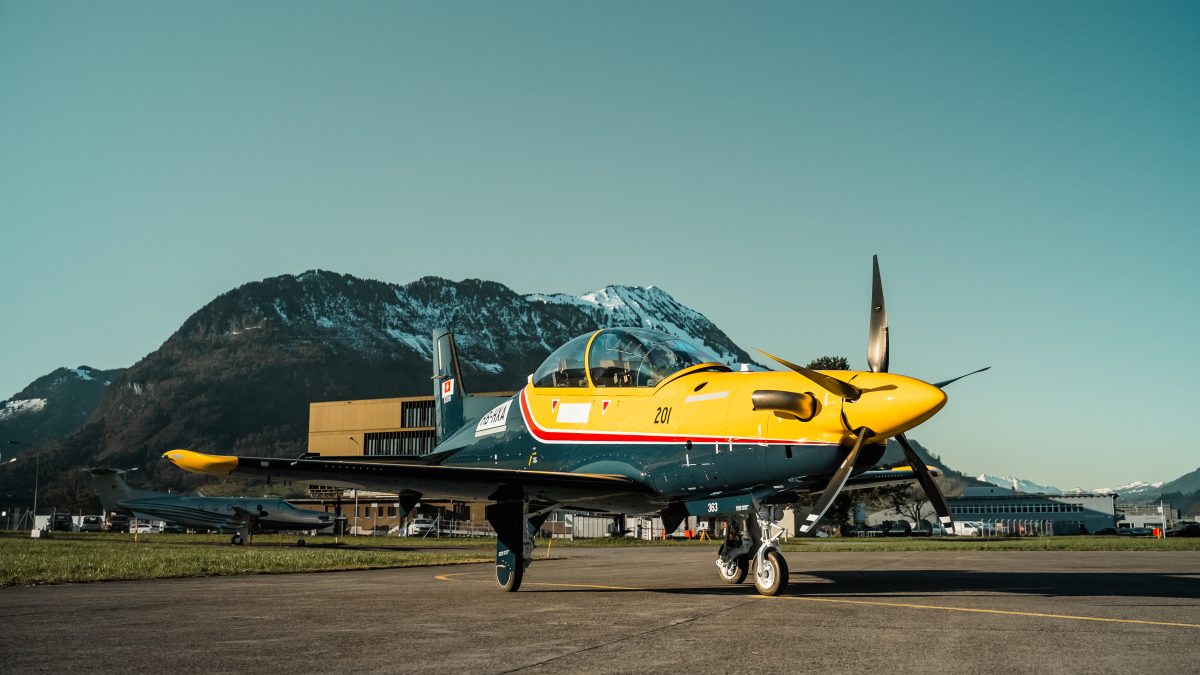
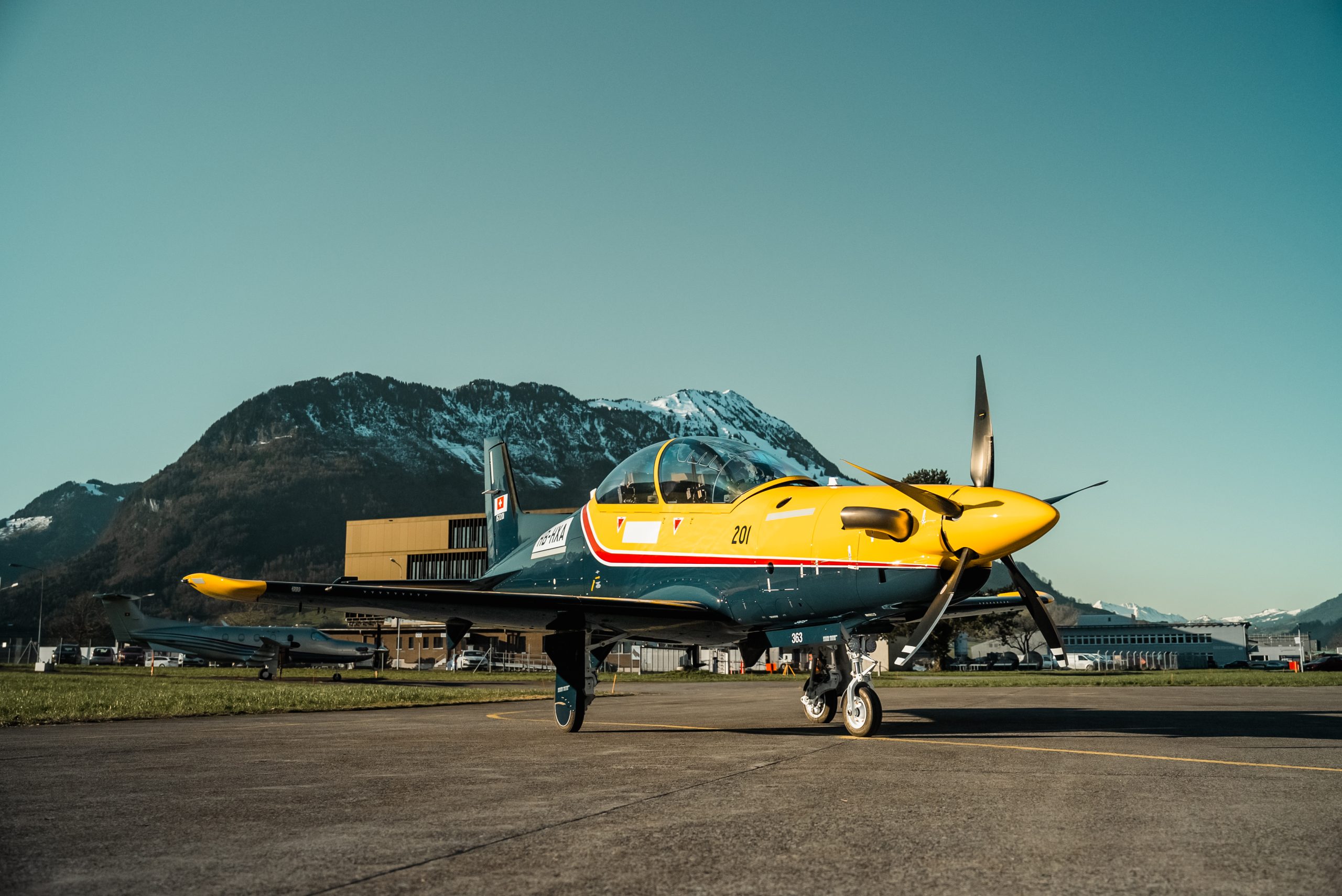
Flying operations on the CT-102B Astra II fleet are now underway at Moose Jaw, enabling ongoing design and testing of the new lesson plans and courses that will underpin student training. The first CT-102B Astra II aircraft arrived at 15 Wing Moose Jaw in September 2025, with three more following in October and November, bringing the current total to five aircraft on site.
“The program is in the design and implementation phase, wherein our teams are focused on designing and standing up the myriad elements of the program,” says Ruess. “In the coming years, numerous other milestones await, from IM/IT implementations, to infrastructure constructions, ground-based training system deliveries, and much more. At present, the majority of the aircraft and simulator fleets are in active manufacture.”
A new fleet
FAcT comes with a complete recapitalisation of RCAF training aircraft. According to DND, Canada will acquire 71 training aircraft across five fleets: 23 CT-102B Astra II, 19 Pilatus PC-21, 19 Airbus Helicopters H-135, seven Beechcraft King Air 260, and three De Havilland Dash 8-400 equipped with a mission training system, according to Ruess. When FAcT is fully operational, the CT-102B Astra II will serve as the primary ab initio trainer, with every future RCAF pilot starting their flying career on the type. These aircraft will carry trainees from initial flight through to operational training units, where they take on their specific roles on fighter, transport, surveillance, and rotary wing aircraft.
“Simulation plays an important role in modern training by complementing live flying, allowing students to experience a wider range of scenarios than what is possible in live flying alone,” says Ruess. “This is particularly true for air combat systems officer and airborne electronic sensor operator training, where advanced simulation will play a much more significant role than what was possible previously. It also provides additional flexibility in how students are prepared, enabling more student practice and review, both before and after live-flight exercises.”
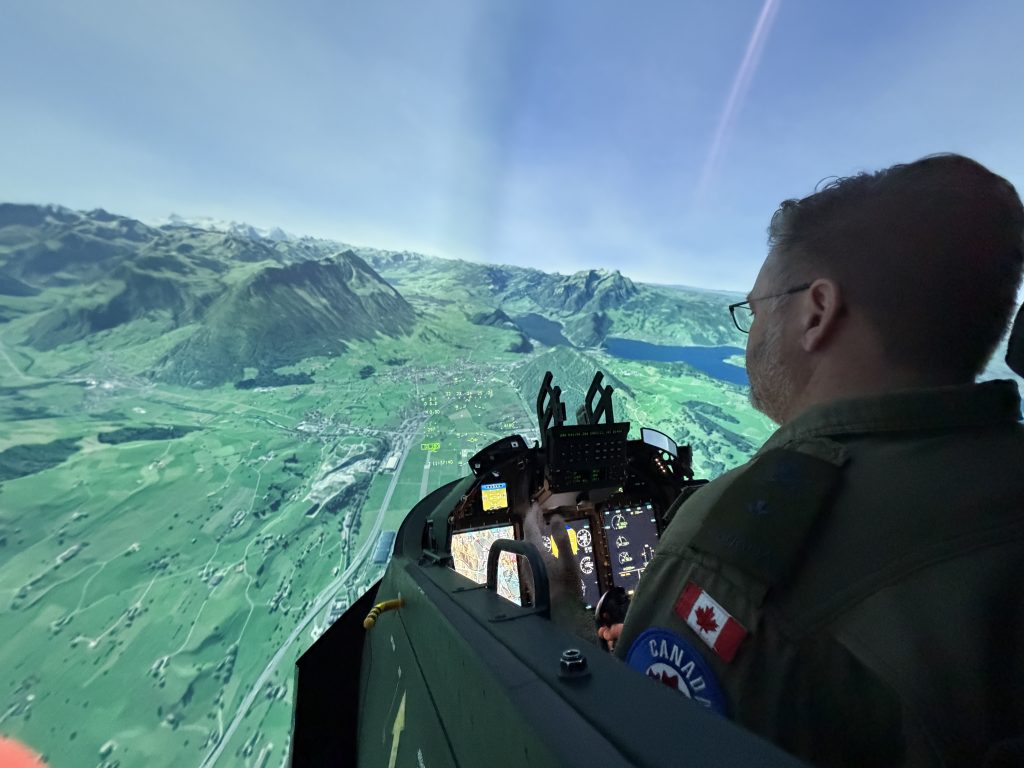
MGen Jeff Smyth, Chief of Air and Space Force Development, RCAF, described what the new aircraft brings: “The Astra II provides more power and superior performance and will set students up for success as they prepare to fly the sophisticated RCAF aircraft we will welcome in the near future, like the CF-35A and CP-8A.”
LGen Eric Kenny, Commander of the RCAF at the time of the contract announcement, made the broader stakes clear in May 2024: “We must modernize our training systems as we are modernizing our front-line equipment and weapons systems. The Future Aircrew Training program will do that by incorporating the latest training concepts and technologies and adapting to emerging trends to ensure Royal Canadian Air Force personnel can operate and win in highly contested and increasingly complex theatres of operation.”
What it means for industry
SkyAlyne is a made-in-Canada joint venture, and the contract structure reflects that. Canada’s Industrial and Technological Benefits Policy applies, requiring investments in Canada equal to the full $11.2 billion contract value. The program is projected to create or maintain 3,400 jobs and contribute $405 million annually to Canada’s GDP across the 25-year term. The procurement specifically targets Canadian industrial capacity in training, simulation, and in-service support.
The FAcT program aims to commit a minimum of five per cent of the contract value, excluding aircraft and simulators, to Indigenous participation.
The bigger picture
FAcT is one piece of a broader defence modernisation effort, and the platforms coming into RCAF service need aircrew trained to meet them. Training continues at the existing sites, with SkyAlyne and the RCAF working towards a spring 2029 goal for FAcT to be operational. The program will ramp up gradually as the initial cadre of students progress through the courses, starting in Basic before moving into the Advanced streams for Multi-Engine, Rotary, and Jet. When that happens, the RCAF will have, for the first time, a single training enterprise matched to the force it is being asked to generate. That’s not a small thing.
