


In an era defined by shifting geopolitical realities and rapidly evolving technologies, Canada is recalibrating how it equips its armed forces—and how it builds the industrial backbone to support them. Nowhere is that transformation more visible than in Newfoundland and Labrador, where a new federal investment is positioning the province as a critical node in Canada’s defence future.
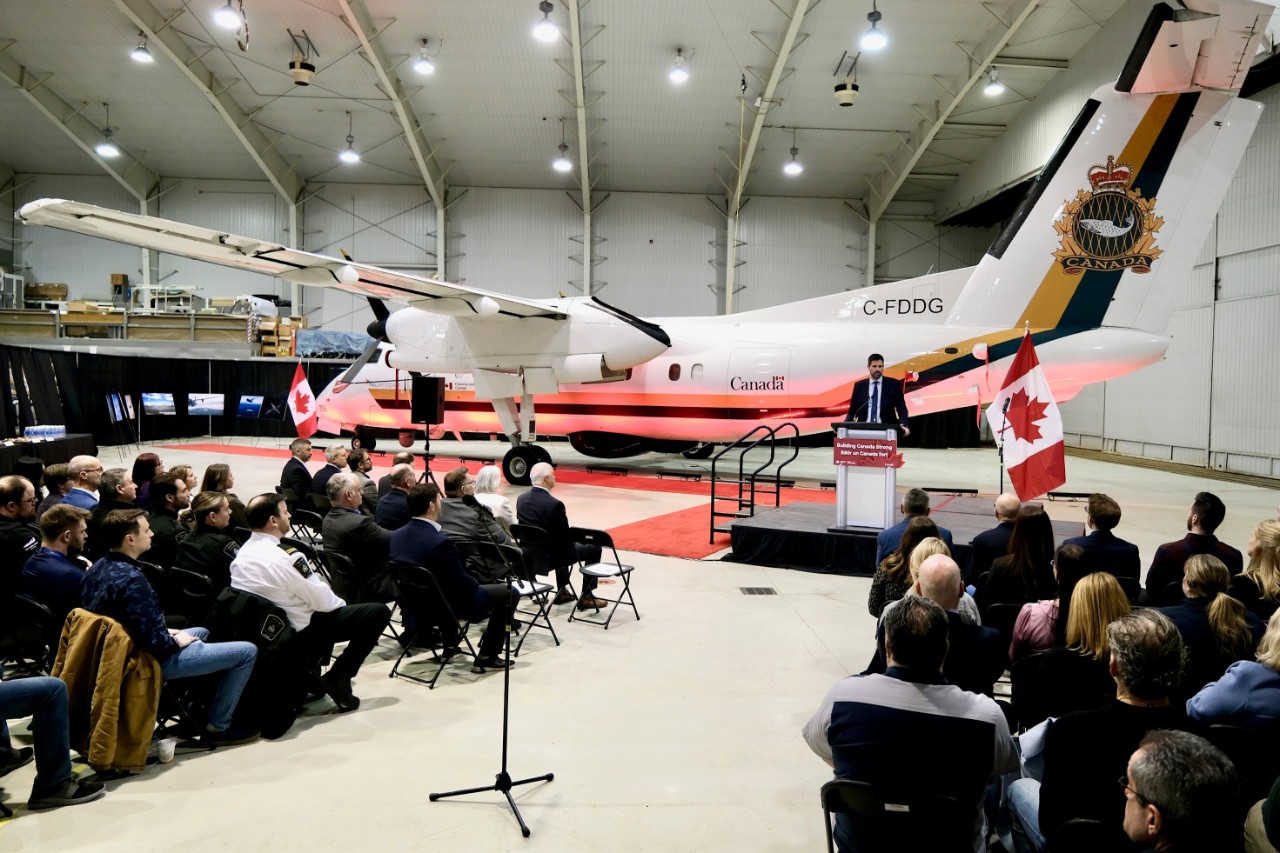
On March 19, 2026, in St. John’s, the Government of Canada announced a $16 million investment through the Atlantic Canada Opportunities Agency (ACOA), aimed at accelerating the growth of five high-potential companies in the province’s aerospace and defence sector. The funding is part of a broader national effort to align procurement, innovation, and industrial development under Canada’s Defence Industrial Strategy.
At its core, the investment is about more than funding—it is about building capability at home.
Building Sovereignty Through Industry
As the global security environment grows more complex, Canada’s approach is shifting from reliance to resilience. The Defence Industrial Strategy reflects this pivot, linking long-term defence spending with domestic industrial capacity to ensure that Canadian companies are not only participants—but leaders—in delivering critical capabilities.
Newfoundland and Labrador is emerging as a strategic anchor in that vision.
The $16 million investment will support five companies—PAL Aerospace Ltd., Virtual Marine Technology Inc., Solace Power Inc., CoLab AI Inc., and Rutter Inc.—as they develop advanced technologies, scale production, and deepen their roles in Canada’s defence and security supply chains. Collectively, these efforts are expected to support more than 115 highly skilled jobs while strengthening the province’s position in both national and global markets.
“Good jobs here at home and in Newfoundland and Labrador helping build the future of Canada’s Armed Forces. That is the real impact of this investment. We could not be prouder of the role Newfoundland and Labrador is playing in strengthening Canada’s defence capabilities. Through Canada’s new Defence Industrial Strategy, local companies are growing, innovating, and building more of what Canada needs at home to stay secure, sovereign, and economically strong,” stated the Honourable Sean Fraser, P.C., K.C., Member of Parliament for Central Nova, Minister of Justice and Attorney General of Canada and Minister responsible for the Atlantic Canada Opportunities Agency.
A Strategic Geography, A Growing Capability
Newfoundland and Labrador’s geographic position—at the gateway to the North Atlantic and in proximity to the Arctic—has long been a strategic advantage. Today, that advantage is being translated into industrial capability.
From maritime domain awareness to aerospace innovation and AI-enabled systems, the province’s companies are increasingly contributing to next-generation defence solutions.
“This investment is creating good, skilled jobs for the people of Newfoundland and Labrador, and it reflects what we know about our province. We have the talent, the expertise, and the businesses to lead. Newfoundland and Labrador is strategically positioned for Arctic and maritime defence, and companies here are already developing the next generation of defence technologies,” expressed the Honourable Joanne Thompson, Minister of Fisheries and Member of Parliament for St. John’s East.
The Regional Defence Investment Initiative (RDII), under which this funding is delivered, is designed to help small and medium-sized enterprises scale up and adopt advanced technologies. In doing so, it is enabling companies to bridge the gap between innovation and operational deployment—an increasingly critical factor in modern defence ecosystems.
Dual-Use Innovation Takes Centre Stage
A defining feature of the investment is its emphasis on dual-use technologies—innovations that serve both civilian and military applications. This approach not only accelerates commercialization but also ensures that Canada’s defence investments deliver broader economic benefits.
Across Newfoundland and Labrador, companies are leveraging expertise in areas such as simulation, communications, artificial intelligence, and ocean sensing to build capabilities that are as relevant to global markets as they are to national security.
“The local businesses receiving funding today have built strong reputations and are proven leaders in their fields and in Newfoundland and Labrador’s economy. With this Government of Canada support, we are seeing the strength and value behind dual-use technologies and the potential they have when it comes to defence. Great minds – and we have many here in our province – are meeting the moment and helping to build Canada stronger,” said Tom Osborne, Member of Parliament for Cape Spear.
PAL Aerospace and the Northern Mission
Among the companies supported, PAL Aerospace stands out as a cornerstone of Canada’s special mission aviation capability. With decades of experience in aircraft modification and operations, the company is poised to expand its contribution to surveillance, enforcement, and disaster response—particularly in Canada’s vast northern and Arctic regions.
“This support from the Government of Canada through the Regional Defence Investment Initiative is a strong vote of confidence in PAL Aerospace’s proven capabilities and an acknowledgement of the role we are poised and ready to play in Canada’s defence ecosystem. This project will allow us to build on decades of experience in aircraft modification and global special missions operations to deliver advanced, made-in-Canada solutions designed to enhance surveillance, enforcement, disaster response, and sovereignty, particularly across Canada’s Northern and Arctic regions,” conveyed Calvin Ash, Chief Executive Officer, PAL Group of Companies.
As Canada continues to prioritize Arctic sovereignty and domain awareness, capabilities like those developed by PAL Aerospace will become increasingly central to national defence operations.
From Regional Investment to National Impact
While the announcement is rooted in Newfoundland and Labrador, its implications extend far beyond the province. The investment reflects a broader national strategy: one that sees regional industrial strengths as essential building blocks in a cohesive, sovereign defence ecosystem.
By enabling companies to innovate, scale, and integrate into global supply chains, initiatives like RDII are helping Canada move from being a buyer of defence capabilities to a builder of them.
In doing so, the country is not only strengthening its military readiness—but also creating high-value jobs, advancing technology, and reinforcing its role as a reliable partner in an increasingly uncertain world.
