
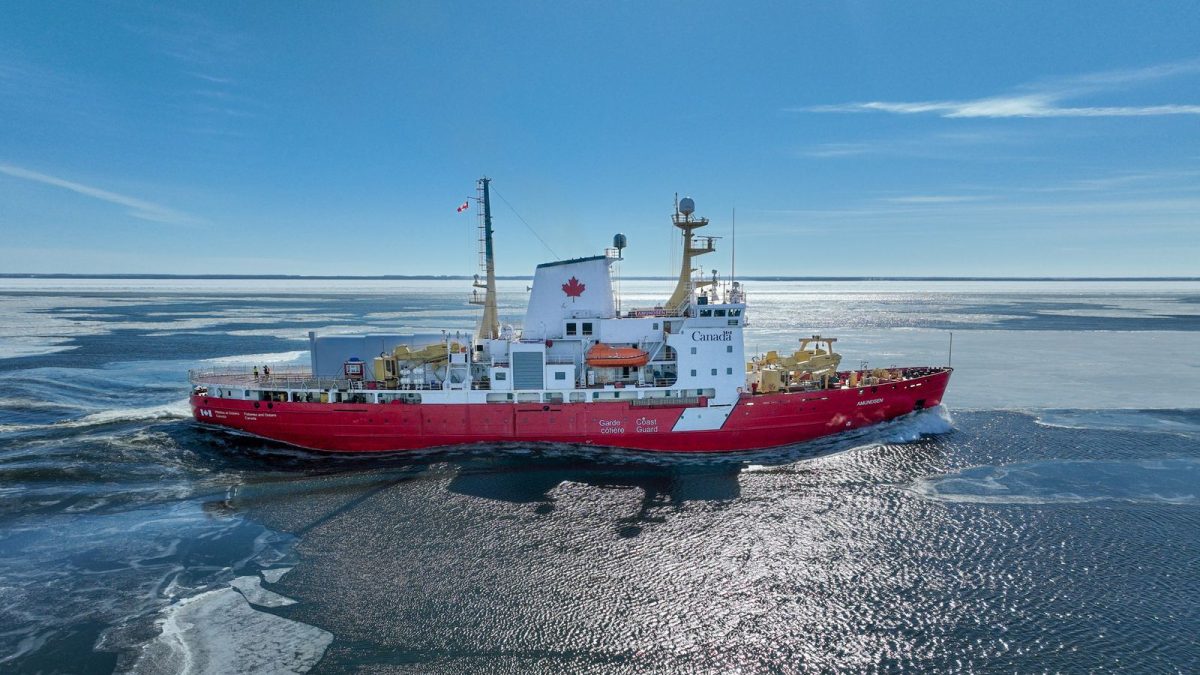


Canada’s vast and rugged coastlines, stretching over 243,000 kilometres, is not only a defining geographic feature but a critical lifeline for communities, ecosystems, and trade. At the helm of protecting and serving these waters is the Canadian Coast Guard, an institution that for over six decades has delivered safety, environmental protection, science, and safe navigation across the country’s maritime domain.
Today, the Canadian Coast Guard is undergoing a transformation, renewing federal fleets, rebuilding domestic shipbuilding capacity, and generating economic benefits nationwide. A key element of this transformation is the expansion of Canadian Coast Guard services under the Oceans Act—the amendments are currently before Parliament and will strengthen security and safeguard Canada’s vast coasts and waterways, particularly in remote Northern regions.
The Canadian Coast Guard’s mandate is broad and vital. Its responsibilities include responding to marine incidents through its search and rescue services, keeping commercial shipping routes open with seasonal icebreaking, leading environmental response efforts during marine pollution events, maintaining a Canadian presence through Arctic operations, and supporting ocean science and navigation safety across Canadian waters. To meet these multifaceted duties, the Canadian Coast Guard requires a capable and modern fleet, one that the National Shipbuilding Strategy is helping to realize.
The National Shipbuilding Strategy is a multi-decade, multi-billion-dollar investment by the Government of Canada. Its goals are clear: deliver modern vessels to federal fleets, revitalize the Canadian marine industry, and create economic opportunities across the country. More than $26.5 billion in contracts have been awarded under the Strategy, generating close to 19,000 jobs annually between 2012 and 2023.
One of the most visible successes of the National Shipbuilding Strategy has been the rollout of Bay Class motor lifeboats. Built in Gaspé, Quebec and Wheatley, Ontario, these search and rescue vessels are built to respond rapidly to emergencies up to 100 nautical miles from shore. With high speed, self-righting capability, and the ability to operate in severe weather, these vessels form an important part of near-shore rescue operations. Crews aboard vessels like the CCGS Baie des Chaleurs and CCGS Hare Bay can launch shortly after receiving an alert, ensuring swift life-saving interventions on all three coasts. As of July 2025, 18 Bay Class vessels had been constructed and delivered, with the final two scheduled for delivery within a few months.
Complementing these rescue capabilities, October 2020 marked another major milestone: the delivery of the third Offshore Fisheries Science Vessels, CCGS John Cabot. As the final vessel in the first class of large ships completed under the Strategy, it enables the collection of critical scientific data.
Icebreaking, meanwhile, remains a central pillar of the Coast Guard’s services to Canadians, vital not only for maintaining commercial routes but for ensuring Canada’s Arctic economic security. The current fleet includes 19 icebreakers of varying capability, with several nearing the end of their operational lives. To address this, Canadian shipyards have been contracted to build up to six new Program Icebreakers, up to 16 Multi-purpose Icebreakers, two Polar Icebreakers, and two new Arctic Offshore Patrol Vessels, which will also be ice capable. The Program Icebreakers will ensure service on the Atlantic, Great Lakes, St. Lawrence, and Arctic routes. These services include keeping shipping routes open, preventing ice jams, and supporting Arctic resupply. Maintaining ice-free shipping lanes is crucial in ensuring goods continue to reach Canadians 365 days a year and that Canadian products continue reaching their markets, keeping the Canadian economy rolling.
The two Polar Icebreakers, scheduled for delivery in 2030 and 2032, will be transformative, as they will allow for year-round operations in Canada’s Arctic. This means operating in the harshest ice conditions in the world, which necessitates extremely thick steel and robust equipment that can withstand crashing through ice ridges in temperatures as low as -50 degrees Celsius. The first Polar Icebreaker is being built by Seaspan’s Vancouver Shipyards, while its counterpart will be built by Chantier Davie Canada Inc. Each will operate in high-latitude, multi-year ice conditions. They will break through ice up to 2.5 metres thick while maintaining speed, carry up to 100 personnel, and operate independently over 30,000 nautical miles. The Polar Icebreaker will feature a large moon pool, as well as dedicated laboratories, and an extensive complement of sensors and sonars to support Arctic science. They are also designed to enable emergency response and support the assertion of Canadian sovereignty in the North.
Another cornerstone of fleet renewal is the CCGS Naalak Nappaaluk, the new Offshore Oceanographic Science Vessel. Scheduled for delivery in fall 2025, this state-of-the-art research platform will support climate monitoring, fish stock research, and marine ecosystem studies. It will replace the CCGS Hudson, which served Canadians for nearly six decades. Outfitted with specialized laboratories, observation platforms, and modular equipment, the vessel will further Canada’s role in global marine science, particularly during the United Nations Decade of Ocean Science.
The CCGS Naalak Nappaaluk isn’t the only new addition to the Canadian Coast Guard’s scientific fleet. The Near-Shore Fishery Research Vessel, soon to begin construction at Chantier Naval Forillon in Gaspé, represents a significant milestone not only for marine research, but also for the Canadian Coast Guard’s environmental leadership. As the first hybrid ship in the fleet, it marks a step toward the decarbonization of operations at sea.
Equipped with a biofuel-enabled diesel engine and a battery energy storage system, the Near-Shore Fishery Research Vessel will be capable of low-speed battery-powered operations and overnight harbour stays without running generators, minimizing local noise and emissions. These design features align with the Government of Canada’s Greening Government Strategy, reinforcing the Canadian Coast Guard’s commitment to reducing its environmental footprint while maintaining operational excellence.
Functionally, the Near-Shore Fishery Research Vessel is designed to collect critical fisheries and oceanographic data that inform sustainable decisions for Canada’s marine ecosystems. Outfitted with the latest hydroacoustic and mapping technologies, it will conduct complex studies on aquatic species, habitat health, and ocean floor dynamics, particularly in the St. Lawrence River and Gulf regions. The data gathered will enhance Canada’s understanding of fish stocks and marine ecosystems, directly supporting the mission to sustain healthy oceans and fisheries. Additional vessels like the CCGS John Cabot, CCGS Sir John Franklin, and CCGS Captain Jacques Cartier enhance fisheries science and seafloor mapping missions.
Over the short- and medium-term, the Canadian Coast Guard has relied on a set of interim solutions to sustain capability while larger builds are underway. Vessels such as the CCGS Captain Molly Kool and CCGS Jean Goodwill were acquired and refitted for icebreaking duties. The leased Atlantic Eagle and Atlantic Raven provide emergency towing operations on the West Coast, ensuring marine safety.
The National Shipbuilding Strategy’s impact extends far beyond vessel production. It is revitalizing Canada’s marine industry through work at shipyards such as Seaspan in Vancouver, Chantier Davie in Lévis, Quebec, and Irving Shipbuilding in Halifax. Smaller builders like Hike Metal Products and Chantier Naval Forillon also contribute search and rescue motor lifeboats and specialty vessels. Thousands of Canadian businesses form part of the marine supply chain, benefiting from contracts and workforce development. Over $30 billion has already been added to Canada’s gross domestic product and is developing a skilled workforce that will serve the marine sector for generations.
Today, the Canadian Coast Guard operates a fleet of 126 vessels spread across three regions. These include icebreakers, motor lifeboats, oceanographic vessels, multi-tasked platforms, and emergency tow ships, supported by a fleet of helicopters, hovercraft, and rigid hull inflatable craft. The fleet will soon celebrate the delivery of the final Bay Class Search and Rescue boats, the CCGS Mira Bay and CCGS Baie de Gaspé, and the new Arctic Offshore Patrol Ship, CCGS Donjek, expected in 2026.
The story of the Canadian Coast Guard’s current and future fleet isn’t just about building new ships; repairing and maintaining its aging vessels is essential to ensuring that services continue to meet Canadians’ expectations. Through meticulous long-term planning, the Canadian Coast Guard regularly maintains and upgrades its ships to keep them safe and reliable. Inspections and surveys help decide which vessels need work, and some ships go through major life-extension upgrades to stay in service longer. This work is planned around new ship arrivals and carried out at shipyards across Canada. A recent example of this is the work carried out on the CCGS Sir Wilfrid Laurier in 2024. New generators were installed at Vancouver Drydock Company Ltd. to allow the vessel to operate on a blend of renewable diesel, biodiesel, and conventional diesel, marking a significant step toward a greener, low-carbon fleet.
Building and maintaining ships is only part of the story. Operating and sustaining this growing fleet requires people. That is why the Canadian Coast Guard is actively working to recruit and train the next generation of navigators, marine engineers, and ships’ crew. Emphasis is placed on creating inclusive and diverse workplaces that reflect the communities served. From helping mariners in need to protecting our oceans from pollution, a career with the Canadian Coast Guard offers an experience like no other. Their personnel work in a variety of settings from coast to coast to coast, including national and regional offices, Marine Communication and Traffic Services centres, search and rescue stations, and vessels at sea. From icebreaking, to supporting science work, to marine traffic communications, they have dozens of career opportunities both at sea and on-shore. They are actively recruiting new and experienced personnel. Or if one wants to acquire the skill needed to work at the Canadian Coast Guard.
Where does one acquire the skills needed to work at in the Canadian Coast Guard? The Canadian Coast Guard College, of course. Located in Sydney, Nova Scotia, the College is the centre of training excellence that develops and delivers unique and specialized training to personnel. Once an Officer Cadet is accepted into a program at the College, they receive the same benefits as an employee of the Canadian Coast Guard including salary, health benefits, and a pension, on top of receiving free tuition, room, and board. The College offers the rare opportunity of a guaranteed job with the Canadian Coast Guard after graduation and an incredible opportunity to serve Canadians.
As the impacts of climate change intensify and marine activity rises, particularly in the North, the demands placed on the Canadian Coast Guard will only increase. From emergency response to environmental stewardship, from Arctic presence to marine science, the Canadian Coast Guard stands on the front line. The National Shipbuilding Strategy is helping to ensure it is equipped, empowered, and ready to meet this future.
Fleet renewal is not just about steel and rivets. It is about Canadians—those who rely on maritime safety, those who call coastal communities home, and those who depend on goods shipped by sea. It is about securing our oceans, growing our economy, and affirming our presence in the world’s most challenging waters.
