
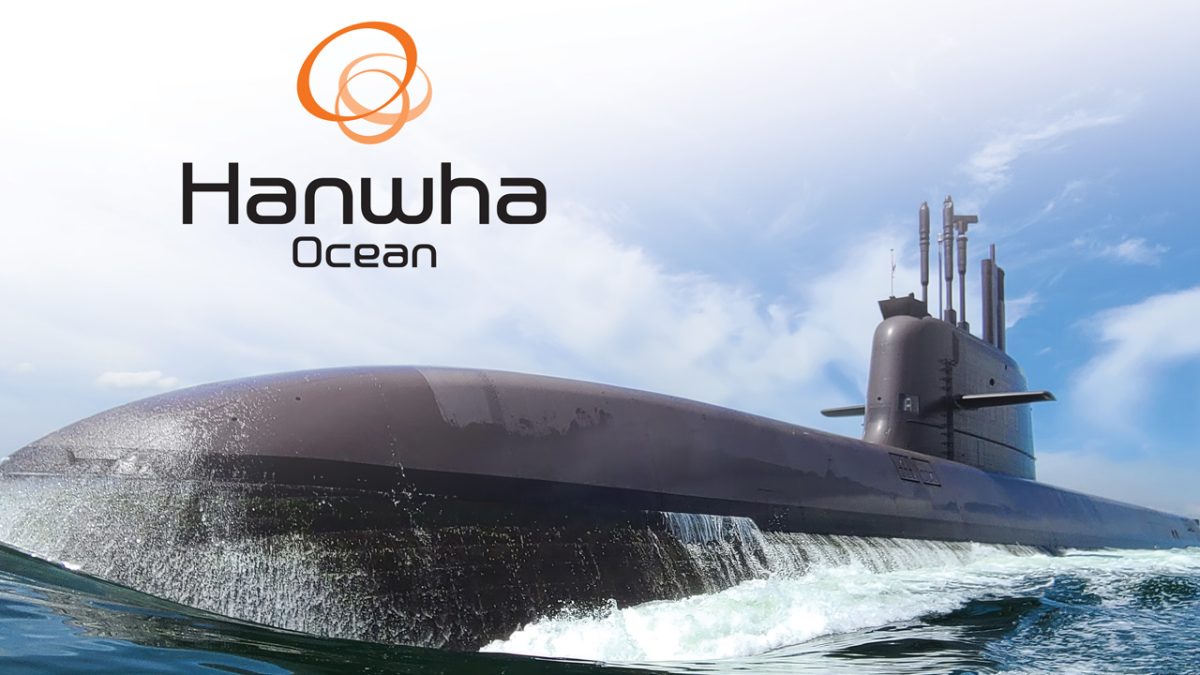


When DEFSEC opened its doors in Halifax this October, one international presence stood out for both its ambition and momentum: Hanwha Ocean. The South Korean shipbuilder arrived with a clear mission—strengthening its Canadian footprint as it advances the Canadian Patrol Submarine Project (CPSP).
Fresh from being named a qualified supplier for CPSP by the Government of Canada in August, Hanwha used the two-day event to fast-track collaboration. Over the course of the show, the company held discussions with more than 35 Canadian companies and organizations, underscoring its drive to build a broad, long-term industrial base across the country.
Building the Canadian Connection
Hanwha’s Halifax meetings read like a cross-section of Canada’s defence ecosystem. From shipyards and engineering firms to technology innovators and government agencies, participants included Irving Shipbuilding, Lockheed Martin Canada, Genoa Design, InnovMarine, GeoSpectrum Technologies, Ultra Maritime, and the University of New Brunswick, among others. This mix highlights Hanwha’s approach: not just signing suppliers, but weaving Canadian capability into a multi-layered partnership that strengthens both national security and industrial resilience.
These engagements build on a history of collaboration. Since 2023, Hanwha has engaged with hundreds of Canadian firms and formalized agreements with more than a dozen, including Babcock Canada, CAE, BlackBerry, Curtiss-Wright Indal Technologies, Gastops, L3Harris, Modest Tree, and J Squared Technologies. For many of these companies, the relationships have already translated into tangible projects.
Canadian Firms Already Delivering
Several Canadian partners are already seeing their expertise deployed on Hanwha’s global programs:
- Modest Tree (Nova Scotia) was tasked with developing a digital mock-up of the KSS-III CPS.
- Hepburn Engineering (Ontario) secured a multi-million-dollar contract for its Replenishment-at-Sea (RAS) system, destined for the Republic of Korea Navy’s AOE-II vessels.
- Curtiss-Wright Indal Technologies (Ontario) provided its Towed Array Handling System for the KSS-III submarine class.
These early successes are not only strengthening Hanwha’s ties to Canadian defence but also demonstrating how Canadian innovation can play a role on the world stage.
A Submarine Strategy for Canada’s Future
At the heart of Hanwha’s Canadian strategy lies the KSS-III submarine—proven, in-service, and in active production. Designed with advanced underwater surveillance capabilities, Arctic deployability, and extended endurance, the platform offers what Hanwha positions as an unparalleled fit for Canada’s urgent submarine needs.
Perhaps most striking is Hanwha’s delivery pledge. If contracted by 2026, the company says it can deliver four Canadian Patrol Submarines to fully replace the aging Victoria-class fleet before 2035—saving Canada an estimated $1 billion in maintenance and support costs. The plan then scales to deliver an additional eight submarines, one per year, with a full fleet of 12 in service by 2043. According to Hanwha, no competitor can match this schedule.
Strengthening the Indo-Pacific Link
Beyond defence, Hanwha frames its Canadian push as part of a bigger story: deepening ties between Canada and South Korea under the banner of the Indo-Pacific Strategy. The company’s expanding partnerships promise to create Canadian jobs, build supply-chain resilience, and expand economic opportunities while advancing shared security objectives.
In Halifax, Hanwha Ocean’s presence was more than a trade show appearance—it was a signal of intent. For Canada’s defence industry, it was another reminder that the submarine program is not just about platforms at sea but also about partnerships on land, where innovation and industrial growth will shape the future of national security.
