
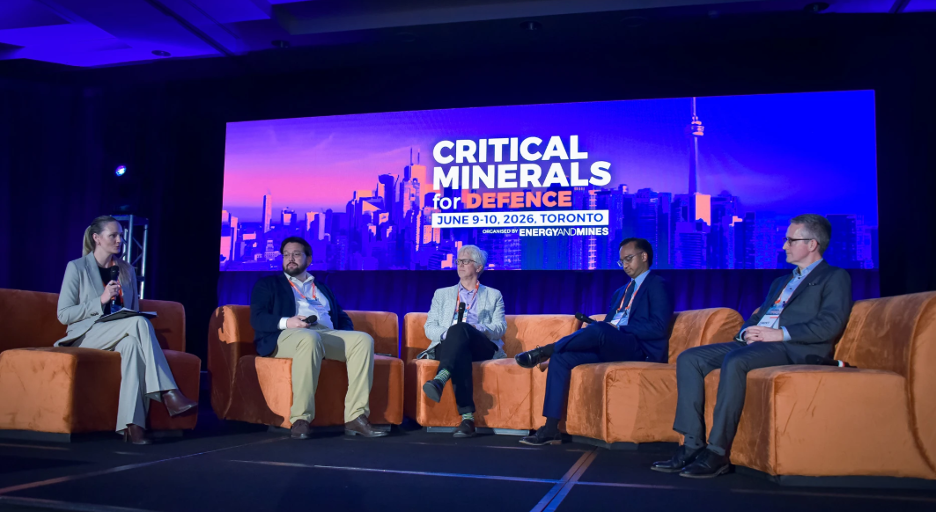

Inside the conversation connecting Canada’s resource sector to military readiness
Canada has the resources. The world knows it. Allied governments are actively looking for partners.
But resources in the ground and usable defence inputs are not the same thing. That was the central message at the Critical Minerals for Defence forum, held June 9 and 10 in Toronto, where mining executives, government officials, allied finance institutions, defence primes and First Nations leaders spent two days examining what it actually takes to connect Canada’s mineral sector to allied military readiness.

Defence is becoming the customer
Critical minerals have long been framed around batteries, electric vehicles and the energy transition. Defence is now moving closer to the centre of that conversation, and it shifts the business case for mining projects in useful ways.
Defence buyers need secure supply, traceability and confidence that material will be available when commercial markets tighten or geopolitics shift. Offtake agreements, stockpiling strategies, price mechanisms and procurement pathways matter as much as geology.
For mining companies, defence demand can help create the bankable signal that makes difficult projects financeable.
The bottleneck is qualified supply
Canada has resources. Whether Canada and its allies can convert those resources into usable defence inputs at scale is a harder question.
Midstream capacity kept coming up: separation, refining, metallurgy and downstream qualification. A defence prime does not put raw material on contract. It needs refined, traceable, qualified supply in rare earths, graphite, cobalt and permanent magnets, available at the right specification and on a timeline it can plan around. That gap is real, but the view in the room was that it is closable.
Ottawa’s strategy now has to become project-level execution
Canada’s Defence Industrial Strategy identifies the gap directly, noting that Canada produces 10 of NATO’s 12 defence-critical raw materials and that expanding processing and refining capacity is a stated priority alongside allied coordination through the G7 Critical Minerals Production Alliance and NATO. Federal and provincial coordination was described as better than it has been, and Canada’s increased NATO spending commitments were cited as meaningful signals to investors and allied partners.
The gap is at the project level, where permitting timelines, midstream investment and downstream qualification are still real constraints.
A capability plan is only as strong as the supply chain underneath it.
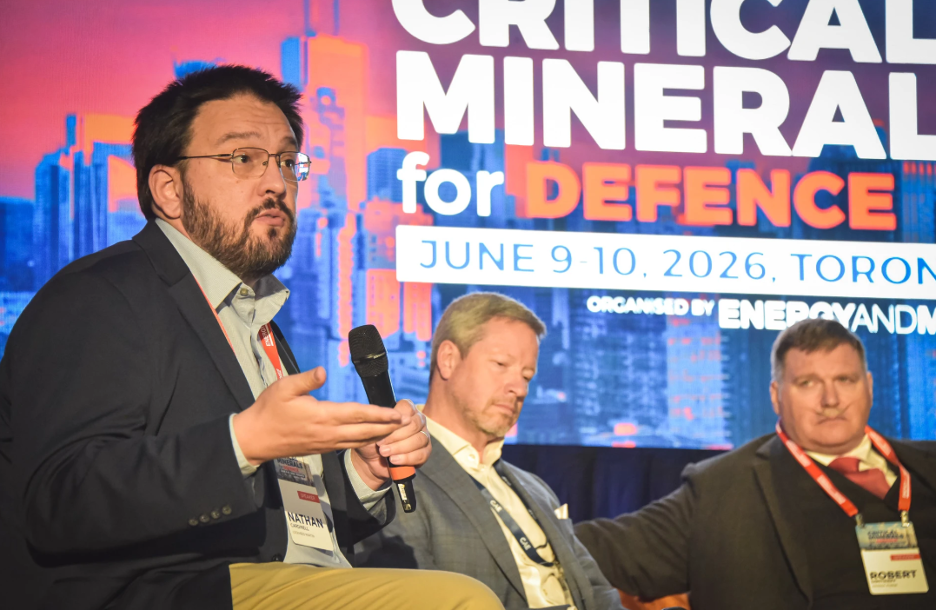
Defence demand is becoming a financing tool
Public financing institutions on both sides of the border have moved toward projects that support supply chain resilience. Several Canadian projects presented at the conference showed how that alignment between government capital and allied industrial demand can work in practice.
Financing still needs a commercial structure though: clear specifications, credible offtake, qualified customers and a path to contract. The projects that move will be the ones with customers, processing plans and timelines that defence buyers can actually rely on.
No partnership, no project
Communities in mineral-rich regions are looking for equity participation, infrastructure benefits, capacity funding and business roles across the supply chain, including in refining and processing. That came through clearly in the First Nations sessions.
Early engagement is not a formality. Projects structured around genuine economic partnership are moving. Others are not.
Canada’s Defence Industrial Strategy identifies Indigenous participation in supply chains, infrastructure development and procurement as a core element of the broader strategy, so the policy direction and the on-the-ground reality are at least pointed the same way.
Not every answer is a new mine
New mines matter, but they are not the only path forward. Recycling, by-product recovery, brownfield refining and mine waste processing all featured prominently across the two days.
Cobalt recovery from existing smelter operations and rare earth recycling from end-of-life electronics and motors were presented as faster, complementary routes alongside longer-horizon extraction projects.
For defence planners, those pathways are worth paying attention to. Faster progress on qualified supply will come partly from connecting existing Canadian resources to allied processing and manufacturing, not only from projects still years from production.
Canada has the resource base. Building the processing capacity, financing structures and partnerships that turn it into reliable defence capability is the work still ahead.
Until that supply chain exists, mineral potential and military readiness are not the same thing.
