
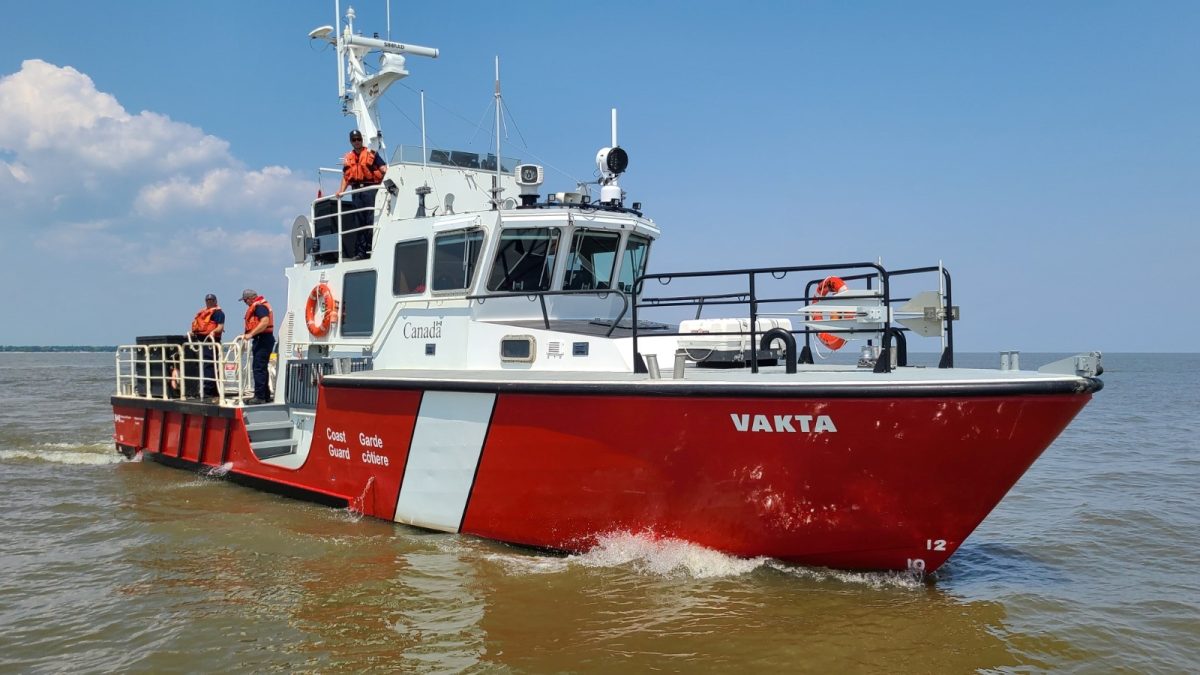

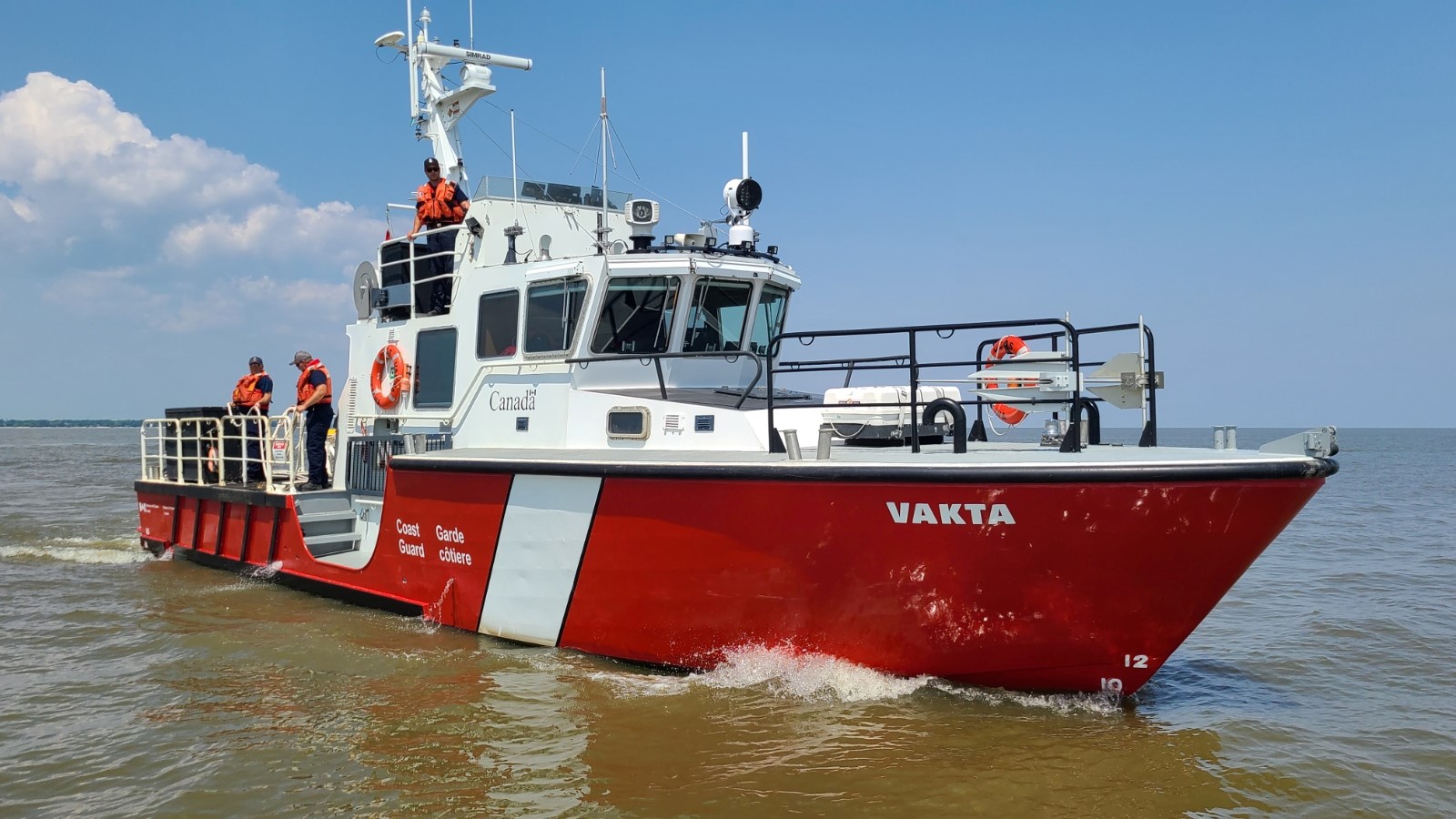
The Canadian Coast Guard is getting a new security mission, and a serious budget to go with it.
Minister of National Defence David McGuinty announced $816 million over seven years on May 22 in Iqaluit to expand the Coast Guard’s role in maritime surveillance, with a heavy emphasis on the Arctic. The investment is the first major tranche of funding to flow from the Coast Guard’s recently expanded legal mandate.
A New Legal Foundation
The Strengthening Canada’s Immigration Systems and Borders Act received Royal Assent on March 26, 2026 and gives the Canadian Coast Guard authority to conduct security patrols and collect, analyze, and disclose intelligence to security and enforcement partners. Before this legislation, the Coast Guard’s mandate was narrowly focused on search and rescue, icebreaking, and environmental response. It had no formal security intelligence role.
The Coast Guard was transferred from Fisheries and Oceans Canada to National Defence on September 2, 2025. It remains a civilian Special Operating Agency. The new legislation and this week’s funding commitment are the clearest signs yet of how seriously the government is treating that realignment.
What the Money Buys
The investment targets four specific capability areas.
A new Maritime Domain Awareness Hub will be established in Iqaluit to serve as a central point for collecting and analyzing maritime intelligence. It will also mean a permanent year-round presence in the Arctic, supporting both the local economy and Canada’s maritime security interests in a region with limited accessibility.
Existing Coast Guard helicopters will receive surveillance cameras, high-intensity searchlights, and operator stations with integrated mission management systems that enable real-time data and video transmission. These upgrades extend what the existing fleet can see and report while on patrol.
New long-range marine radar sites will be installed at strategic locations across the country, including along the Northwest Passage, the Hudson Strait, the Great Lakes, and the St. Lawrence. The Northwest Passage sites are the most strategically significant: the changing climate and growing geopolitical interest have brought increased maritime traffic to the North, and monitoring those approaches gives Canada better visibility into a vast and historically difficult-to-watch environment.
Short-to-medium-endurance autonomous aerial, surface, and subsurface drones will extend the reach of Coast Guard vessels and shore-based operators. The deployment of drones will significantly enhance the ability to monitor Canadian waters, particularly in remote and Arctic regions, with real-time sharing available to federal partners.
On April 1, 2026, Transport Canada’s aircraft services and assets were transferred to the Coast Guard, including Canada’s first Class III UAV. Beginning this summer, the Coast Guard will test the drone in the Arctic to determine capabilities and limitations, including range, weather conditions, and clarity of imagery.
The 200-Mile Picture
The broader strategic aim is full maritime domain awareness within Canada’s 200-nautical-mile zone. Marine Security Operations Centres across the country will expand to 24/7 year-round monitoring, allowing partners to integrate and analyze data in real time to maintain a comprehensive picture of marine activity across Canada’s waters.
Canada’s maritime security is a shared responsibility across multiple government departments and agencies, with the Coast Guard working alongside the Canada Border Services Agency, Fisheries and Oceans Canada, National Defence, the RCMP, and Transport Canada. The intelligence-sharing authority created by the new legislation is what connects those agencies to what the Coast Guard now collects.
The Arctic Dimension
The announcement was made in Iqaluit deliberately. Strong partnerships with Inuit across Inuit Nunangat remain a priority for the Canadian Coast Guard, and the government has committed to honouring Indigenous rights and interests in accordance with the United Nations Declaration on the Rights of Indigenous Peoples Act and the Inuit Nunangat Policy.
Nunavut MP Lori Idlout framed the investment in practical terms. She noted that strengthening Coast Guard capabilities will improve the ability to monitor activity in the region, respond to emergencies, and safeguard territory in an increasingly complex Arctic environment.
Coast Guard Commissioner Kevin Brosseau pointed to the intelligence dimension. He said the new security responsibilities allow the Coast Guard to share crucial information with partners, painting a more complete picture of what is happening in Canadian waters.
Industry Implications
The investment spans surveillance infrastructure, autonomous systems, helicopter sensor suites, and radar installations. Each category represents procurement activity that will move through the federal system over the next several years. The Coast Guard’s expanded mandate and the pace of Arctic capability investments will be a recurring theme in defence procurement circles for the foreseeable future.
