
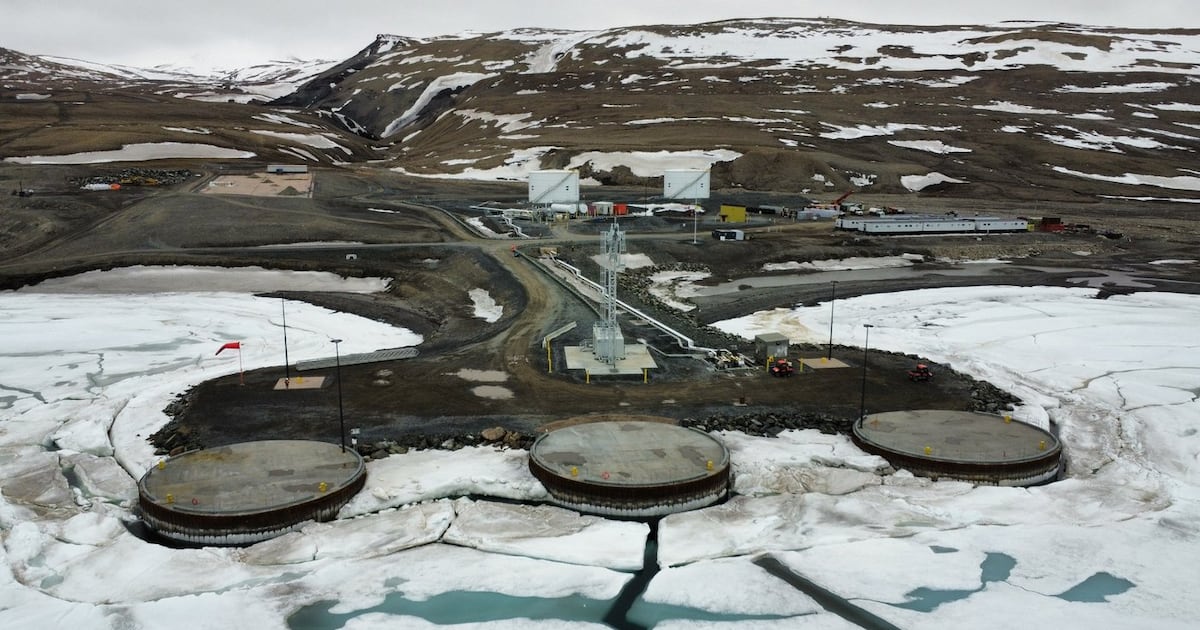

Canada’s Arctic defence posture is entering a new phase as the Department of National Defence begins transitioning the Nanisivik Naval Facility out of operational use, closing the chapter on a project originally conceived nearly two decades ago under a vastly different northern security landscape.
Announced on May 21, the decision reflects what officials describe as a fundamental shift in operational realities since the facility was first planned in 2007. Located on northern Baffin Island near Arctic Bay, the site had long been envisioned as a strategic refuelling and logistics node for Arctic naval operations. But evolving capabilities, mounting infrastructure challenges, and changing operational demands ultimately altered the calculus.
According to DND, the extended range of the Royal Canadian Navy’s Harry DeWolf-class Arctic and Offshore Patrol Vessels (AOPVs), combined with the facility’s short seasonal access window, repeated construction delays, costly jetty repairs, and reduced project scope, significantly limited the site’s operational value.
“The Arctic has changed significantly since 2007, and Canada’s investments need to keep pace with today’s realities. This is an opportunity to modernize northern infrastructure and capabilities in a way that strengthens our sovereignty, supports our military priorities in the North, and delivers better value for Canadians,” said the Honourable David J. McGuinty, Minister of National Defence.
The transition will begin by moving the facility into a non-operational caretaker status while DND undertakes longer-term asset lifecycle management activities. Should the site later be deemed surplus to operational requirements, the department would formally begin a divestment process that includes engagement with federal and Indigenous partners to assess possible reuse or transfer opportunities.
Environmental assessments and any required remediation measures will also form part of the process.
“In today’s changing geopolitical environment, the federal government must make prudent decisions to ensure Canada’s sovereignty and security in the Arctic. The decommissioning of the Nanisivik Naval Facility will support the Canadian Armed Forces’ ability to invest in more modern capabilities, while working with local partners to assess the potential for reuse or transfer of the site. As part of the site’s decommissioning, any required environmental assessments and remediation measures should be undertaken to ensure responsible management for the people of Arctic Bay,” expressed Lori Idlout, Member of Parliament for Nunavut.
The move does not signal a reduction in Arctic naval capability, officials emphasized. Instead, it reflects a broader modernization effort that is increasingly focused on mobility, endurance, distributed logistics, and year-round northern presence.
“The Royal Canadian Navy can operate in the Arctic without the Nanisivik Naval Facility. The Harry DeWolf-class Arctic and Offshore Patrol Vessels have at-sea fuel endurance that exceeds what was anticipated when this facility was first planned, and we have proven refuelling options that support sustained operations without relying on the Nanisivik Naval Facility. This decision allows us to focus our effort where it best strengthens readiness, so our sailors remain capable, responsive, and effective across the North,” stated Vice-Admiral Angus Topshee, Commander Royal Canadian Navy.
The announcement comes as Ottawa accelerates broader Arctic defence investments amid heightened geopolitical competition and growing focus on sovereignty in the North. DND pointed to the planned $32 billion investment in infrastructure upgrades at Forward Operating Locations in Yellowknife, Inuvik, and Iqaluit, as well as at 5 Wing Goose Bay, as part of Canada’s evolving northern defence strategy.
At the same time, the Northern Operational Support Hubs (NOSH) Program — a long-term $2.67 billion initiative — is intended to establish a network of operational support sites designed to improve logistics, increase CAF responsiveness, and enable more sustained year-round operations across northern regions. Together, the shift away from Nanisivik and the emphasis on newer distributed infrastructure investments illustrate how Canada’s Arctic defence strategy is evolving from static Cold War-style support concepts toward more agile and adaptable operational models tailored to today’s northern realities.
Arctic Strategy Recalibrated as Canada Moves Nanisivik Facility Out of Operations
