


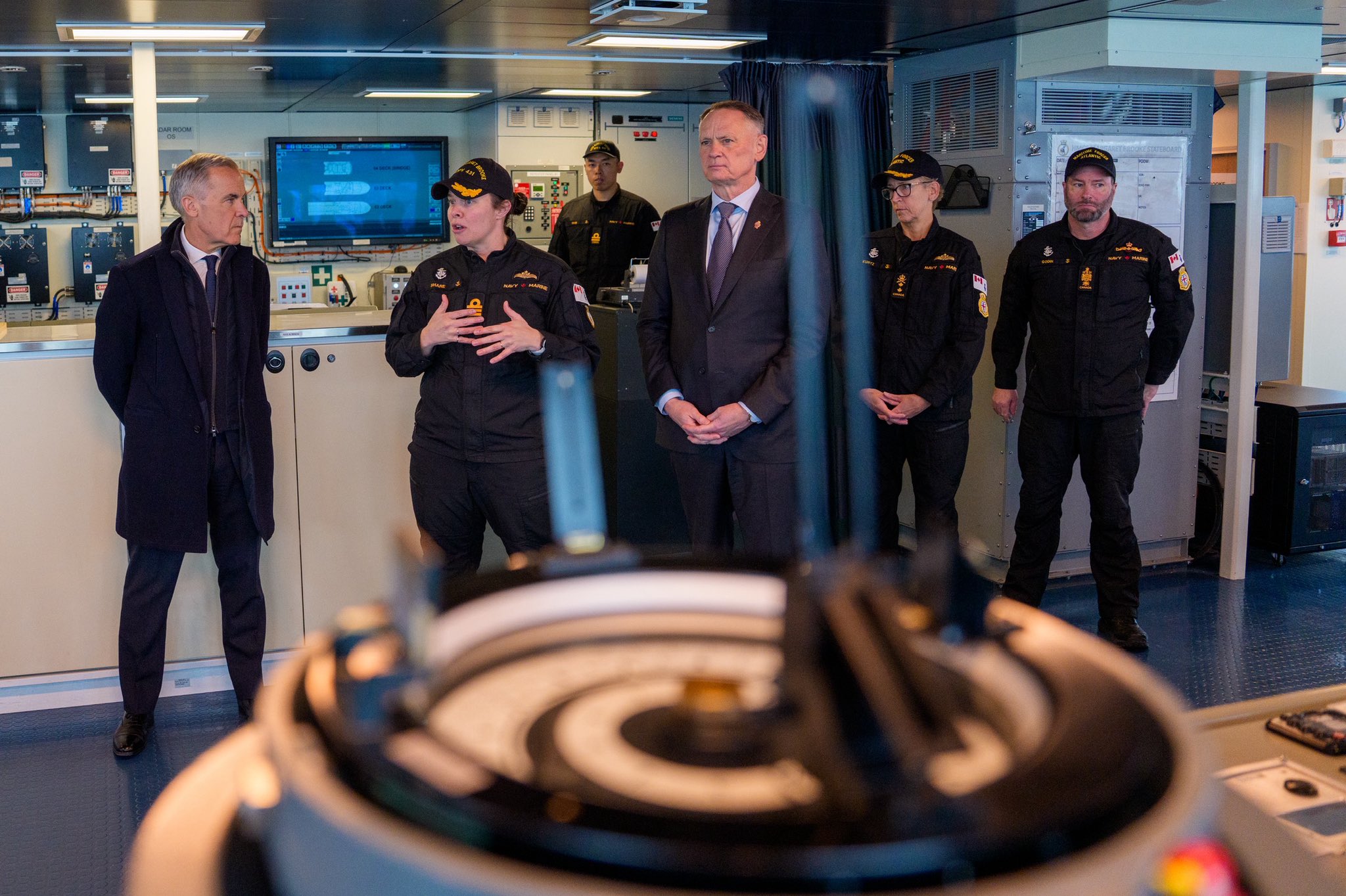
Canada has reached NATO’s 2% of GDP defence spending benchmark for the first time since the fall of the Berlin Wall, according to Prime Minister Carney, who marked the milestone at CFB Halifax as NATO released its Secretary General’s 2025 Annual Report in Brussels.
According to NATO’s recently released Defence Expenditure report, Canada spent 1.47% of GDP on defence in 2024. In 2025, that figure jumped to an estimated 2.01%, what Prime Minister Carney called the largest year-over-year increase in defence investment in generations, and half a decade ahead of the previous government’s schedule.
The Halifax Announcement
Alongside the 2% milestone, Prime Minister Carney announced more than $3 billion in new infrastructure investments across Atlantic Canada, the most concrete new procurement news for industry to emerge from the event.
In Nova Scotia, more than $2 billion in investments are concentrated at CFB Halifax and 14 Wing Greenwood. $1.2 billion will modernise critical power and municipal service infrastructure at CFB Halifax Dockyard and Stadacona to support future naval operations, including the next generation of River-Class destroyers, alongside a $180 million Combatant Training and Integration Centre for destroyer crews. At 14 Wing Greenwood, $648 million will construct two new aviation support facilities for the CP-8A Poseidon maritime patrol aircraft and CQ-9B Guardian drone. A 475-acre waterfront industrial site in Dartmouth, Halifax Gate, has also been acquired to support RCN operations.
In New Brunswick, more than $1 billion is going to CFB Gagetown, covering a major recapitalisation of the Range and Training Area, a new ground-based air defence system, and upgrades to transition centre facilities for CAF members.
The Path to 5%
Canada has committed to NATO’s new Defence Investment Pledge of 5% of GDP by 2035, with 3.5% allocated to core defence and 1.5% to critical infrastructure and security-related spending. Over the next decade, that means half a trillion dollars in defence investment, spanning submarines and aircraft to drones, sensors, and radar systems.
Canada’s Defence Industrial Strategy is receiving $6.6 billion over five years, Canada’s first explicit industrial strategy for defence, signalling a deliberate move toward building domestic capacity alongside purchasing capability. The Defence Investment Agency, launched last October, is designed to streamline acquisition decisions and accelerate delivery to the CAF. Together, they represent the institutional architecture Canada is building to sustain that investment over the decade ahead.
