
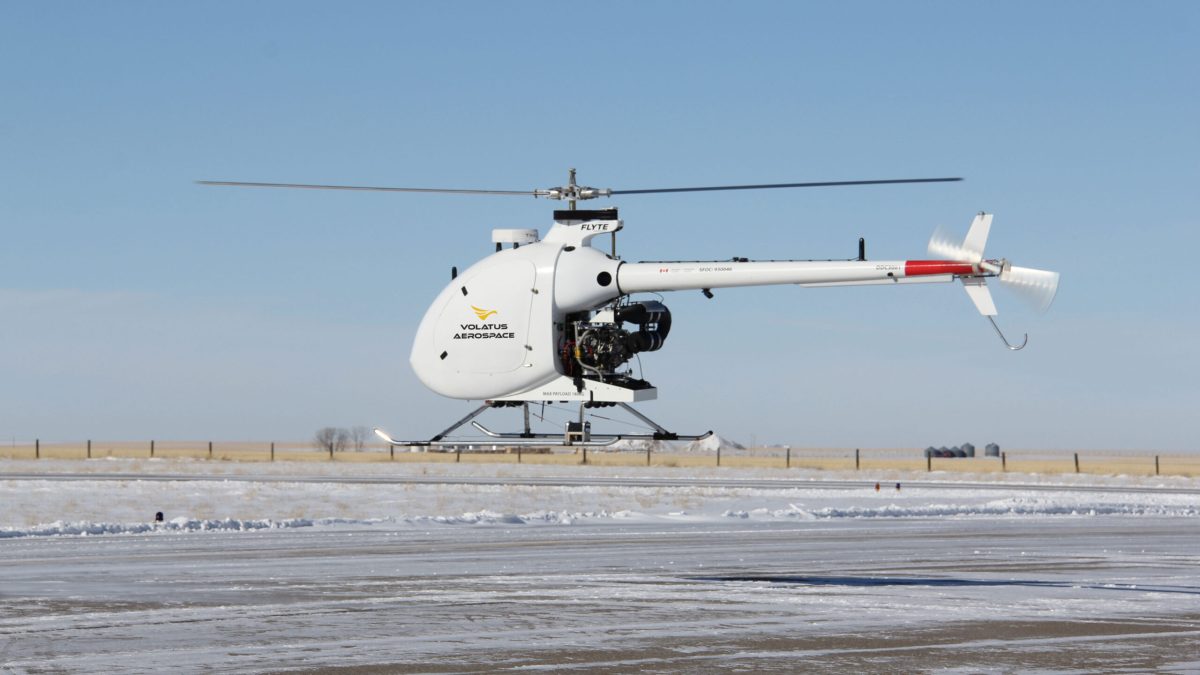

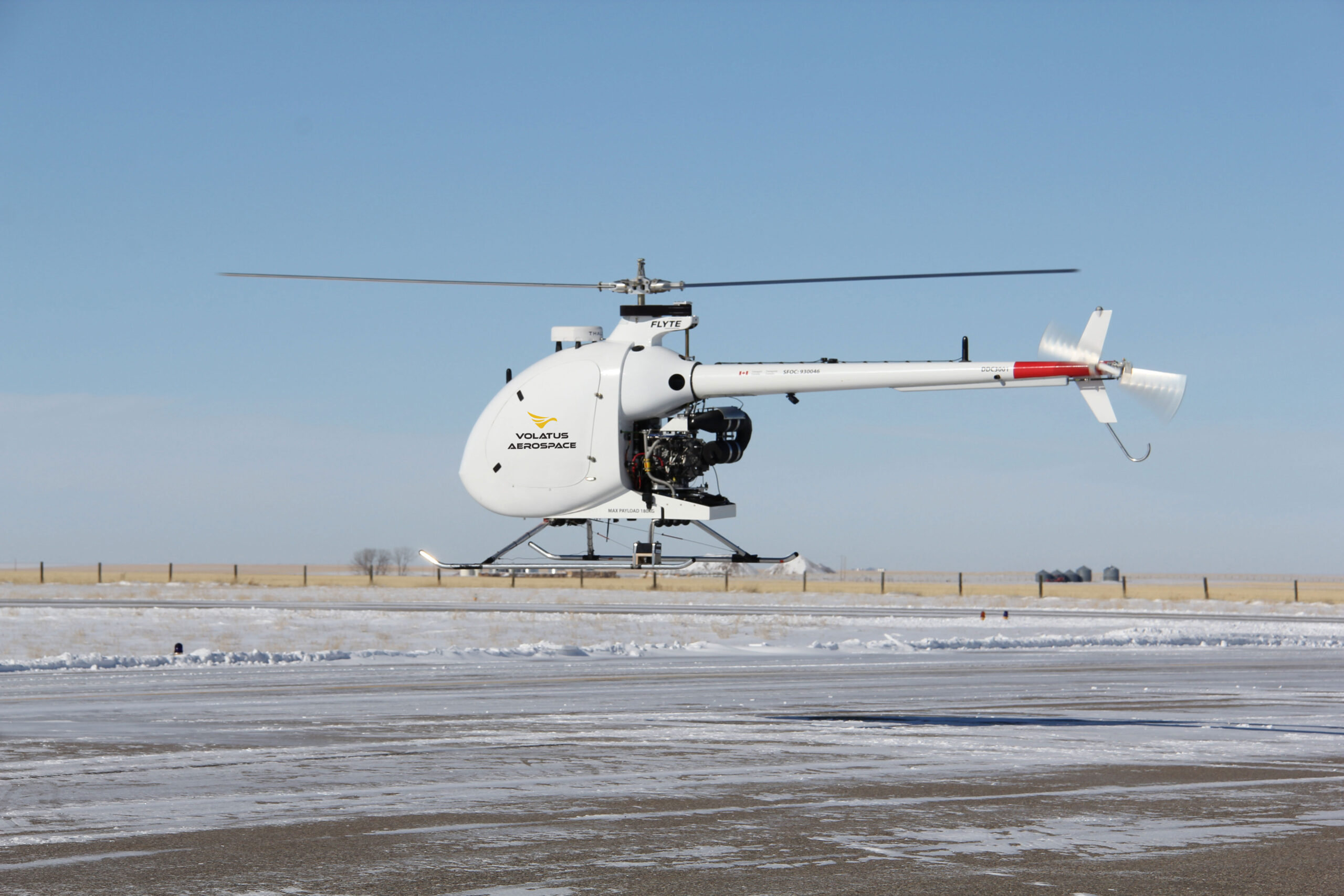
As Canada sharpens its focus on sovereign capability, innovation, and dual-use technologies, strategic investments in homegrown aerospace solutions are becoming increasingly critical. Against this backdrop, Volatus Aerospace is advancing a platform designed to push the boundaries of uncrewed logistics—and reinforce Canada’s position in next-generation aviation. The Montreal-based company has secured non-dilutive funding support of up to $320,000 from the National Research Council of Canada’s Industrial Research Assistance Program (NRC-IRAP), marking another step forward in the development of its Condor XL heavy-lift uncrewed aerial system.
At its core, the investment is about more than a single platform. It reflects a broader alignment between industry innovation and federal priorities—particularly as Canada’s Defence Industrial Strategy emphasizes domestic research and development, resilient supply chains, and dual-use technologies that can serve both civilian and defence applications.
Building a Heavy-Lift Capability for a New Operational Reality
The Condor XL is being engineered to address a growing operational gap: reliable, runway-independent logistics in environments where traditional infrastructure is limited, compromised, or non-existent.
Designed for heavy-lift missions, the platform targets a wide spectrum of use cases—from infrastructure support and emergency response to government operations requiring flexible cargo delivery. Its ability to operate without conventional runways positions it as a potential enabler in remote regions, disaster zones, and austere operational theatres.
The NRC-IRAP funding will directly support critical development phases, including avionics architecture design, autonomy integration, and flight validation activities. These elements are essential to ensuring the platform can meet the performance, safety, and reliability standards required for both commercial and government deployment.
The project is expected to run through early 2027, underscoring a sustained development effort that extends beyond near-term milestones and into long-term capability building.
Aligning Innovation with National Strategy
Volatus’ work on the Condor XL sits squarely within Canada’s evolving approach to defence and industrial policy—one that increasingly prioritizes sovereign capability and domestic innovation ecosystems. The company has positioned the platform as part of a broader strategy to expand Canadian leadership in autonomous aerospace systems and next-generation aerial logistics. In doing so, it is contributing to a growing national emphasis on technologies that can operate across both civilian and defence domains.
Glen Lynch, Chief Executive Officer of Volatus Aerospace, commented,
“Last week, the National Research Council of Canada (NRC) announced over $900 million in funding over five years under the Industrial Research Assistance Program (IRAP) to bolster the Defence Industrial Strategy, focusing on domestic R&D and dual-use technologies. Today, we are pleased to acknowledge the financial contribution of the Government of Canada through NRC-IRAP. This support helps advance Canadian innovation in autonomous aerial systems and aligns with our strategy to build domestic capabilities in dual-use aerospace technologies.”
Strengthening Canada’s Innovation Base
Beyond the platform itself, the initiative carries broader implications for Canada’s aerospace ecosystem. By supporting advanced engineering work and high-value technical development, the project is expected to contribute to domestic innovation capacity while sustaining skilled employment across the sector. As global demand grows for autonomous systems capable of operating in complex and infrastructure-limited environments, platforms like the Condor XL could play a defining role—not only in operational contexts but in shaping the industrial capabilities that underpin them.
For Volatus Aerospace, the NRC-IRAP funding represents both validation and momentum: a signal that its vision for heavy-lift, autonomous aerial logistics aligns with national priorities—and a catalyst for the next phase of development.
