

How a new TKMS–Seaspan teaming agreement is shaping the backbone of the Canadian Patrol Submarine Project
Canada’s long-term vision for its future submarine fleet is coming into sharper focus—and at its core is a simple but strategic objective: sovereign sustainment.
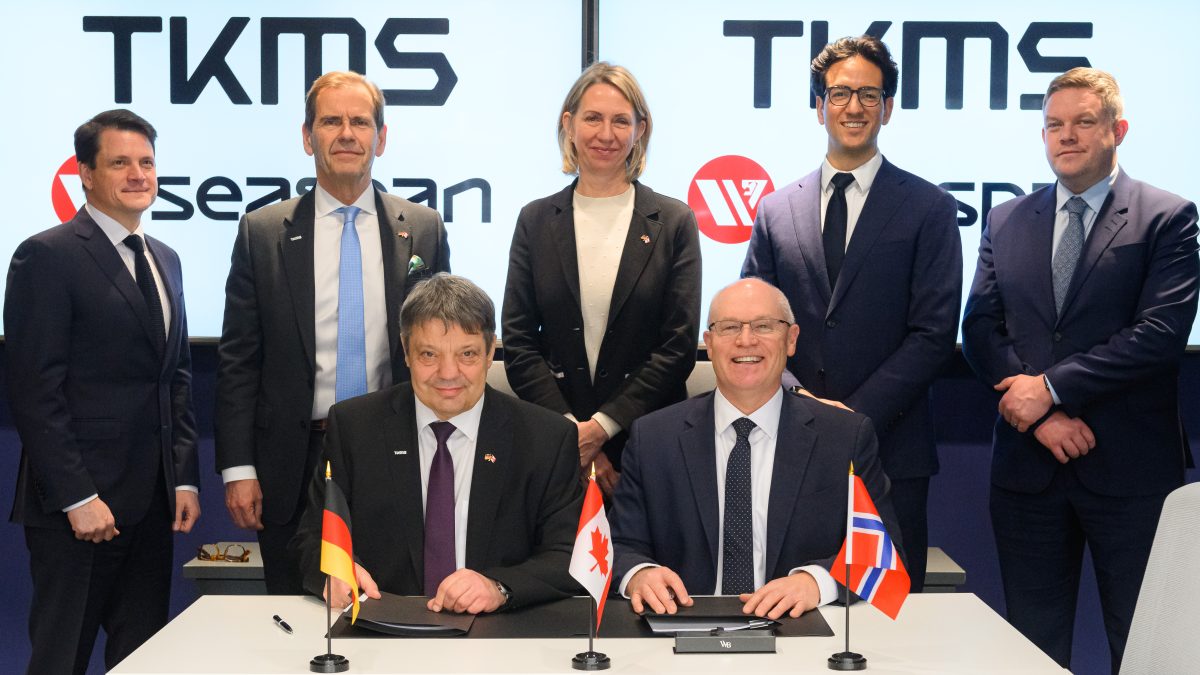
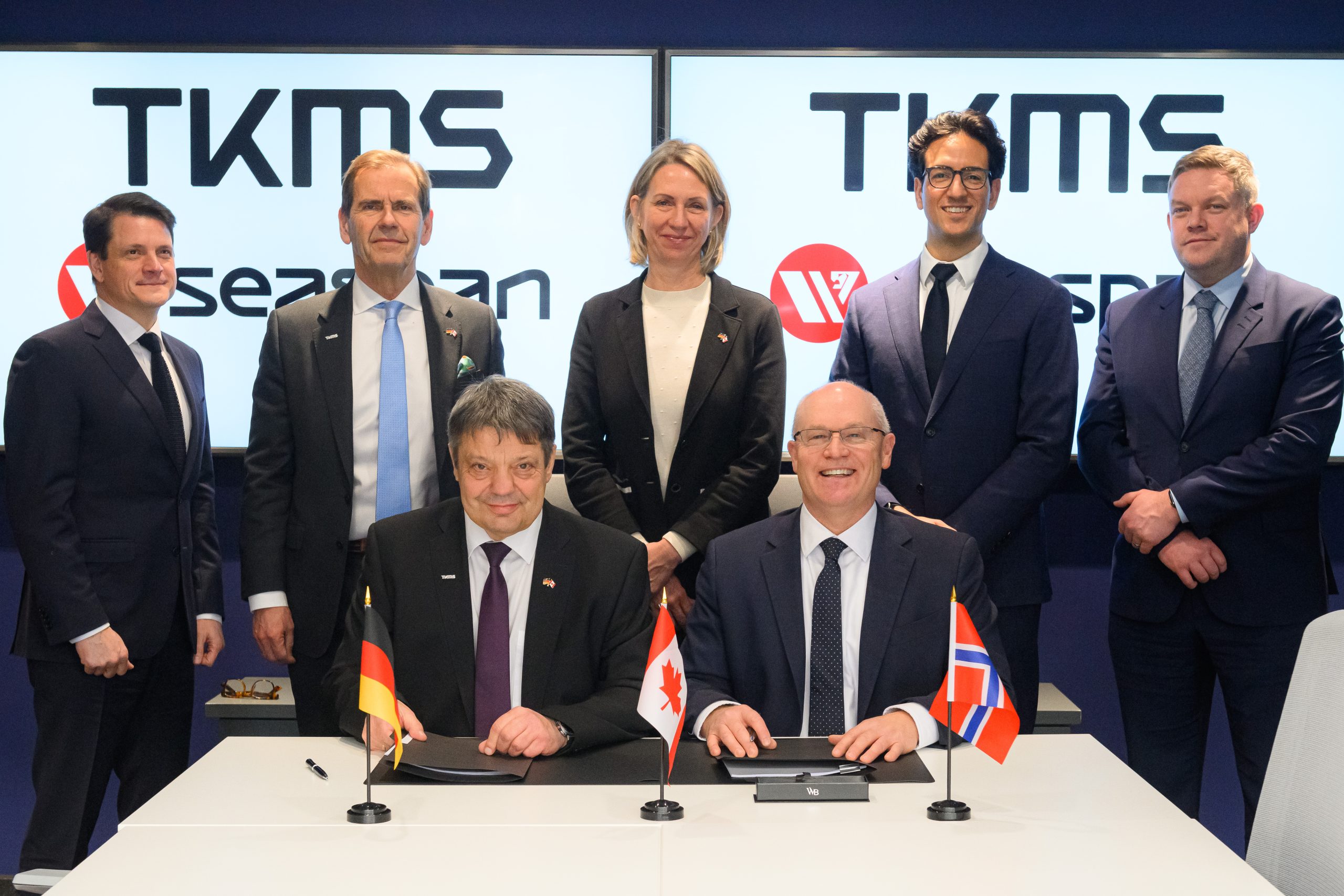
On January 29, 2026, thyssenkrupp Marine Systems (TKMS) and Seaspan Shipyards signed a Teaming Agreement that directly targets that ambition, aligning the two companies around supporting the Government of Canada’s goal of establishing a fully Canadian-led sustainment and through-life support capability for the Canadian Patrol Submarine Project (CPSP).
The agreement brings together two organizations with complementary strengths. TKMS contributes decades of global submarine engineering, lifecycle management, and sustainment experience across multiple navies. Seaspan, Canada’s largest shipbuilding, design, and repair company, brings an established in-country sustainment workforce, infrastructure, and deep experience supporting complex naval platforms. Together, the partners intend to help Canada build an integrated, enduring sustainment enterprise designed to support future submarines on both the east and west coasts.
“This teaming agreement reflects our shared commitment to long-term support excellence and aligns with the objectives of the Canadian Patrol Submarine Project, ensuring that Canadian naval platforms are supported by robust, reliable and sovereign sustainment capabilities throughout their life cycle,” said Thomas Keupp, Chief Sales Officer at TKMS.
“We are pleased to join forces with Seaspan, a company with deep experience in ship sustainment and a strong Canadian industrial footprint.”
Building a Canadian-Led Sustainment Enterprise
From the outset, Canada has identified sovereign sustainment as a critical priority for CPSP. Rather than relying on offshore support models, the project seeks to establish a domestic capability that integrates the Royal Canadian Navy, the Maritime Equipment Program, Fleet Maintenance Facilities, and Canadian industry into a single, cohesive ecosystem.
Under the teaming agreement, TKMS and Seaspan plan to work with these stakeholders to develop and deliver the capabilities needed to sustain future submarines in Canada—placing a strong emphasis on maintaining operational readiness, fleet availability, and long-term performance.
The approach is deliberately holistic. It encompasses engineering support, maintenance planning, supply-chain development, workforce growth, and lifecycle management, all anchored in Canada. For Ottawa, this model supports operational sovereignty. For industry, it represents decades of high-value, skilled employment and a foundation for long-term industrial growth.
Seaspan’s Submarine Sustainment Advantage
Seaspan enters the partnership with a unique position in the Canadian market.
“As the only shipyard in Canada with submarine maintenance expertise, Seaspan is well-positioned to deliver on the decades-long sustainment of this new fleet and to contribute meaningfully to this country’s maritime defence industrial base,” stated John McCarthy, CEO of Seaspan Shipyards.
“The CPSP is one of the highest priorities for the long-term defence and security of Canada’s sovereignty. We are excited to partner with TKMS on this critical capability for Canada and we look forward to working closely with their team and the Royal Canadian Navy, the Maritime Equipment Program and the Fleet Maintenance Facilities to build a truly Canadian submarine sustainment program.”
Seaspan’s existing workforce, facilities, and relationships within Canada’s naval ecosystem provide an immediate foundation for scaling sustainment activity. Combined with TKMS’s global experience supporting submarine fleets throughout their service lives, the partnership is designed to accelerate Canada’s path toward a mature, sovereign sustainment enterprise.
More Than Domestic: Export Potential
While the focus remains squarely on CPSP, the agreement also contemplates opportunities tied to TKMS’s international customer base. As sustainment capabilities mature in Canada, the partnership envisions potential export support roles connected to TKMS submarine programs worldwide.
For Canada, this represents an opportunity to move beyond being solely a customer nation and toward becoming a contributor within global naval sustainment networks—extending economic and industrial benefits well beyond the CPSP itself.
A Signal of Long-Term Commitment
The TKMS–Seaspan agreement is the latest in a series of teaming arrangements TKMS has signed with Canadian industry partners, underscoring a broader strategy centered on localization, workforce development, and sovereign capability.
For CPSP, these partnerships collectively point to a future in which submarines are not only acquired for Canada, but supported, sustained, and evolved by Canadians.
At a time when maritime security, Arctic presence, and undersea capabilities are rising in strategic importance, the ability to sustain submarines at home—on Canada’s terms—may prove just as decisive as the platforms themselves.
