


Cyberspace has emerged as a critical domain of modern conflict, alongside land, sea, air, and space. The threats it presents are constant, fast-moving, and often invisible—ranging from state-sponsored intrusions and ransomware attacks to disinformation campaigns designed to undermine trust. For militaries, cyberspace is no longer just an enabling environment but a contested battlespace in its own right.
The Canadian Armed Forces (CAF) has made it a priority to deter, detect, and respond to these evolving cyber threats—protecting military infrastructure, supporting joint operations, and contributing to global cyber stability. Recognizing cyberspace as an operational domain places it on equal footing with traditional theatres of war, underscoring both its complexity and its importance to Canada’s national security.
This is not to say that awareness of cyber threats as a key dimension of national defence is new. For decades, cyber, signals intelligence, and electronic warfare capabilities have existed across the CAF and the Department of National Defence (DND), some dating back to the Second World War. These functions were often scattered and buried under multiple layers of reporting, meaning important decisions sometimes had to pass through five to seven echelons before reaching the Chief of the Defence Staff.
The creation of the Canadian Armed Forces Cyber Command (CAFCYBERCOM) on September 26, 2024, however, marked an important turning point in how the military organizes, defends, and projects its cyber capabilities.
As the CAF’s primary authority for cyber operations, CAFCYBERCOM is tasked with defending Canada’s national interests by conducting cyber missions, sustaining cyber forces, and managing mission assurance to strengthen resilience against malicious cyber activity.
CAFCYBERCOM was created to solve a strategic command-and-control problem and to meet the growing complexity of cyber threats facing Canada and its allies. Today it unifies all CAF cyber capabilities—including Joint Electronic Warfare, Signals Intelligence, and full-spectrum cyber operations—under a centralized structure. With a direct line to the Chief of the Defence Staff, CAFCYBERCOM has placed cyber operations on a true warfighting footing. This centralization improves command and control, operational agility, and the integration of cyber effects into joint military operations. “We have removed silos and created a more agile, integrated force that delivers cyber effects faster and more efficiently,” says Major-General Dave Yarker, Commander, CAFCYBERCOM. “CAFCYBERCOM is a decisive step in defending Canada’s interests in the cyber domain.”
It has consolidated Joint Electronic Warfare, Signals Intelligence, and cyber functions, enabling more cohesive and effective multi-domain mission execution across the CAF. “Bringing cyber specialists together enables seamless collaboration and sharing of insights, strengthening our mission effectiveness on the ground,” says Chief Warrant Officer Peter Holub, Command CWO, CAFCYBERCOM.
Simply put, CAFCYBERCOM directly supports Canada’s national defence strategy by protecting critical military infrastructure, conducting full-spectrum cyber operations, and promoting responsible state behaviour and a rules-based international order in cyberspace.
Strengthening Partnerships
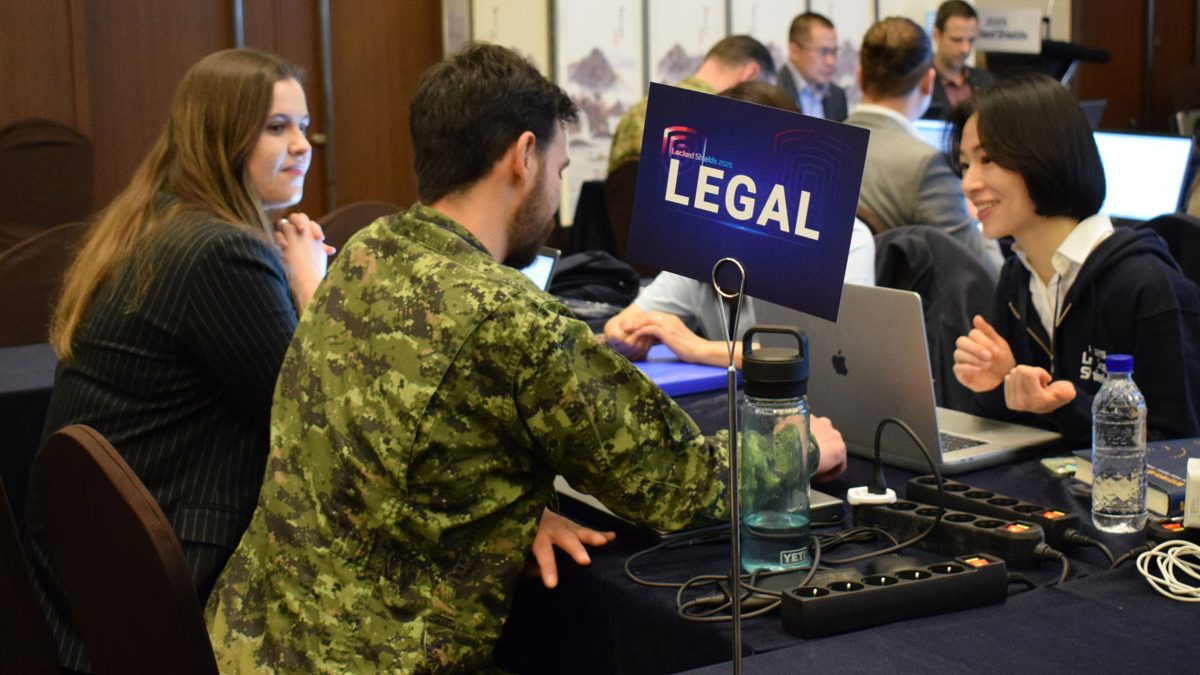
Having all these functions under one roof makes it easier to work with others. CAFCYBERCOM collaborates closely with the Communications Security Establishment (CSE) and allied partners in NATO, North American Aerospace Defense Command (NORAD), and the Five Eyes to deliver coordinated cyber defence. It integrates cyber capabilities into multi-domain operations and participates in multinational exercises such as NATO’s Exercise LOCKED SHIELDS 2025, where Canadian teams worked alongside 41 nations, and Operation REASSURANCE, where it supports Latvia’s cyber infrastructure through threat hunting and network monitoring.
It also aligns with allies making similar investments, enabling deeper engagement in regions such as the Indo-Pacific—for example, during Major-General Yarker’s recent visit to the Philippines to advance bilateral cyber cooperation.
Distinct Role, Unified Capabilities
It is important to note that CAFCYBERCOM is distinct from CSE, which protects Government of Canada networks and collects foreign intelligence. CAFCYBERCOM is a military operational command that defends CAF networks and delivers cyber effects in support of military missions. By consolidating all cyber-related capabilities within the CAF, CAFCYBERCOM improves coordination, planning, and execution while reducing duplication and streamlining decision-making.
By integrating Joint Electronic Warfare, Signals Intelligence, and Cyber Operations under one command, CAFCYBERCOM optimizes resources and synchronizes efforts across military domains. This centralization strengthens interoperability with national and international partners through intelligence sharing, joint training, and multinational exercises.
It also enables a strong focus on workforce development, ensuring the command maintains a skilled and adaptive team. “Our people are the backbone of CAFCYBERCOM’s success. Continuous training and dedication keep our cyber operators ready to face evolving threats and secure Canada’s military networks,” says CWO Holub.
These efficiencies strengthen situational awareness, accelerate threat detection, and improve incident response—enhancing the defence of CAF networks and supporting Canada’s strategic defence objectives. “Our operators have made a real impact defending networks and building partnerships across regions. We will continue developing our skills and pushing innovation to meet evolving mission demands,” adds CWO Holub.
Protecting privacy is also essential in a free and democratic society. CAFCYBERCOM recognizes its responsibility to uphold the privacy rights of Canadians in accordance with the Privacy Act and integrates privacy protection into every aspect of its operations.
Building Momentum
Since its establishment nearly a year ago, CAFCYBERCOM has rapidly matured into a unified command responsible for all CAF cyber operations. “In our first year, CAFCYBERCOM has unified capabilities, and proven Canada can deliver decisive cyber effects alongside allies,” says MGen Yarker.
CAFCYBERCOM has strengthened interoperability by participating in high-profile multinational exercises such as NATO’s Exercise LOCKED SHIELDS 2025, where CAF teams defended simulated networks under intense cyberattack scenarios. It played a vital role in Operation REASSURANCE, deploying Cyber Task Force 2 in Latvia to help safeguard critical civilian digital infrastructure. A recent month-long multinational cyber surge there dramatically increased Latvia’s cyber defence capacity, achieving in one month what would normally take several. This effort exposed supply-chain vulnerabilities, enhanced collaboration among allies, and involved close cooperation with the Canadian Centre for Cyber Security and NATO partners—demonstrating Canada’s commitment to shared defence.
Beyond Europe, CAFCYBERCOM has deepened partnerships in the Indo-Pacific through engagements such as leadership visits to the Philippines, fostering cooperation and sharing best practices to counter evolving threats globally.
Innovation and the Road Ahead
On the technological front, CAFCYBERCOM is advancing the integration of artificial intelligence in line with DND and CAF strategies, aiming to enhance situational awareness, threat detection, and decision-making by 2030.
Near-term objectives include scaling full-spectrum cyber capabilities within legal frameworks, expanding workforce training, deepening partnerships, and supporting joint CAF operations. Through these efforts, CAFCYBERCOM ensures Canada remains agile and resilient in the increasingly contested domain of cyberspace. International partnerships in Europe and the Indo-Pacific continue to grow, exemplified by cooperation with Latvia’s CERT, the Armed Forces of the Philippines, and Japan’s Self-Defense Forces on cyber initiatives, as well as participation in LOCKED SHIELDS. These efforts enhance interoperability and regional resilience.
On innovation, CAFCYBERCOM aligns with DND/CAF AI strategies to improve operational effectiveness and invests heavily in workforce development. “Our teams have grown closer and more confident, with a rapid pace of learning. We’re preparing to meet future cyber challenges with deeper expertise and readiness,” says CWO Holub.
Next milestones include scaling full-spectrum capabilities, expanding multinational exercises, strengthening ties with government, industry, and academia on emerging technologies, advancing AI integration, and enhancing operational cooperation with allies across the Western Hemisphere, Europe, and the Indo-Pacific. “Our near-term focus includes accelerating innovation, deepening partnerships, and enhancing operator training to stay ahead of emerging threats,” adds MGen Yarker. “Next, we aim to expand our capabilities, enhance cooperation, and integrate emerging technologies like AI.”
Conclusion
CAFCYBERCOM represents a pivotal step in Canada’s defence posture, unifying cyber operations, signals intelligence, and electronic warfare to address evolving threats with professionalism and innovation. Operating in an environment marked by state-sponsored attacks, ransomware, and disinformation, the command protects military networks, supports joint operations, and contributes to maintaining a secure, rules-based digital environment.
Partnerships with domestic agencies and international allies are critical to building collective resilience. CAFCYBERCOM balances operational security with accountability and democratic values, operating within clear legal frameworks protecting privacy and civil liberties.
Above all, CAFCYBERCOM is about earning trust through professionalism, ethical conduct, and dedication to safeguarding Canada’s cyberspace.
As CWO Holub notes: “At the heart of our success are the dedicated soldiers, sailors, aviators, and civilians who bring expertise and innovation to every mission. We’re proud of our progress and focused on preparing for the future challenges of cyber defence.”
SIDEBAR
MASAKARI 25: Canadian and Japanese militaries strengthen cyber defences
In summer 2025, CAFCYBERCOM and the Japan Self-Defense Forces (JSDF) Cyber Defense Command (JCDC) joined forces in MASAKARI 25—a bilateral cyber defence activity that deepened operational cooperation and reaffirmed a shared commitment to regional cyber security and stability in the Indo-Pacific.
Conducted under Operation HORIZON, Canada’s forward-presence mission in the Indo-Pacific, MASAKARI 25 was hosted by CAFCYBERCOM and brought together cyber operators from both nations, alongside Royal Canadian Navy (RCN) personnel, to conduct combined defensive cyber activities.
“This activity represented more than an operational milestone—it reflected our collective will to shape a secure and rules-based digital environment,” says MGen Yarker. “MASAKARI 25 built practical cyber interoperability and strengthened a trusted partnership between Canada and Japan. Together, we advanced persistent engagement in a region where cyber threats increasingly test the resolve of open societies.”
Major-General Akitsugu Kimura, Commander of the JCDC, emphasized the strategic value of the engagement, “MASAKARI 25 brought the two nations even closer, since this combined effort facilitated our mutual understanding and strengthened capabilities and interoperability. I am confident that Canada and Japan are well-united and able to contribute to the security in the Indo-Pacific region.”
MASAKARI 25 is aligned with Canada’s Indo-Pacific Strategy by reinforcing regional partnerships, demonstrating commitment to cyber resilience, and upholding norms of responsible state behaviour in cyberspace. The activity underscored the vital role cyber defence plays in supporting a free, open, and inclusive Indo-Pacific.
Looking beyond 2025, both commands anticipated continued collaboration through future joint training, cyber intelligence exchanges, and operational cooperative efforts.
“This was just the beginning,” says MGen Yarker. “In an era of evolving digital threats, partnerships like this are essential to securing our interests and those of our global partners.”
MASAKARI 25 stood as a clear signal: Canada and Japan were united in defending the digital front lines of the Indo-Pacific.
– Major Christopher Daniel, CAFCYBERCOM Senior Public Affairs Officer
