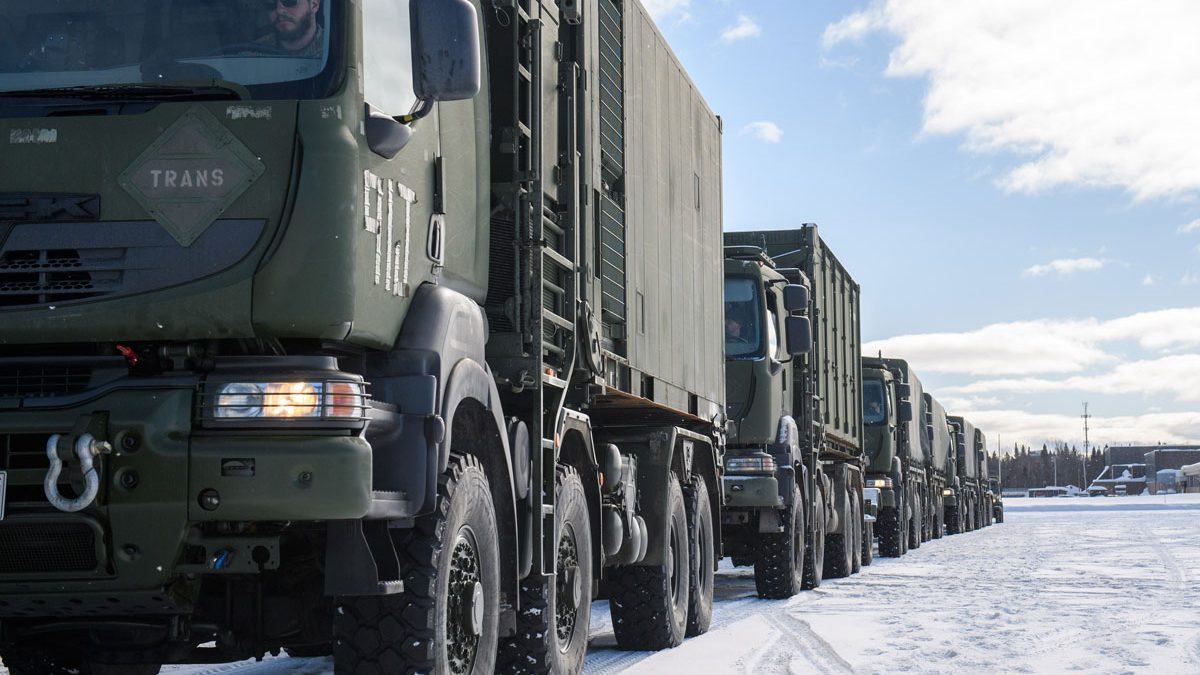

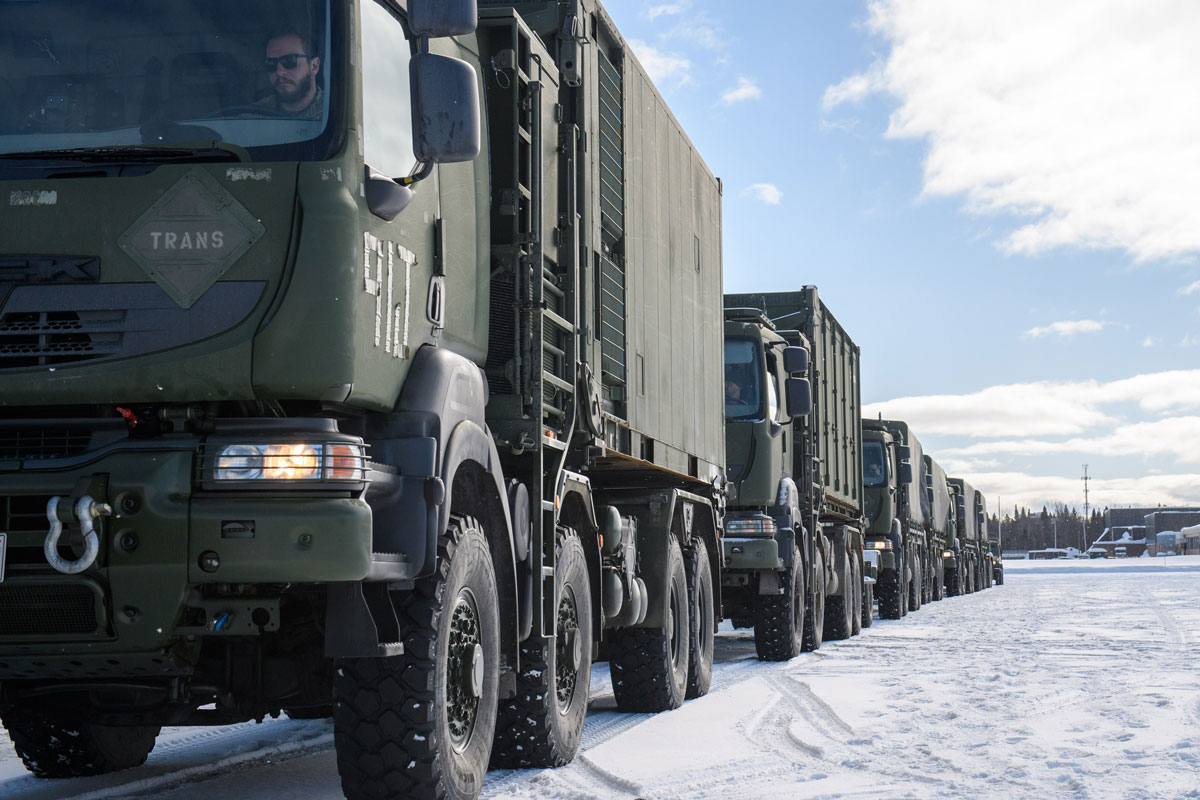
A supply chain is only as strong as its weakest link — Tony Hsieh
Canada’s recently released Defence Industrial Strategy (DIS) focused on the need for more sovereign capabilities in support of the Canadian Armed Forces (CAF).
Foreign companies involved in supplying Canada with fighter jets and submarines have been particularly engaged in determining how to maximize sovereign supply chains to support long term in-service support. And the Minister of Industry Science and Economic Development Canada (ISEDC) Mélanie Joly regularly speaks of the importance of creating sustained jobs when discussing military acquisition projects, even hinting that Lockheed Martin should provide more jobs in Canada to support the US weapons sensors and combat management systems in the River Class Destroyers.
These are logical developments in terms of the context in this moment. But when one looks under the hood, there are major challenges to overcome to make sovereign supply chains viable for the long term.
Canada has too often seen foreign prime contractors that established factories in Canada, only to close them within years when the business case is no longer profitable or the political pressure to move elsewhere is unbearable. Notwithstanding contractual commitments, unprofitable business will always drive companies to take appropriate action to survive.
Prime contractors endeavour to deliver weapons systems on time, whether for construction or subsequent support, and they often fail to meet the contractual delivery dates. The reasons are many: climate extreme events, disease epidemics, workforce issues, material shortages, fires, mergers and more that logistics experts know well. In essence, all of these unpredictable surprises cause incremental delays that add up.
To overstate the obvious, the supply chains for warships, combat vehicles and military aircraft are made up of thousands of components. Even if the thousands of lowest component suppliers escape the challenges mentioned in the previous paragraph, the challenges faced are significant in peacetime and so much larger during transitions in logistics philosophy or in the level of wartime footing required. Should both occur at the same time, miracles are called for with the level of sophistication of most modern weapons systems.
This note explores just one aspect of these challenges.
Tier Two+ Suppliers
I recently read an article written by Menny Shalom entitled “The Primes Aren’t the Real Bottleneck in U.S. Weapons Production,” published in War on the Rocks in January 2026. While focused on US supply chain challenges, it resonated with my own experience in this area.
The article explores one of the major issues that can play havoc, the challenges often faced by lower tier component suppliers as caused by significantly variable demands for their products.
When purchasers dramatically reduce their annual purchases or suddenly call for surges, lower tier suppliers are hamstrung in their ability to address them. The lower the tier supplier, the less flexibility suppliers can accommodate with smaller workforces adjusting to layoffs, less access to finances to survive the peaks and valleys and challenges accessing necessary materials and lower tier parts. A decision to substitute with material from new suppliers requires recertification of products, usually a lengthy and expensive process.
In a similar vein, many lower tier defence suppliers are sole sourced by the Primes. Failure to keep them busy during major disruptions as occurred during the Covid-19 pandemic can jeopardize their very survival. Funding, skills development, tooling and certifying new lower tier replacement suppliers can create delays in the order of years.
Therefore, customers need to be prepared to subsidize lower tier suppliers in the demand troughs with targeted funding and warehousing, and with advanced notice to ramp up to address peaks in demand. The key enabling ingredient is the client manager’s visibility deep into supply chains to understand, track and adjust to what matters, often buried deep below a Prime but sometimes directly.
Sovereign Supply Chain Capability
Military logistics is a very broad subject involving “the planning and execution of design, development, acquisition, storage, transportation and maintenance of materiel.” But in traditional use, it is about acquiring, warehousing or accommodating, transporting and delivering materiel and/or personnel to arrive in a condition that is ready for employment.
Today, the components in very few military equipment and systems are exclusively sourced in one nation. Cost, availability and security play into such sourcing for competitive and political reasons. Nevertheless, as the risks in geopolitics have risen, this is slowly changing to a preference for maximum home-shoring of manufacturing and materials. Friend-shoring remains an acceptable alternative with cautions. Sometimes, the supplier’s nation surges when you do and prioritizes domestic deliveries when products are scarce. And the recent actions of the U.S. Administration have reminded us that friends for decades may suddenly become much less friendly and create anxiety regarding supply chain reliability. Only large nations with deep pockets and equally large militaries can afford multiple suppliers to hedge against such concerns.
The reality is that Canada’s legacy military systems are significantly sourced and supported from other nations, most of which are allies, and that will not change quickly, if ever. Even when placing high bid evaluation scores on Canadian content, platform acquisition Primes source what they can from Canada, but this is at the equipment level. 100% Canadian content remains largely unattainable today in support of the CAF.
In the past, it has been even more difficult to build sovereign in-service support capability when acquiring weapon systems platforms for some of the reasons that follow, reasons that can become the weak link:
- The Department of National Defence was often cash strapped such that investing in Canadian supply chain creation and sustained support was not possible. There are never guarantees that such budget issues will not emerge in the future as governments face a myriad of unavoidable crises.
- Security of the manufacturing and transport of all components has taken on exceptional importance relating to the potential for internal sabotage, cyber attacks, counterfeit parts and document disinformation. It is a continuous concern whether sourced in Canada or in allies’ nations, and often requires scrutiny down to the individual fastener and connector level. As Western nations grow more diverse, the risk of competing ideological allegiances within defence supply chains is real, and cannot be overlooked.
- In the past, government contract lawyers have discouraged Canada from having visibility beyond the Prime contractor level during procurement implementation, for fear of being accused of interfering in contracts between suppliers at lower tiers and the attendant liability transfers. Therefore, visibility deep into supply chains was often impossible. Whether that culture of risk aversion has changed remains an open question.
- The constant tension around the transfer of foreign intellectual property to Canadian agents to enable sovereign manufacturing makes such pursuits very much hit and miss. It also can take many years to establish Canadian equipment and materiel support capabilities to the level of redesign and modifications, and usually under ‘non-compete’ clauses. Furthermore, few Original Equipment Manufacturers (OEMs) will assume responsibility once Canadian companies commit to employ the OEM’s standards and certification systems.
- As implied earlier, Canadian companies will only invest in such work if Canada can commit contractually to a demand signal that makes the effort profitable in the long term, this possibly translating into overpriced products because Canada can rarely maintain a consistent demand for a decade or more. Export opportunities may occur in time but those may only represent periodic surge requirements rather than a steady demand signal.
- A sole source sovereign supplier is the likely reliable outcome, making negotiations difficult and putting Canada at risk of the contractor discontinuing the business line. Single points of failure even at the complex component level can be disastrous if contingency operations are underway.
When discussing sovereign capabilities, it is not surprising that our politicians talk a lot about jobs for Canadians, rather than percentage of capability sourced within Canada, by when and its sustainment despite the costs.
So What
Those in the defence business will not be surprised by what I have written, nor will such industry experts agree entirely. I have never worked in a Canadian defence company but I have worked with many. I have an appreciation for just how challenging it has been for many of Canada’s defence industries to survive and prosper.
So why did I write this note?
I hear many positive comments in conferences and announcements from all sides about bigger defence budgets, the stand up of the Defence Investment Agency (DIA) and the recently released DIS. And to support DIS, the government has also launched a Canadian Defence Industry Resilience Program to address the sorts of issues mentioned in this article.
Anyone who has followed my published work will know how passionate I am about setting and managing expectations in a transparent manner. Having been a plank owner of the implementation of the National Shipbuilding Procurement Strategy when expectations were not well managed, I see some parallels.
I am truly thrilled to see the excitement and long overdue intentions to dramatically increase the funding and support for the CAF, the creation of the DIA and the release of the DIS. While I would be disappointed to be branded as a perpetual naysayer, I do admit to being a professional worrier as a result of a decade with a portfolio of billion-dollar-plus platform acquisitions for the Royal Canadian Navy and the Canadian Army.
I have tried to provide a glimpse of just a couple of potential challenging issues ahead in terms of achieving in-service sovereign supply chains. All of these activities will only thrive if the right expectations are set in terms of patience, perseverance through the shortfalls and the creation of multitudes of truly collaborative relationships based on trust.
We have done it before. We will stumble when we miss weak links in the chain, as Tony Hsieh has reminded us. But we must persevere in a pragmatic way in home-shoring our weapon systems platform sustainment capabilities to the greatest extent possible.
As General John Pershing is quoted as saying so very long ago, “The infantry wins battles but logistics wins wars.” Beyond the shiny weapon systems, the support must be assured despite the challenges. Failing in that mission is not an option – CAF members’ lives are at stake.