

In an increasingly contested maritime environment, demand for advanced subsea intelligence, surveillance, and mine countermeasure capabilities continues to accelerate—and Kraken Robotics is positioning itself squarely at the centre of that momentum.
The St. John’s-based marine technology company has announced approximately $24 million in new defence-related orders spanning more than 10 customers across five countries, including three new defence clients. The contracts underscore a growing global appetite for Kraken’s subsea power and sensing technologies, particularly as navies and defence operators invest in autonomous and high-resolution underwater capabilities.
At the core of these new orders is a mix of Kraken’s key product lines: SeaPower batteries, the KATFISH towed synthetic aperture sonar (SAS), and Kraken’s SAS solutions for integration into autonomous underwater vehicle (AUV) platforms. Together, these systems form a critical backbone for modern mine countermeasure missions, underwater surveillance, and seabed mapping operations.
Building on Proven Capability
Among the most notable developments is a renewed order tied to the Polish Navy’s minehunting program. Poland originally selected Kraken’s KATFISH system in 2020 for deployment aboard its Kormoran II-class minehunting vessels—platforms specifically designed to operate in challenging shallow-water environments where mine threats are particularly complex.
This latest order, placed through Kraken’s Polish partner Thesta, reinforces the operational confidence in KATFISH’s high-resolution imaging and wide-area coverage capabilities. Thesta’s recent appointment as an authorized reseller of the system—announced during last week’s Oceanology International exhibition—further strengthens Kraken’s position in the European defence market.
The continued adoption of KATFISH highlights a broader trend: navies are increasingly turning to synthetic aperture sonar technologies to enhance detection, classification, and identification of underwater threats, particularly in littoral zones where traditional sonar systems often face limitations.
Powering the Autonomous Future
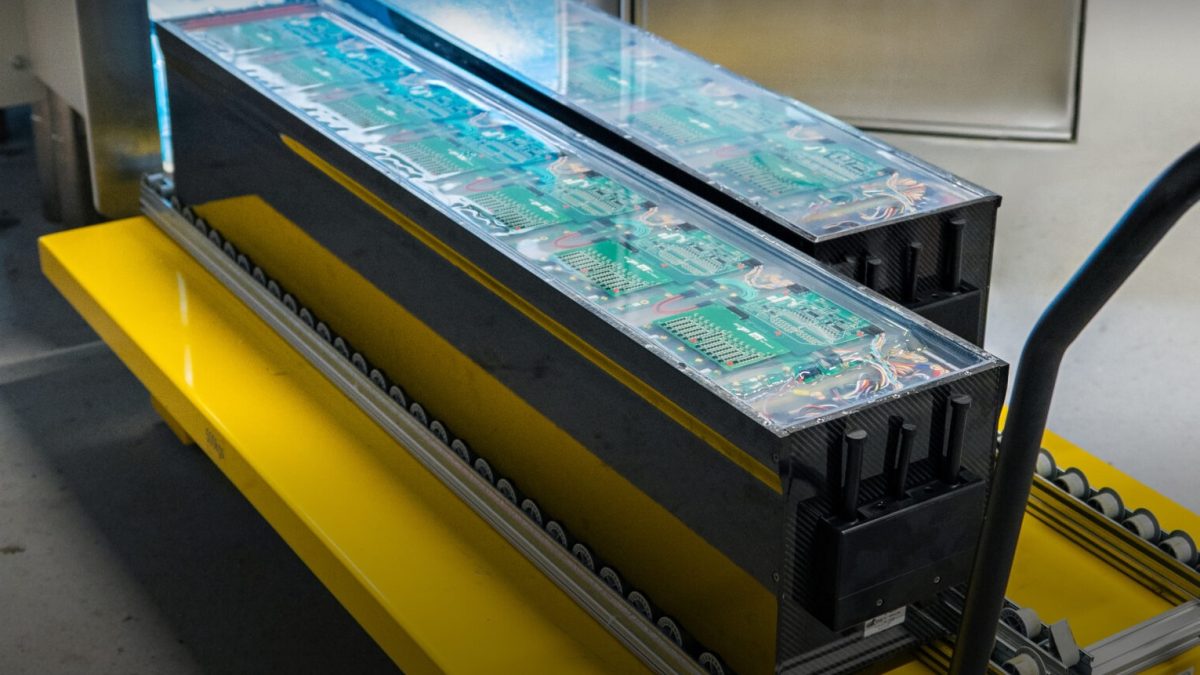
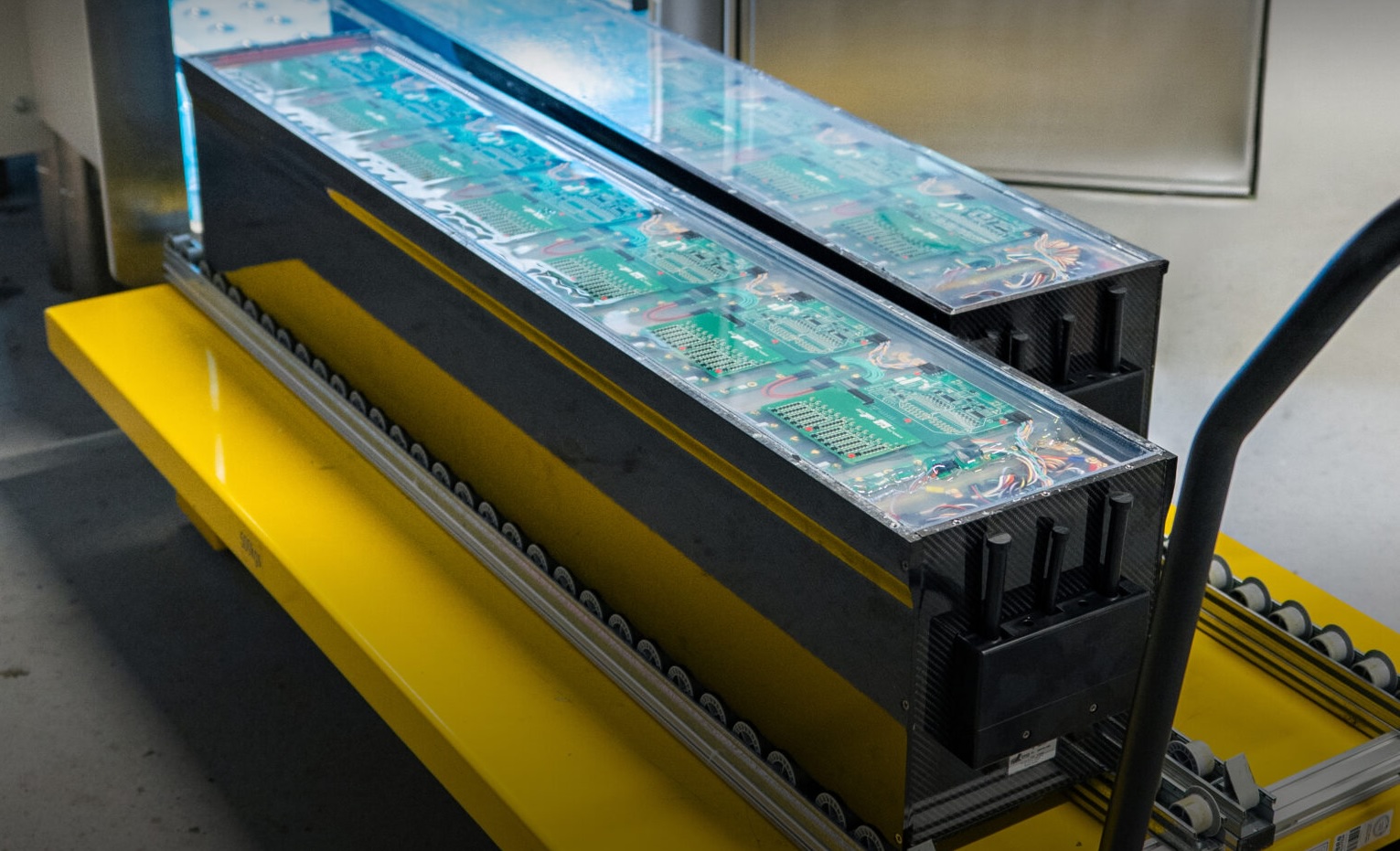
Equally significant is the surge in demand for Kraken’s SeaPower batteries, which are engineered to support long-duration subsea missions. As autonomous systems—from AUVs to remote sensing platforms—become central to naval operations, reliable and high-capacity underwater power solutions are emerging as a strategic enabler.
“SeaPower battery sales continue to be strong, with several new clients further diversifying our customer base in this area of the business. Manufacturing of our batteries in our new Nova Scotia facility is coming online in the next month, significantly expanding our production capacity” said Greg Reid, President and CEO of Kraken Robotics. “We are also pleased to share that we have sold a new KATFISH to the Polish Navy for their minehunting program and SAS to multiple defence customers for their autonomous underwater vehicle (AUV) platforms.”
The ramp-up of production at Kraken’s Nova Scotia facility marks an important milestone for the company, enabling it to scale output to meet growing global demand while strengthening its domestic manufacturing footprint.
Expanding a Global Customer Base
The diversity of customers—spanning multiple countries and including new defence entrants—signals Kraken’s continued expansion into new markets and mission sets. From mine countermeasures to autonomous underwater operations, the company’s technologies are increasingly being integrated into next-generation naval architectures.
This latest wave of orders also reflects a broader shift in defence procurement priorities. Nations are investing in scalable, modular, and autonomous systems that can operate effectively in contested and complex maritime environments. Kraken’s portfolio, combining high-resolution sensing with advanced subsea power, aligns closely with these evolving requirements.
Positioning for Long-Term Growth
As geopolitical tensions reshape maritime security priorities, the need for persistent underwater awareness and resilient subsea capabilities is only expected to grow. Kraken Robotics’ latest contracts not only reinforce its role as a key player in this domain but also point to sustained demand across allied and partner nations.
With production capacity expanding, partnerships strengthening, and a growing roster of international customers, the company appears well-positioned to capitalize on the next wave of defence modernization—beneath the surface.
