
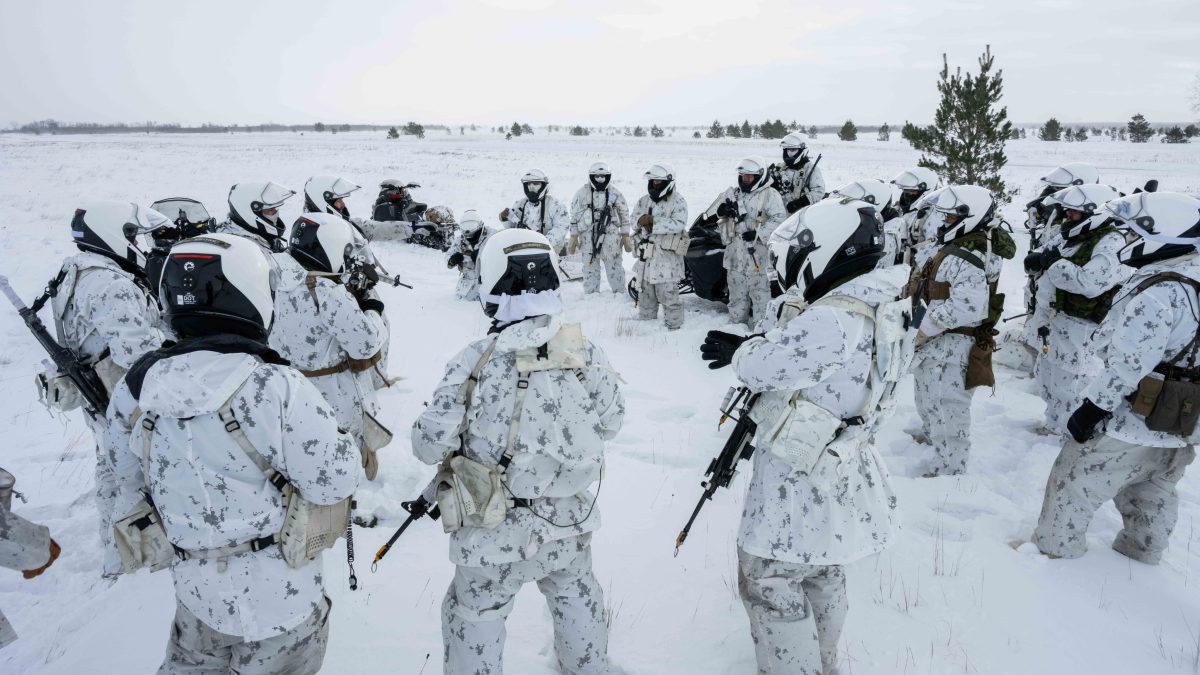

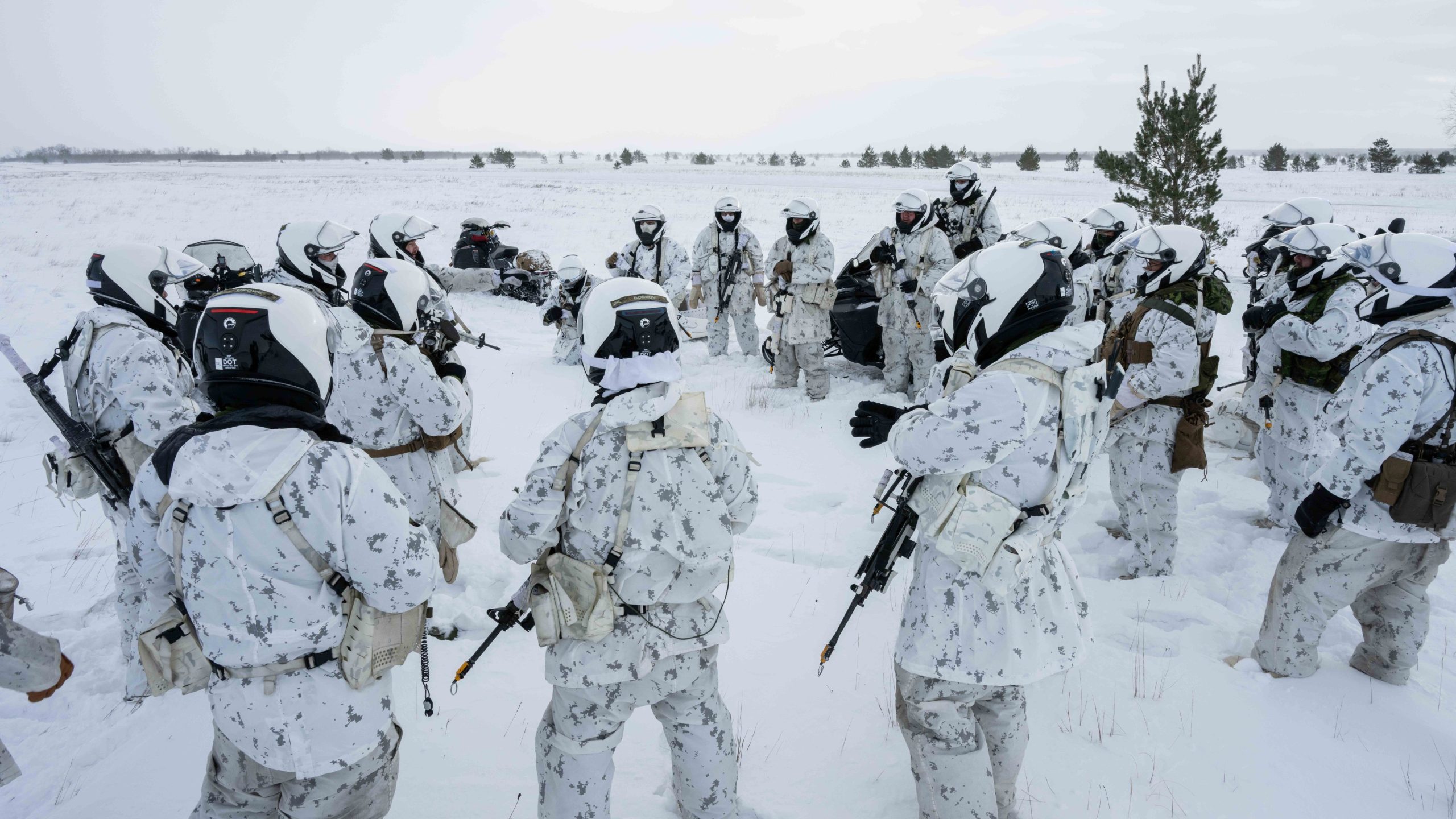
In 2026, the Canadian Arctic is not a distant frontier—it is an active operational theatre.
From the ice-choked channels of the Northwest Passage to the vast airspace and maritime approaches of the western Arctic, the Canadian Armed Forces (CAF) will conduct a full spectrum of operations designed to detect, deter, and, if required, defend against threats. The objective is clear: demonstrate the capability and capacity to protect Canadian sovereignty across land, maritime, air, cyber, and space domains.
The message from Ottawa is equally direct.
“Canadian sovereignty is inseparable from a strong and credible Arctic defence. As strategic competition accelerates and adversaries expand their military reach across the circumpolar region, Canada is acting with purpose and resolve. By strengthening domain awareness, modernizing northern capabilities, and deepening integration with allies and partners, the Canadian Armed Forces are enhancing deterrence and ensuring persistent presence in the North,” stated the Honourable David J. McGuinty, Minister of National Defence.
A Whole-of-Force, Whole-of-Government Effort
Throughout 2026, the CAF will deploy ships, aircraft, vehicles, and personnel from the Royal Canadian Navy, Canadian Army, Royal Canadian Air Force, and Canadian Special Operations Forces Command in coordinated operations. These activities will unfold alongside the Canadian Coast Guard and allied forces, reinforcing interoperability while expanding operational reach.
Modern command-and-control systems, communications networks, sensing capabilities, and sustainment frameworks underpin these efforts. Crucially, the Northern Operational Support Hubs will bolster presence, mobility, and responsiveness across northern regions—strengthening the infrastructure required for sustained operations in one of the world’s most demanding environments.
Regular operations across the Arctic and the North improve early threat detection, sharpen response capabilities, and ensure cohesive action with Canada’s North Atlantic Treaty Organization (NATO) and Arctic allies.
For General Jennie Carignan, Chief of the Defence Staff, the imperative is operational readiness through persistent activity:
“Operating continually in the Canadian Arctic and its approaches is vital to strengthening Canada’s ability to deter threats and assert our sovereignty. By continuing to enhance our domain awareness and conducting ongoing operations in the North, we enable the Canadian Armed Forces to remain ready to defend Canada and Canadian interests in the region alongside our allies and partners.”
Operation NANOOK: A Year-Long Arctic Framework
The 2026 programme launches with Operation NANOOK-NUNALIVUT, focused on long-range sustainment along the Northwest Passage and defensive activities throughout Yukon, Northwest Territories, and Nunavut.
From there, additional NANOOK serials will run sequentially—and in some cases concurrently—throughout the year:
- NANOOK-NUNAKPUT – All-domain activities along the Northwest Passage
- NANOOK-TUUGAALIK – Maritime interoperability with the Canadian Coast Guard and NATO allies
- NANOOK-TAKUNIQ – Air-land integration, including Canadian Ranger patrols
- NANOOK-TATIGIIT – Whole-of-government crisis response
- NANOOK-QIMAAVIVUT – Military engineering and infrastructure tasks
Together, these serials represent more than exercises—they are sustained operational demonstrations of sovereignty, integration, and readiness.
Complementing Operation NANOOK are three enduring missions:
- Operation LIMPID – A continuous, all-domain surveillance mission designed to detect threats to Canada’s security and sovereignty as early as possible.
- Operation BOXTOP – A critical logistics mission that resupplies Canadian Forces Station Alert, enabling year-round CAF presence at Canada’s northernmost installation.
- Operation LATITUDE – A maritime-focused operation dedicated to detection, deterrence, and defence against potential threats in the western Arctic and its approaches.
Lieutenant-General Steve Boivin, Commander of Canadian Joint Operations Command, frames these efforts in strategic terms:
“Defending Canada’s Arctic is integral to defending Canada and Canadian interests. The detection, deterrence, and defence against any threat to Canada is the primary mission of the Canadian Armed Forces. Our permanent presence and near-persistent approach to operations in the Arctic, with our partners and allies, strengthens Canadian sovereignty and directly contributes to our collective security.”
Allies, NORAD, and the Arctic’s Strategic Turn
Arctic operations in 2026 will not occur in isolation. They will run concurrently and in coherence with exercises led by organizations of which Canada is a member, including NATO and the North American Aerospace Defense Command (NORAD).
As both an Arctic nation and a founding NATO member, Canada advocates for strengthening NATO’s posture in the High North, including through enhanced Vigilance Activity ARCTIC SENTRY. Meanwhile, NORAD continues to evolve in response to a changing threat environment—remaining the world’s only bi-national command responsible for aerospace warning, aerospace control, and maritime warning for Canada and the United States.
The Arctic is experiencing heightened global attention. Climate change is reshaping accessibility, shipping routes are expanding, and strategic competition is intensifying across the circumpolar region. In this environment, presence is policy—and persistence is deterrence.
Partnership with Northern and Indigenous Communities
CAF operations are conducted in collaboration with Inuit and Northern Indigenous governments and communities, as well as with federal departments, agencies, and territorial and municipal governments.
This enduring engagement reinforces a meaningful and sustained presence—one that reflects not only military readiness but a broader commitment to safeguarding sovereignty in partnership with those who call the North home.
A Near-Persistent Posture for a Changing Arctic
The 2026 Arctic operations programme represents a coordinated, multi-domain, whole-of-government approach to sovereignty and security. Ships cut through sea ice. Aircraft patrol vast airspace. Rangers traverse frozen terrain. Engineers strengthen infrastructure. Surveillance systems watch across domains.
Together, they form a near-persistent shield across Canada’s northern frontier.
In an era of accelerating strategic competition, Canada’s Arctic is not simply being monitored—it is being actively defended.
