
With the Second World War barely underway in 1940, a Canadian Army officer described Canada as an “unmilitary community.” This wasn’t a comment about Canada’s ability or willingness to fight. It was about the traditionally low support of the population for building and sustaining a large military force. Canada is now in a very different moment.
The Commander of the Canadian Army, Lieutenant-General Michael Wright, has said that the army Canada has is not the army it needs and the government has already accelerated defence spending, with Canada now spending two per cent of its GDP on national defence. There is clear ambition to build the army that Canada needs now and to restructure for the long term.
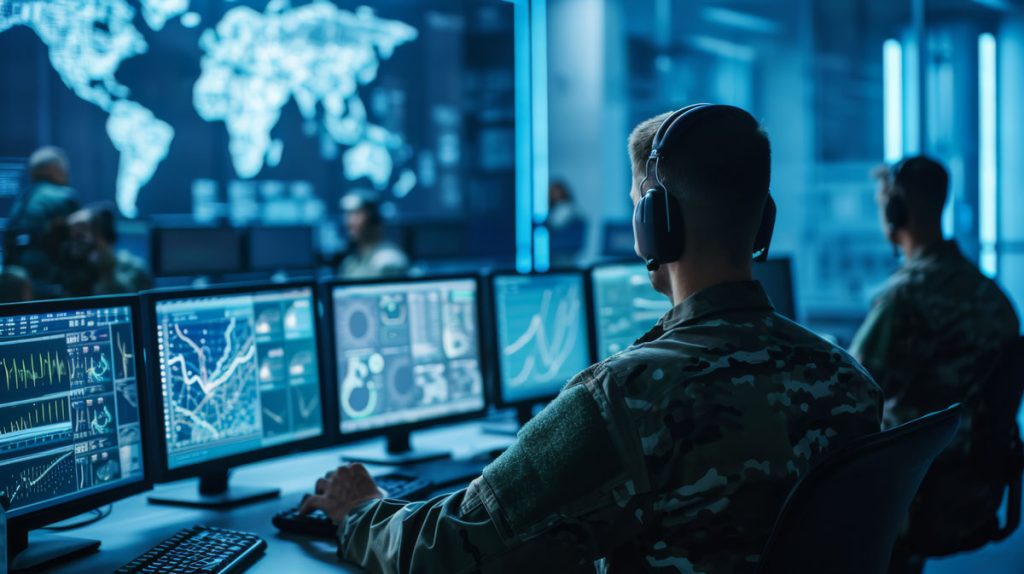
One of the missing ingredients for a stronger, more capable Canadian military is digital integration. Without it, even the most sophisticated systems can become siloed assets, underperforming against expectations. Canada is planning to procure many new capabilities for the army, including air defence, tanks, autonomous vehicles and other advanced systems. At present, there is no program to digitally integrate all these systems into a common architecture. This presents major challenges for command and control, situational awareness, and the timeliness of decision-making.
Right now, the army’s digital landscape is dominated by proprietary systems from major primes. Each works well in isolation or with other proprietary systems, but integration with non-proprietary systems presents a complex, expensive and time-consuming challenge. When systems aren’t designed for interoperability, the army spends significant time, money and effort on integration processes, constraining operational flexibility and reducing the speed and effectiveness needed for mission execution. These barriers slow modernization, limit the ability to adopt emerging technologies and create long-term dependencies that are difficult and costly to unwind.
To address the interoperability challenges that the army is facing, an open, vendor-neutral C5ISRT architecture that focuses on interoperability for a wide range of systems and sensors is essential. Calian is tackling this challenge head-on.
Calian is relying on over a decade of experience in digital integration for large-scale military training and real-life military operational architectures to develop a new C5ISRT architecture. Built on open standards, modular interfaces and Canadian-developed intellectual property, Calian is building an operational capability that is flexible and free from any single vendor data standard, while improving data sovereignty, flexibility and greater freedom on future procurement choices.
Calian is developing a C5ISRT interoperability solution for military customers. Our solution will be a unifying capability to connect training systems, sensor data stream and command and control tools so they can share information and operate as one cohesive environment. This enables a shared operational picture, smoother coordination and the ability to adopt new technologies without disruption—and without reliance on any core proprietary technology. It strengthens interoperability, supports more realistic and integrated training and gives customers the freedom to evolve their capabilities without being locked into rigid architectures. This solution will deliver the capability for operational needs and training needs. Our approach is to deliver a true “train as you will fight” capability for military customers.
This architecture is being designed to let the Canadian Armed Forces integrate new C5ISRT capabilities rapidly, without waiting for a prime contractor to rewrite proprietary code. That means AI/ML tools, autonomous systems, advanced sensors and legacy, new and emerging platforms can work together within one cohesive environment. This is all delivered through agile, iterative development cycles that move capabilities from concept to reality faster. The result is a more responsive, adaptable force that can incorporate innovation as it emerges rather than waiting years for integration pathways to be built.
An open C5ISRT architecture also provides opportunity for Canadian defence companies—especially small and medium businesses (SMBs). SMBs make up 92 per cent of firms in the defence industry and account for 40 per cent of sector employment. An open architecture provides a more equitable playing field for SMBs, removing the burden of integrating with proprietary software. SMBs often struggle to break into the larger defence ecosystem because proprietary data standards present a barrier. Removing those barriers allows Canadian innovators to contribute more directly to national defence, strengthening the domestic industrial base and expanding the range of solutions available to the Canadian Armed Forces.
In addition to an open C5ISRT architecture, Calian is seeking to support SMB technology integration through our VENTURES initiative. Calian VENTURES will mobilize shared infrastructure and national development labs to accelerate SME integration, co-develop new IP and ultimately strengthen Canada’s defence industrial base. The strength of Canada’s SMBs represents a comparative advantage for the Canadian defence industrial base and is a major driver of innovation.
Calian VENTURES connects innovation to the military’s needs and provides the ability for Canada to develop and retain its own IP to support sovereignty and improve long-term affordability by reducing dependence on foreign entities. Through VENTURES, Calian is advancing this mission through strategic partnerships with high-potential Canadian innovators such as Tessellate Robotics and TACTIQL.
With Tessellate Robotics, Calian is helping accelerate the development of sovereign autonomous navigation systems designed for Canada’s most challenging environments, including the Arctic and other GPS-denied regions. This collaboration integrates Calian’s precision GNSS and resilient PNT technologies with Tessellate’s advanced navigation and inspection systems, enabling autonomous platforms to operate reliably in harsh terrain, low-visibility conditions and areas where satellite signals are disrupted. The partnership includes joint validation and field testing such as deployments during Operation Nanook to rapidly mature and scale these capabilities, strengthening Canada’s ability to operate independently in strategically vital Northern regions.
Calian VENTURES is also partnering with TACTIQL to co-develop next-generation ISR and decision-support capabilities tailored to modern military operations. This collaboration focuses on integrating TACTIQL’s advanced situational awareness and mission management tools with Calian’s defence technologies, enabling faster, more informed decision-making across distributed operations. By supporting TACTIQL’s growth and accelerating the transition of their innovations into defence applications, Calian is helping expand Canada’s sovereign digital operations ecosystem and ensuring that critical capabilities are developed, owned and sustained within Canada.
Building a C5ISRT architecture gives the army and the joint force greater flexibility to give commanders and decision-makers what they need: integration of all sources of information to develop situational awareness faster, enabling decision-makers to see more of the operating environment in real time. Faster, informed decision-making is essential in the modern operating environment, and Calian is leading the development of that capability. This is how Canada moves from an “unmilitary community” to enduring readiness.
Learn how Calian is delivering sovereign C5ISRT architecture that makes a difference: www.calian.com/defence/c5isrt/