

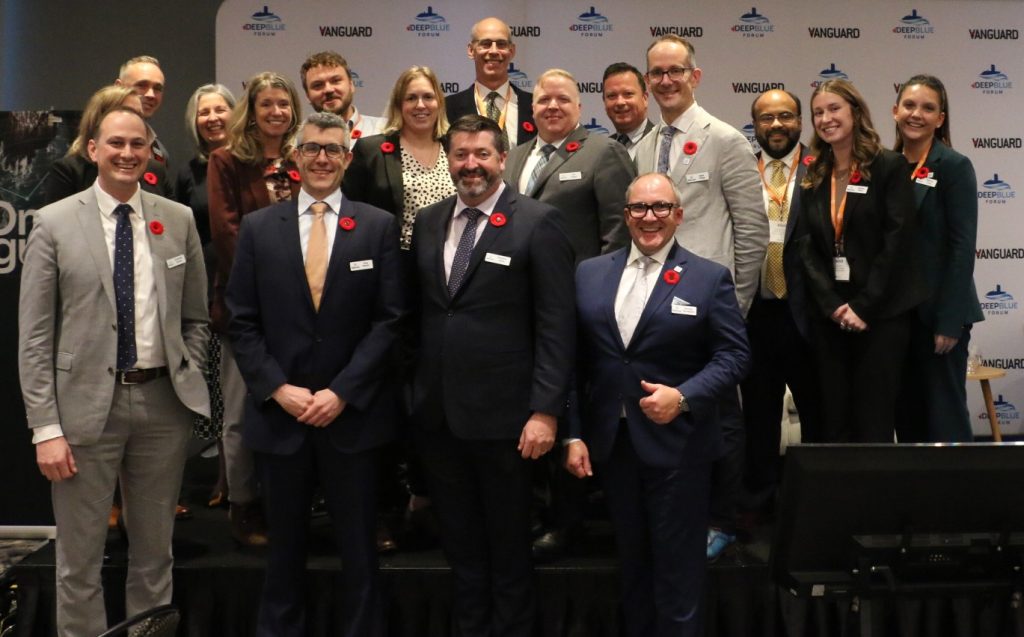
On 4 November 2025, Vanguard’s sixth annual underwater forum, Deep Blue 2025, was held in Ottawa, with a theme of The Future of the Submarine Enterprise – People Harnessing Technology, in a System of Systems. The day-long conference was eloquently run by the Master of Ceremony, Sarah McMillan, Chief Operating Officer, Babcock Canada. The conference was hosted in person, while simultaneously streaming virtually, with a record number of people spanning both government and industry registered for Deep Blue 2025: over 354 attending in person and 76 virtually.

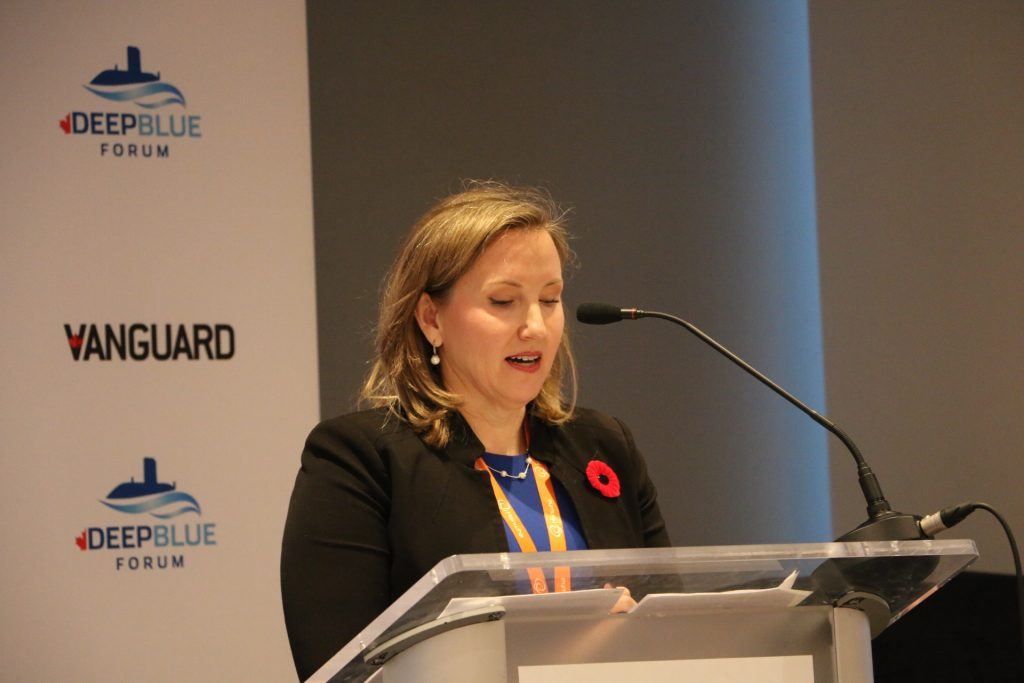
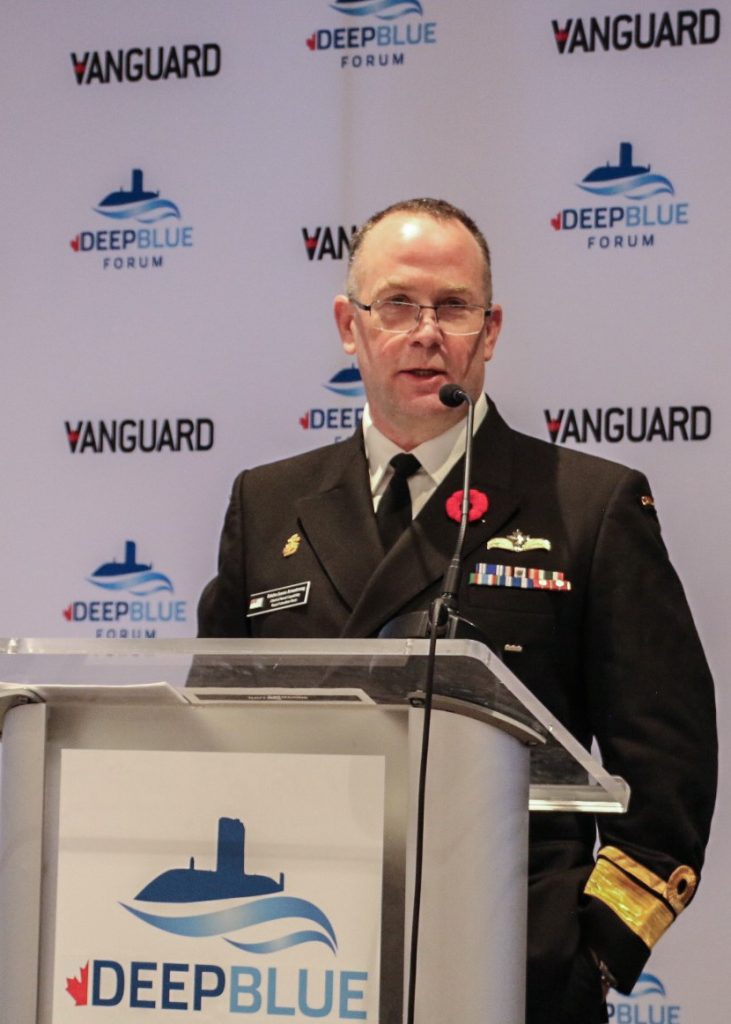
The conference was opened with a keynote speech by Rear Admiral Jason Armstrong, the RCN Chief of Naval Capability, where he discussed the Canadian Patrol Submarine Project (CPSP) highlighting the baseline requirements for the replacement for the Victoria-class submarines. He then briefed the unique proposal process, a significant departure from legacy processes with the aim of identifying the preferred supplier in 2026. While the submarines will be built offshore, he stressed the opportunity for Canadian industry in sustainment and supply chain integration with the submarine manufacturer, to develop and maintain a sovereign support capability. This will necessarily include purpose-built submarine maintenance facilities, on both coasts, using a government owned/contractor operated (GOCO) model.

His address was then followed by a panel discussion, moderated by retired Commodore James Clarke on preparing the people for CPSP. The panel representing the RCN, MDA and recently retired CAE training expertise discussed the building of a sovereign capability that encompasses platforms, infrastructure and people – with the biggest threat to the project being the ability to deliver trained people in time. The need to attract, train and retain sufficient personnel requires a rethink of the current training philosophy that must align with both the operations and maintenance philosophies. This will necessarily encompass step changes in technology and potentially occupation structure revision as the RCN simultaneously competes for talent with industry. When looking at the entire enterprise, there is a need for collaboration with industry to avoid conflict, notably the original equipment manufacturers (OEMs) and other users of the selected submarine platform.

The morning then proceeded with a second panel discussion on Continuous Capability Sustainment (CCS) moderated by Patrice Miron from DND. The panel representing Thales Canada, L3 Harris and Babcock Canada discussed transformational initiatives to address the “speed of relevance”, with low-risk, low-complexity solutions through an incremental life cycle. Historically, platforms degrade in performance until a mid-life upgrade. To resolve systems obsolescence, government and industry must work together, proactively, to maintain the platform at its stated capability. This is notably easier in combat systems than platform systems, as power and cooling upgrades must fit within the hull. Moreover, technical insertions must be thoroughly planned to minimize the time in maintenance by conducting more pre-installation testing, ideally in dedicated land-based test facilities (LBTFs).

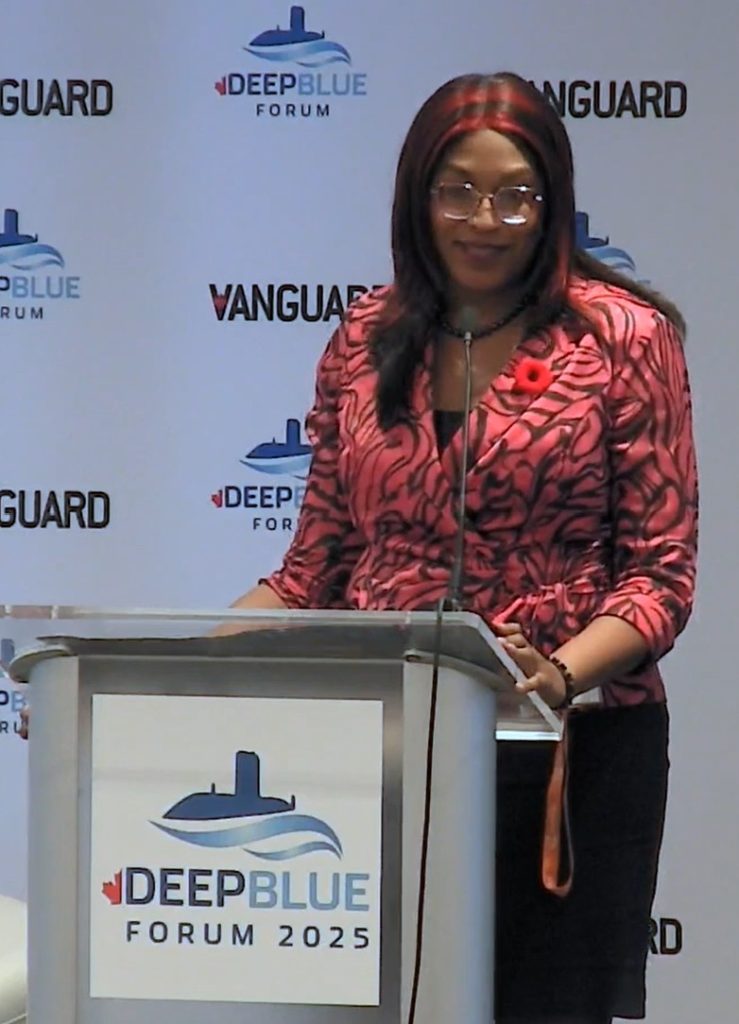
Following a luncheon break, the afternoon keynote address was given by Paula Folkes, the PSPC Associate Assistant Deputy Minister, Defence & Marine Procurement. In a forcefully presented address, she underscored that domestic sustainment was critical to Canadian sovereignty otherwise you risk having a hollow force. This is a multi-generational investment and data, cyber and CCS is the way of the future. She highlighted the need to prioritize in-country capability and deep industrial alignment and independent supportability. All of this is only achievable with trained and educated people, and she challenged industry and academia to create these people.

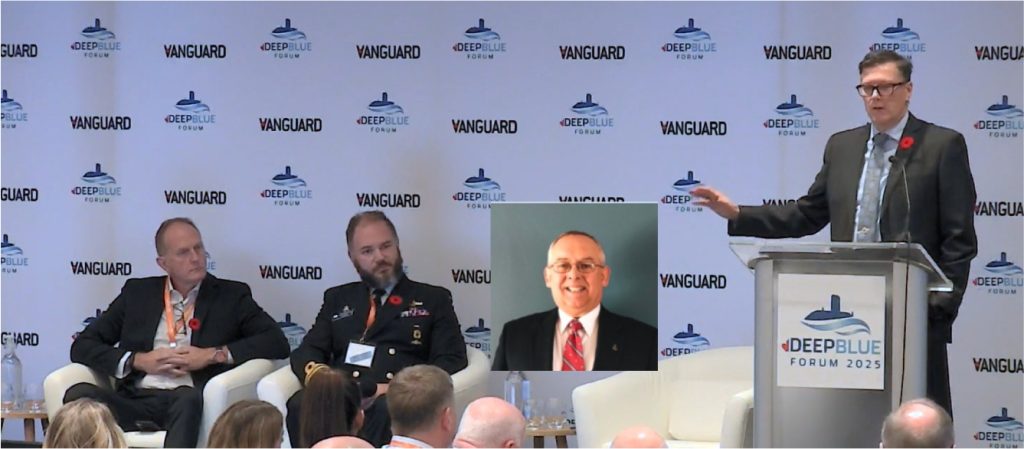
Inset: LCdr William (Bill) Smallman RCN (Ret’d)
The afternoon continued with the third panel discussion of the day on technical tools to operate in the Arctic. Moderated by retired Commodore Larry Hickey who started with an excellent precis of the general surveillance perspective of the Arctic. He was followed by retired Rear Admiral Nigel Greenwood’s eye-opening presentation on the actual environment, painting a sobering picture as to the challenge with operations in the Canadian Arctic Archipelago. DRDC’s Brian May and Ultra I&C’s Denis Couillard highlighted challenges with operating autonomous systems and, most notably, communications North of 60. The panel then discussed the limitations on submarine operations with underwater navigation in poorly charted areas, salinity changes, ice keels and currents.
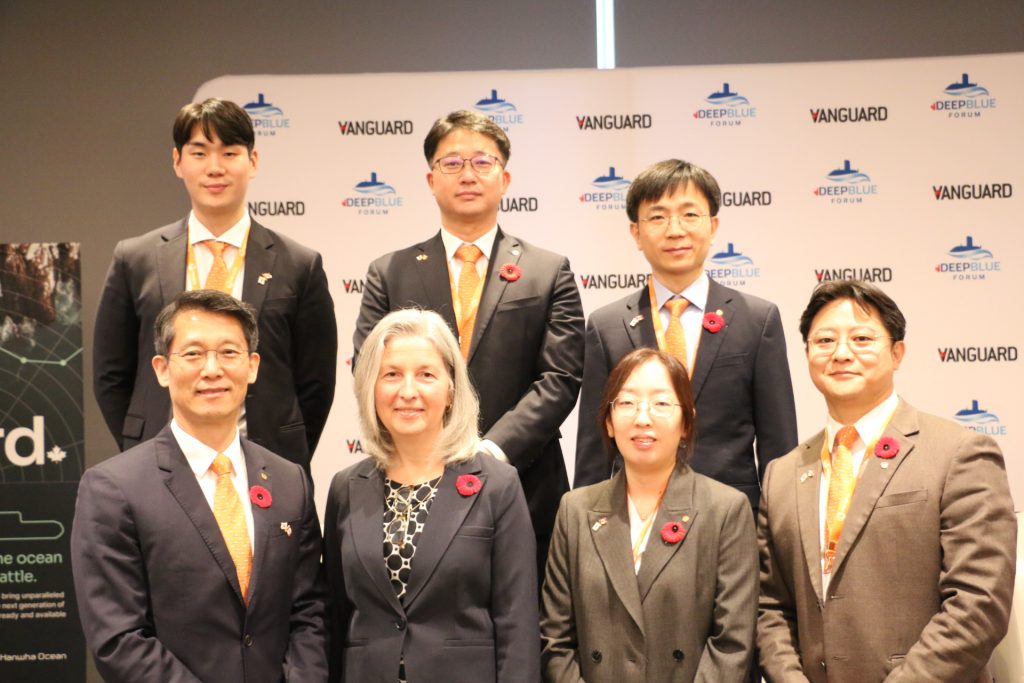
Front row – VAdm Steve SK Jeong, Terri Pavelic, Ha Yeon Jang, Mai-Tai Kang Back row – DongYoon Han, Mun Hee Choi, Issac Bae.
The final event of the forum was a fireside chat on infrastructure for the Canadian Patrol Submarine Project with retired Commodore Keith Coffen, retired Captain(N) David Hudock and retired Commander Darcy Byrtus. Coffen started the chat with the importance of getting the supporting infrastructure, people and process, and adequate resources right from the beginning. David Hudock, from PCL Construction, underscored that construction takes time and there is not a lot of time before the first submarine will arrive under the CPSP. He made a compelling argument as to engaging industry as soon as possible and to consider fully the project delivery method for a timely process – noting that any construction North of 60 is fundamentally different. That said, timely government support will be required for environmental issues and approvals.

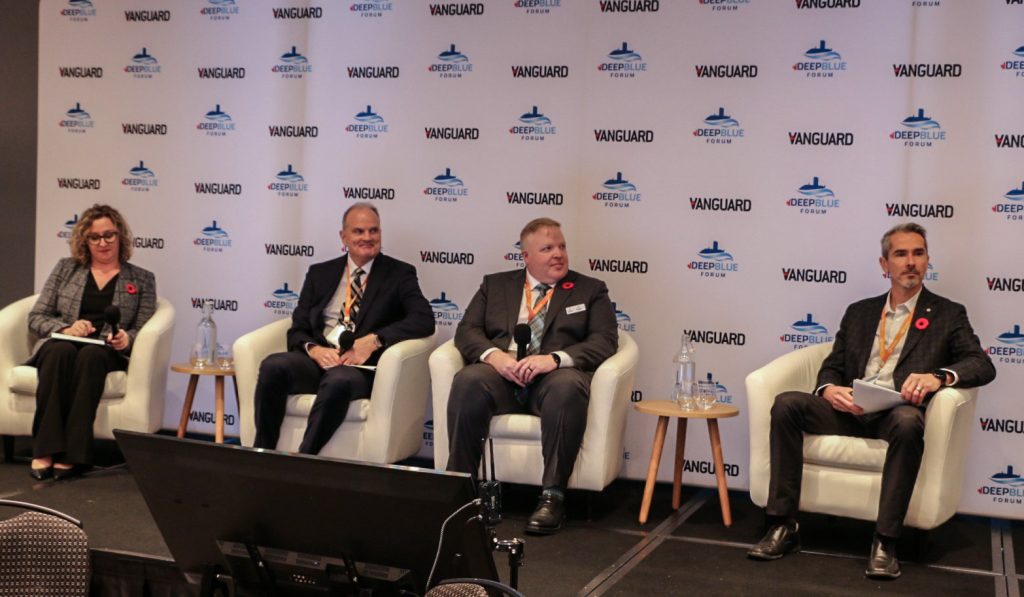
Byrtus noted that the level of engagement is unprecedented for the CPSP and that there are important lessons to draw from the National Shipbuilding Strategy—particularly around in-service support, supply-chain integration, and the role of the submarine manufacturer. Above all, he emphasized the need for maximum collaboration.

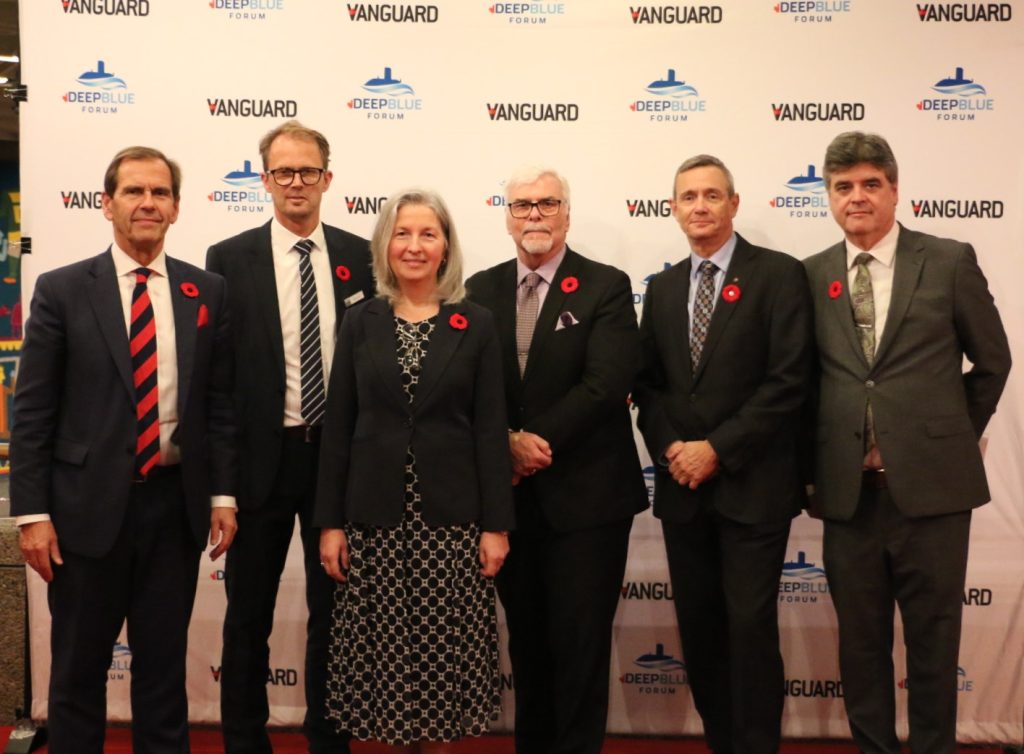
Left to right: Joachim Schoenfeld, Philipp Schöen, Rick Gerbrecht, Bob Davidson.
Summary
Deep Blue 2025 was a continuum from the previous five conferences, which looked at the critical areas facing acceptance and through life support of a new submarine capability that is being procured under incredibly rapid timelines. Regardless of which submarine design is eventually selected, how will Canada be ready to operate and sustain a sovereign submarine capability that will reflect a significant portion of the RCN fleet? Hopefully the frank interchange during Deep Blue 2025 will facilitate greater discussion between the RCN, government and industry, as only with a team effort by all participants will the Canadian Patrol Submarine Project succeed.

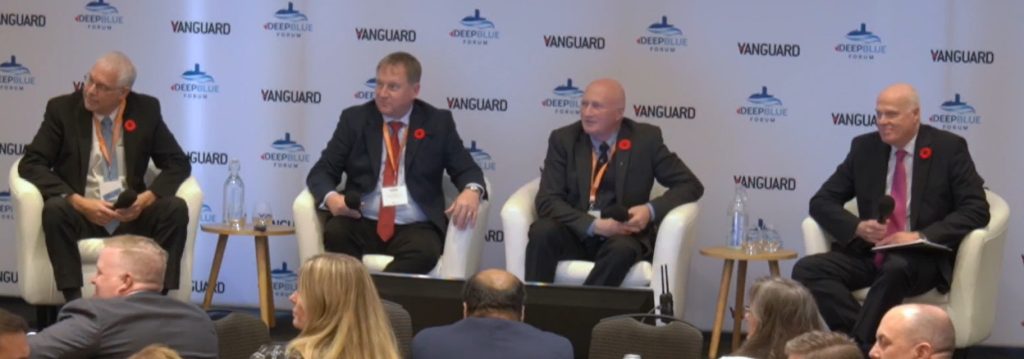
RAdm Nigel Greenwood RCN (Ret’d); Cmdre Laurence (Larry) Hickey RCN (Ret’d).