
If you ever find yourself in serious trouble on a vessel in the middle of the North Atlantic, there’s a good chance Canada and Portugal would end up working together to rescue you. That partnership is now formal.
On July 13, officials from Canada’s Department of National Defence and Portugal’s Ministry of National Defence signed a Memorandum of Understanding on search and rescue cooperation. The agreement itself is straightforward in purpose: Canada and Portugal are each responsible for search and rescue across vast, adjacent stretches of ocean. Canada’s zone is coordinated out of Halifax, Portugal’s out of the Azores. Those zones border one another in one of the most demanding maritime environments in the world.
“Search and rescue in the North Atlantic depends on well trained people, good equipment, trust, interoperability and enduring relationships with allies and partners,” Lieutenant-General Steve Boivin, Commander, Canadian Joint Operations Command stated in a release. “This memorandum of understanding with Portugal formalizes a relationship that has been built over years of operational cooperation and exercises like ASAREX, ensuring our forces can respond quickly and effectively when lives are at risk far from shore.’’
Brigadier-General Francisco Dionísio, Commander of the Portuguese Air Force, echoed that sentiment, describing the MOU as another step toward closer coordination in a region where international partners increasingly need to operate as one.
When an emergency occurs in that area such as a vessel in distress or a medical crisis aboard a ship far from shore then the two countries’ rescue teams frequently need to coordinate quickly, share information, and determine responsibilities. The new agreement establishes a clearer framework for that coordination, ensuring both nations are working from established procedures rather than improvising in the moment.
ASAREX 2026
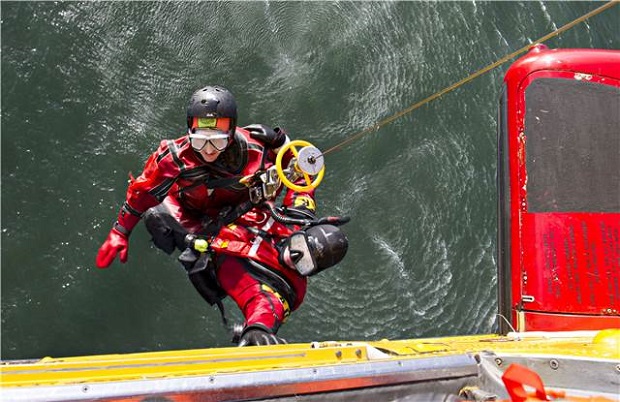
The timing of the signing was not incidental. It followed the conclusion of Advanced Search and Rescue Exercise (ASAREX) 2026, an annual training exercise held from July 1 to 12 in Ponta Delgada, in Portugal’s Azores islands. The exercise brought together search and rescue professionals from Canada, Portugal, and other North Atlantic partners to train through realistic emergency scenarios involving long-range coordination and multinational response. Canada and Portugal have participated in ASAREX together since 2015.
The value of that training extends beyond the exercise itself. The relationship built through ASAREX has already supported real-world operations: in April 2024, Canadian and Portuguese rescue coordination centres worked together to evacuate a crew member who had fallen seriously ill aboard the French sailing vessel Grain de Sail II. Later that year, the two countries’ teams also collaborated on the search for an overdue sailing vessel, the Theros.
The agreement does not change how search and rescue operations function day-to-day. Rather, it puts a formal structure around a relationship that already exists, ensuring that when incidents occur in that stretch of the Atlantic, both countries continue to respond from a shared set of procedures.