
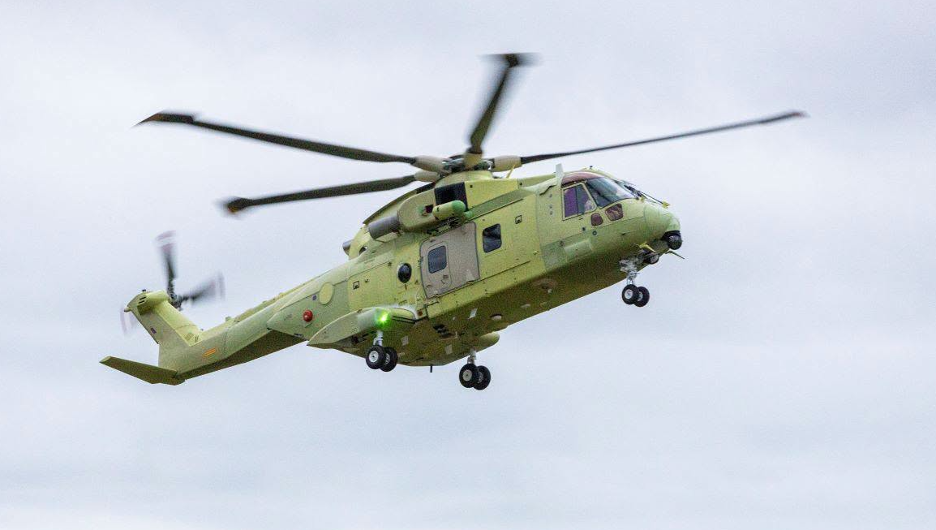

The CH-149 modernization program now moves into final testing ahead of deliveries beginning in 2027
The first CH-149 Cormorant modified under the Cormorant Mid-Life Upgrade Project has completed its first flight at Leonardo’s facility in Yeovil, United Kingdom.
National Defence called the flight an important production milestone. The aircraft will now undergo final testing of its upgraded systems and capabilities before the first modernized Cormorant is delivered to the Royal Canadian Air Force in 2027.
The project
The Cormorant Mid-Life Upgrade Project is currently in its implementation phase. National Defence awarded contracts to Leonardo UK Ltd. and Montreal-based CAE Inc. in late 2022, together valued at up to $1.24 billion including taxes.
The project will modernize Canada’s 13 existing Cormorants and add three aircraft, increasing the fleet to 16.
The larger fleet will allow the RCAF to restore a full rotary-wing search and rescue capability at 8 Wing Trenton, which currently operates CH-146 Griffon helicopters in that role. Cormorants are already based at Comox, British Columbia; Gander, Newfoundland and Labrador; and Greenwood, Nova Scotia.
CAE is also delivering a domestic flight simulator, allowing Canadian aircrews to train on the modernized configuration without travelling to the United Kingdom.
Production underway
Production of the first AW101-615 variant airframe began at Leonardo’s Yeovil facility in August 2024. By October 2025, National Defence reported that three airframes were in various stages of production there.
Work on the remaining 13 aircraft began at IMP Aerospace & Defence’s Halifax facility in September 2025. IMP is upgrading those aircraft under subcontract to Leonardo after its personnel undertook training in the United Kingdom.
What’s next
Under National Defence’s current schedule, the first aircraft delivery and initial operational capability are targeted for 2027. Final delivery is expected in 2029, followed by full operational capability in 2030.
The upgrades will replace obsolete equipment, modernize the helicopters’ avionics, communications and sensors, and extend the fleet’s service life to at least 2042.
