
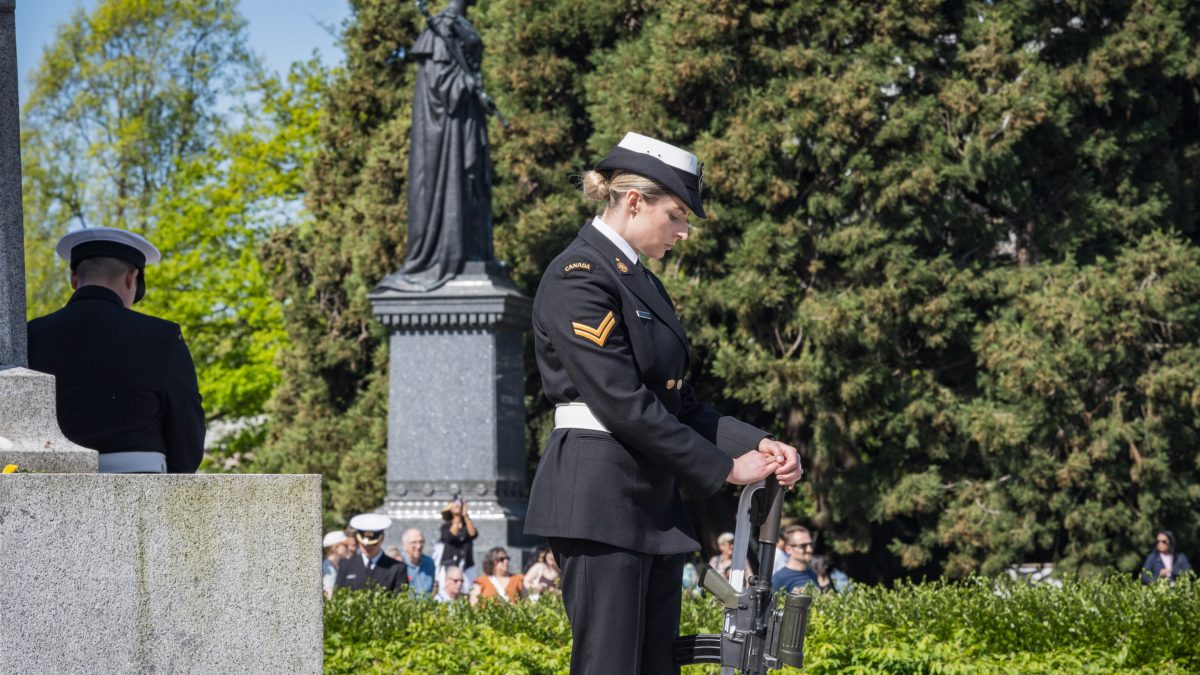

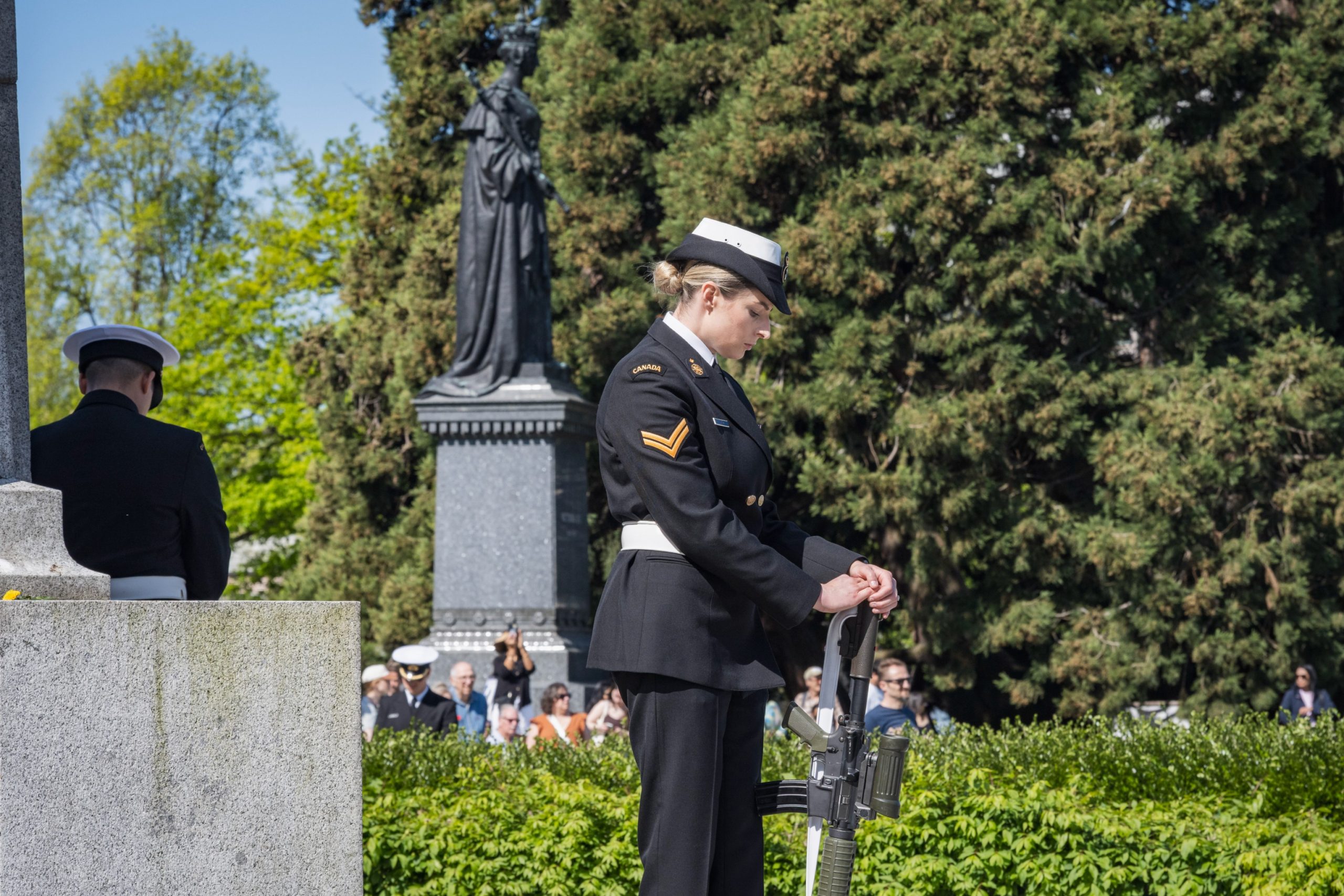
On the first Sunday in May, Canadians once again pause to remember a campaign that unfolded not in a single decisive clash, but across years of relentless struggle at sea. The 81st anniversary of the Battle of the Atlantic marks the end of the longest continuous military campaign of the Second World War—one that tested endurance, ingenuity, and resolve on a scale few conflicts have matched.
Across the country, members of the Royal Canadian Navy, the Royal Canadian Air Force, and Canada’s broader naval community gather to honour those who served. Their focus is not only on the scale of the operation, but on the human cost borne by thousands of sailors, aviators, and merchant mariners—alongside the civilian workforce that sustained the effort from shore.
The campaign began on September 3, 1939, with the sinking of the SS Athenia by German submarine U-30. Less than two weeks later, Halifax dispatched the first supply convoy bound for the United Kingdom, marking the start of a vast and complex logistical lifeline. Over the next several years, that lifeline would grow into a transatlantic artery of staggering proportions. By 1944, 494 fast and slow convoys—comprising more than 26,800 ships—had crossed the ocean, even as approximately 540 vessels were lost to enemy action.
For 2,075 days, Allied forces fought to maintain control of the North Atlantic, ensuring the steady flow of supplies essential to sustaining the war effort in Europe. Canadian sailors stood at the forefront of that fight, escorting convoys through some of the harshest conditions imaginable—darkened seas, relentless weather, and the constant threat of submarine attack.
The cost was profound. More than 2,210 Canadian sailors, 900 aviators, and 1,700 members of the Canadian Merchant Navy lost their lives. Their sacrifices, however, proved decisive. By protecting the convoys, they preserved the vital link between North America and Europe, helping to secure Allied victory.
Today, that legacy continues to shape Canada’s maritime identity and operational focus. The enduring importance of safeguarding sea lines of communication—particularly across Canada’s three oceans—remains a defining element of national defence.
As Vice-Admiral Angus Topshee, Commander of the Royal Canadian Navy, reflects:
“As we mark the 81st anniversary of the Battle of the Atlantic, I find myself reflecting on the extraordinary Canadians whose dedication at sea, in the air, and across our coastal communities helped secure the lifeline to Europe and shaped the Royal Canadian Navy we know today. Their determination – alongside the vital contributions of maritime aviation, including the Royal Canadian Air Force – closed the Mid-Atlantic Gap and protected countless lives. Their legacy continues to guide us, reminding us why a strong and determined maritime force remains essential to protecting our three oceans and the level of risk and hardship we endure once we put on the naval uniform.”
Eighty-one years on, the Battle of the Atlantic is more than a historical milestone—it is a reminder of the stakes of maritime security, and the enduring obligation to remember those who stood watch over the world’s most vital supply route.
