
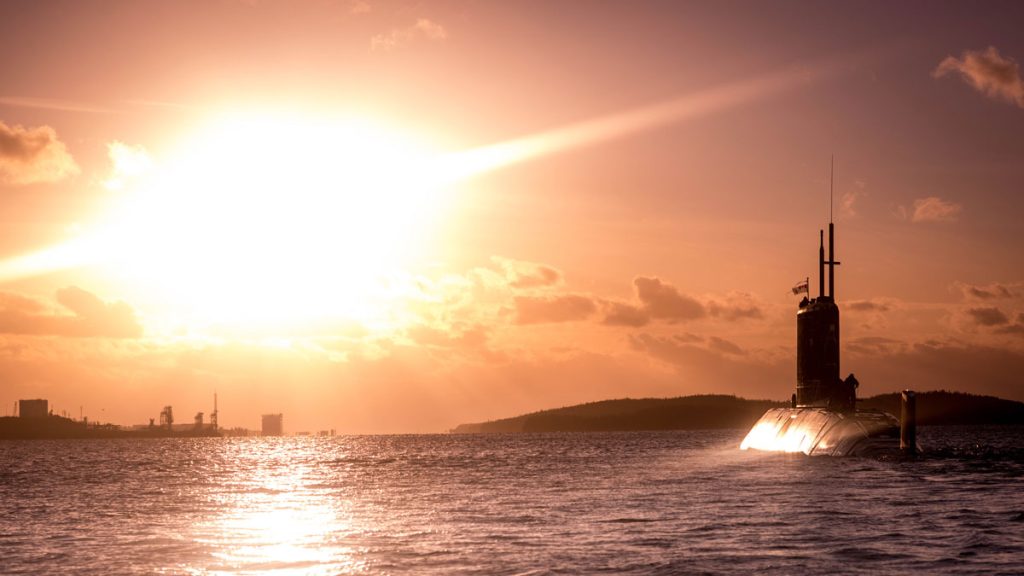
Canada is about to embark on a replacement for the four Victoria-class submarines currently in service with the Royal Canadian Navy (RCN). The project, entitled the Canadian Patrol Submarine Project (CPSP), is the manifestation of a multi-decade requirement to replace the three British Oberon-class submarines acquired in the 1960s.The interim 1998 decision to purchase four used British conventional submarines, called the Victoria-class in RCN service, was always envisioned as a temporary solution to maintain a submarine capability by generating a cadre of submariners while a replacement project was pursued.1 Little did anyone think that it would take over a quarter of a century for a submarine replacement project to be realized. With the RCN now actively seeking a new, non-British, class of submarine, it is worth understanding that Canada has not really had to consider baseline submarine crew composition, and its related training and support issues, beyond the day-to-day personnel issues that are the hallmark of small units.
Anyone who has ever had to deal with naval personnel issues in Canada understands it has always been challenging, especially after the Unification of the Canadian Armed Forces (CAF) in the 1960s.2 The current military personnel and training model is driven by baseline numbers authorized in each CAF unit’s personnel establishment, which allocates personnel, by rank and occupation, that is used to determine recruitment requirements.3 The rationale behind the model is that authorized personnel levels are tied directly to positions and it assumes there to be no requirement to exceed these numbers. What the rationale does not account for is CAF training policies that eschew the realities of naval operations, which can have personnel temporarily away on training for up to six months without replacement, the need for onboard training to meet at sea qualification/certification requirements and the daily short-fused medical and compassionate issues that precede any deployment.
To the pan-CAF perspective of personnel issues, the gravity of this situation is often misunderstood and under resourced as the total numbers are small compared to other CAF units. The significant difference is that in a warship, and particularly in a submarine, the crews are small, while simultaneously representing a number of diverse occupations, at different rank, skill and certification levels all of which must be in place prior to sailing. The naval personnel situation is further exacerbated by the need to support ships and submarines from two coastal bases approximately 6,000 km apart. A polite way of saying the present CAF “one size fits all” personnel system has never worked for the navy and continues to frustrate the conduct of naval operations. The long-standing issues surrounding naval personnel and training will only be resolved with a return to pre-Unification RCN control of the entire enterprise.
But what of submarines and the Canadian Patrol Submarine Project (CPSP)? At the time of writing, Canada has issued a request for information (RFI) to industry, indicating the submarines will be built offshore. Furthermore, on 26 August 2025 the Government of Canada identified Hanwha Ocean of South Korea and Thyssen Krupp Marine Systems of Germany as the two qualified suppliers for the CPSP.4 Both represent different language, cultural and operating routines than the legacy submarines familiar to Canada. When Canada made the decision to acquire the British Oberon-class submarines in the 1960s the RCN had over 200 officers and men then serving in British submarines.5 Notably, in addition to language and cultural similarities, the crew composition reflected the same occupations (classification/trades) of the RCN surface fleet. All that was required was submarine-specific training. But the next class of submarine will necessarily be different, which will compel an immediate review of personnel and training requirements once the country-of-origin (COO) is selected.
The most immediate requirement facing the RCN will be to ascertain whether the current naval occupation structure will work for the selected class of submarine, for both operations and maintenance. This will necessarily involve a thorough understanding of the culture that determined their operations and maintenance routines. From there Canada will need to rapidly determine what occupation changes are necessary to build the personnel establishment that will crew the submarine for a lengthy deployment, whilst simultaneously supporting it from ashore – notably the Fleet Maintenance Facilities (FMF). Should it be determined that changes to the legacy military occupation structures (MOS) are required, any changes will have to be made early to allow for the requisite training essential for initial acceptance of the submarines. Again, this underscores the need for a rapid naval analysis and not a lengthy CAF-style MOS review.
Once the baseline personnel establishment is developed, plans for COO initial cadre training, and eventual training patriation to Canada, will soon be required. Training length will vary dependent on occupation, position in the establishment and unique certification requirements. This is an area where history has repeatedly shown that under resourcing personnel numbers to meet CAF policy guidelines negatively impacts both the transition to the new fleet and the ability to operate (and maintain) the legacy fleet during the transition period. The CAF 1960s-era “one man, one job” baseline for personnel strength simply does not work, particularly for small diverse crews. Experience has shown the need to ‘over establish’ the personnel and associated training numbers, to what may seem to be significantly ‘in excess of the requirement’, as the numbers represent many diverse qualifications and backgrounds.6 Failure to get ahead of the requirements for trained personnel will impact the quick transition to a new submarine fleet but also foment dissatisfaction impacting both recruitment and retention in the submarine service during the lengthy transition period to steady state training. We have seen this before – and the subsequent damaging impact it has on recruiting for submarine crews within the RCN. The good news is that Canada has indicated its intention to replace the four Victoria-class submarines with up to 12 conventionally powered patrol submariness. However, a submarine fleet of this size will necessarily bring into place a number of changes to the legacy RCN fleet composition and therefore naval personnel policies. First and foremost, 12 submarines, regardless of their small crew size, will cease to be a niche element of the RCN, but rather represent a significant strategic part of a balanced fleet. The RCN will no longer be defined as a solely a frigate/destroyer navy that drives, currently, all naval personnel and training policy and resources. Moreover, 12 submarines – in a potential a six and six split between east and west coast bases – will allow for the creation of a critical personnel mass of submarine crews and maintenance staffs to allow for an unrestricted operations tempo and surge capability in times of tension.7
Assuming a delivery schedule of the first submarine by 2035 with further submarines following at an agreed transfer drumbeat, decisions regarding training, including the supporting infrastructure, will require a high level of RCN interaction with the Materiel Group.8 This would be a challenge at the best of times, however, with an anticipated mid-decade delivery of the first of a fleet of submarines, the CPSP will be in direct competition with the simultaneous introduction of the River-class destroyers. This has the potential to be an immensely disruptive factor that will require careful coordination by the RCN. While the project, under the Materiel Group, will be responsible for all CPSP deliverables, which include training as part of Integrated Logistics Support, it is the RCN, through the Chief of Military Personnel, that must ensure the requisite numbers of personnel are selected and available in time for this training. To work, this will require significant planning, as well as potential reassessment of longstanding CAF personnel policies. Specifically, the issue of retention policies and incentives for CPSP trained personnel, as the RCN will soon be in competition with industry for submarine trained personnel that have completed the initial cadre training.9
Unlike the Oberon experience of the 1960s, both CPSP countries of origin represent significant cultural and language differences to Canadians. Therefore, every effort should be made to put the requisite infrastructure in place, in Canada, as soon as practicable, where training in the new submarine can be conducted domestically. To support this training, the required infrastructure to support submarines in Halifax and Esquimalt will demand a certain amount of duplication of training resources. While one coast may be designated a submarine centre of excellence for baseline submarine training and tactical development, there needs to be adequate training facilities, notably simulators, available on the other coast.10 This is where synergies with other major naval projects, notably the River-class destroyers, are useful. No longer a sub-set of the surface fleet, a large Canadian submarine fleet will fully justify the construction of land-based test facilities that can offer a combined training and tactical development opportunities. Canada will need to swiftly determine which is the lead coast to commence building the supporting infrastructure, as it must be in place and operating before the first submarine arrives.
In summary, the Canadian Patrol Submarine Project has personnel implications of a scale and detail that have not been looked at since the 1980s. Canada will be procuring a completely different submarine that will be operated by smaller crews and supported by an infrastructure comprising both military and civilian expertise underpinned by an international supply chain. Success will be dependent upon the trained personnel resources available throughout the process. To achieve this, whilst simultaneously introducing the River-class destroyers, the RCN must exercise control over all the levers of the personnel and training process, to ensure there is the requisite number of people resources needed to build a cadre of submarine expertise.
The 2030s are indeed shaping up to be a very busy time for the Royal Canadian Navy and submarines.
References:
1. “The submarine we own today was a used submarine that was designed to do one thing for us, and that was preserve our ability to generate submariners and maintain the knowledge and skills required to successfully operate a submarine force.” Commander RCN, VAdm Angus Topshee quoted in CDR Volume 31, Issue 4, August 2025, pg 19.
2. The Canadian Forces Re-Organization Act (known as Unification) became law on 1 February 1968. On that date, the Royal Canadian Navy, the Canadian Army and the Royal Canadian Air Force ceased to exist as separate services and one service, the Canadian Armed Forces was established. Notwithstanding a return to traditional names in 2011, the organization of a unified armed forces remains, where all recruiting, training, assignments (postings) and retention are the responsibility of the Chief of Military Personnel reporting to the Chief of the Defence Staff, not the Commanders of the RCN, CA & RCAF.
3. A personnel establishment is a document which defines the rank, occupation and unique qualification for each position in the unit. For example, in a submarine establishment, the position of Commanding Officer will call for a Lieutenant-Commander (rank), Naval Warfare Officer (occupation) who is submarine command qualified (speciality qualification necessary to fill the position).
4. See: https://www.canada.ca/en/public-services-procurement/news/2025/08/government-of-canada-advances-to-next-step-in-canadian-patrol-submarine-project-procurement.html accessed 26 August 2025.
5. Minutes of the 564th meeting of the Naval Board 2 April 1958
6. To “over establish” would be to authorize more than the allocated numbers of personnel in each unit, as defined in the establishment, by rank, occupation and specialty qualification. For example, if the establishment of the submarine called for three petty officer 2nd class marine engineering techs at a certain certification level, by authorizing two more personnel of the same rank and qualification & certification level would allow for the inevitable critical personnel shortfalls during the transition to steady state and speed the build-up of a cadre of qualified personnel. Once in steady state, the additional qualified personnel can replace those having to attend training, medical, etc without impacting the submarine’s ability to sail.
7. As a result of a seminal study by the Navy into submarine personnel issues, in April 1988 the “Report on the Personnel Structure of the Submarine Service of Canada” (known as the Pollard Report) was released – the research was conducted in consultation with allied submarine nations, which anecdotally determined that while four submarines running from one geographic area is possible, the optimal number of six crews in each geographic area allowed for a critical mass to deal with day-to-day personnel issues.
8. The 2024 RFI for the Canadian Patrol Submarine Project’s high level mandatory requirements called for the “Ability to deliver submarine, maintenance facilities and training systems to achieve Initial Operating Capability (IOC) no later than 2037” which was amplified that to avoid a capability gap with the Victoria-class submarines and allow for crew generation the requirement is for the first Canadian Patrol Submarine (CPS) to be delivered by 2035. IOC is defined as the first CPS being operational with requisite infrastructure and in-service-support in place”. The author was the staff officer charged with personnel and training issues for the Navy’s Project Director for the nuclear submarine project, which required close liaison with the CASAP-SSN Project Management Office which was responsible to ADM (Materiel).
9. Notwithstanding the terms of service under which a member is serving, personnel can request voluntary release from the CAF on 6 months notice. A return of service obligation is where an individual commits to serve a set period after receiving specific education/training – normally on a one for one basis (e.g. four years of university equating to four years of post graduation service). This policy is used mainly for officers undergoing education (e.g. Regular Officer Training Program). Will there be an obligation or a financial incentive to agree to serve for a fixed period after submarine training, particularly senior NCMs?
10. As a minimum the simulators required, in each geographic area, should include: a six-degree ship control trainer (similar to aviation trainers), control room for sensor operator and attack training, propulsion system (operation & maintenance), weapons handling and submarine damage control. Other common fleet simulators, such as bridge navigation can have software updates to reflect the handling characteristics of the submarine on the surface. Less frequently used training systems, such as Submarine Escape Tank Training (SETT) can be located in one geographic area.