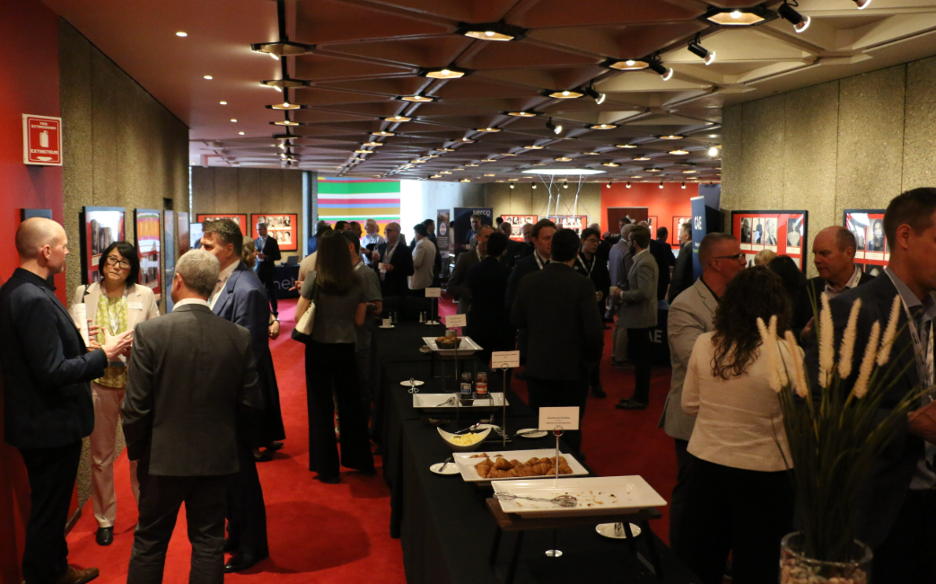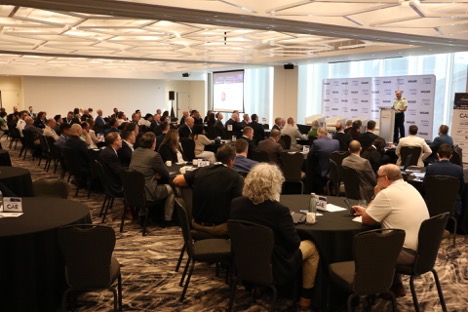
At the inaugural Simulation and Training Forum in Ottawa, the question on the table was whether Canada’s training enterprise can keep pace with the force it is being asked to build.
Canada is spending money on defence at a pace not seen in a generation. New jet fighters, new surface combatants, new ground systems. The question is whether the training enterprise can keep pace. The Simulation and Training Forum put that question on the table on April 28 in Ottawa and drew more than 180 participants from across government, the Canadian Armed Forces, and industry. It spent a full day examining it with the people who do this work, the industry partners building the systems that support it, and the scientists who study how people actually learn complex skills under pressure.

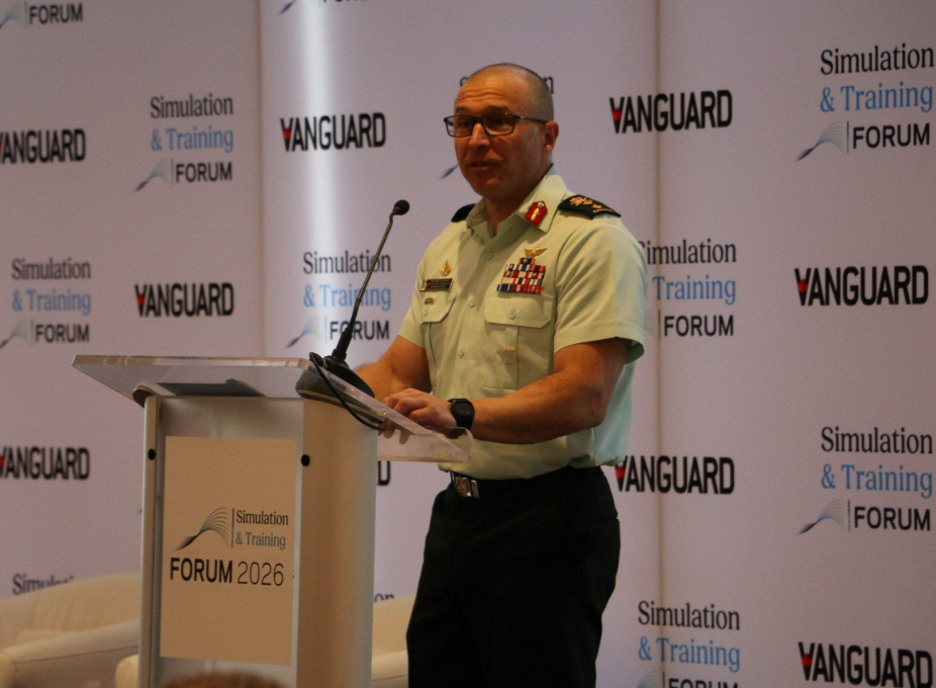
Major-General Timothy Arsenault, Deputy Commander of Canadian Joint Operations Command, opened the day by putting training at the centre of the CAF’s modernization agenda. In his view, the training enterprise must keep pace with the platforms Canada is acquiring, and getting there will require deliberate investment and integration. “If we fail to evolve, if we allow fragmentation to persist, if we lag behind the pace of technological change, then it will become a vulnerability, one that our adversaries will exploit, and one that will ultimately be paid for by our people on operations.”
That framing was held for the rest of the day.
What the People Doing the Work Actually Said
Two serving officers, Major Jake Balfe, Chief Training Officer at 436 Tactical Air Transport Squadron, and Lieutenant-Commander Nicholas Culhane, Operations Room Officer Course Officer, Naval Fleet School (Pacific), were given the stage with no moderator and no prepared remarks. The format was called the Coal Face. Both officers spoke plainly about what is working, what is not, and what they need.

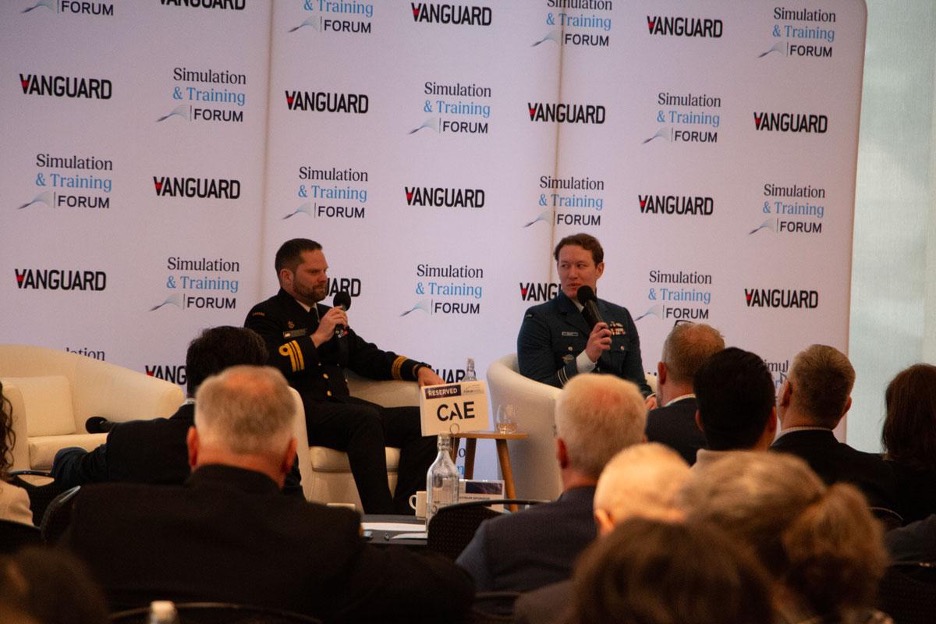
Balfe described an Air Force in expansion, making forward-looking investments and asking the right questions of the right people. But he was clear about where the gaps are. “The expansion of radar-guided weapons around the world is something that keeps me up at night. One-way attack drones, things we can’t simulate that you might encounter for the first time. The variability of the battlespace and the complexity of weapons now out there.” Simulation of the electromagnetic spectrum, he said, remains fundamentally inadequate. “The EM spectrum is incredibly difficult to replicate currently.”
Culhane was equally direct about what the Navy needs and does not yet have. His priority in five years: the ability to locate adversary submarines holding North American infrastructure at risk in a degraded environment, with limited communications, fighting at distance. “I can’t do that with the simulator I have right now.” He also named the River Class destroyer training gap plainly. Canada is sending its first operators south to Dahlgren, Virginia to train on the AEGIS combat system because no domestic training infrastructure yet exists. “If we don’t do the work into developing the training program for that ahead of time, we’re going to see the first River Class, and we’re not going to know how to use it.”
What the Science Says
The luncheon keynote shifted the conversation. Shelly Blake-Plock, president of the Institute for Infrastructure and Interoperable Data in Learning and CEO of Yet Analytics, made the case from first principles. For most of the twentieth century, he argued, training was designed around a flawed theory of how the human mind works. Lectures and summative assessment assumed learning happened through transfer. The evidence says otherwise. Learning happens through adaptation, through prediction error, through retrieval and reconsolidation. “When reality differs from prediction, learning happens. We learn from mistakes. We learn from failure. Within simulations, it is often actually more impactful for learners to fail than to succeed.”
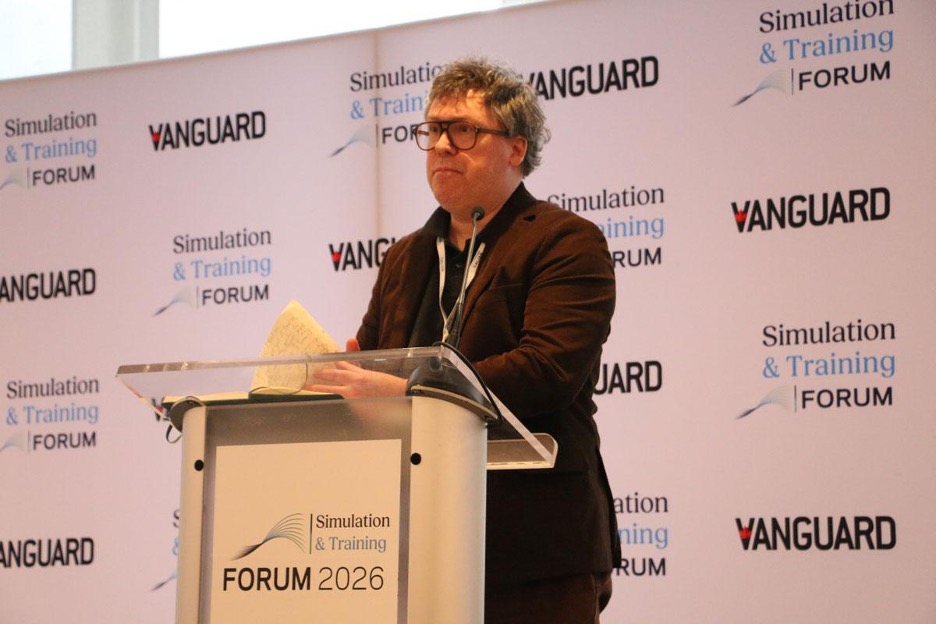
The implication for Canada’s training enterprise is significant. AI-enabled simulation is not a supplement to existing systems. Properly instrumented, it becomes the engine of learning, capable of identifying skills gaps before they become operational failures, personalizing training to the individual, and compressing timelines in ways that conventional approaches cannot match. Blake-Plock was careful to distinguish hype from substance. Large language models are one piece of a larger paradigm shift. The deeper opportunity lies in learning engineering: bringing together learning scientists, experience designers, and systems architects to build training systems grounded in evidence and capable of measuring what they claim to produce. “There is no learning system that should be created, let alone touched by a learner, if it does not have a learning science fundamental background underneath it.”
The Partnership Problem
Panels two and three returned repeatedly to the word partnership. Major-General John Errington, Commander of the Canadian Army Doctrine and Training Centre, was unequivocal about the stakes. “If we don’t take advantage of this opportunity, it’s now on us. When I say us, it’s not those in uniform. It’s on all of us.” He described an Army in structural transformation, shifting to functionally organized divisions with units coast to coast.
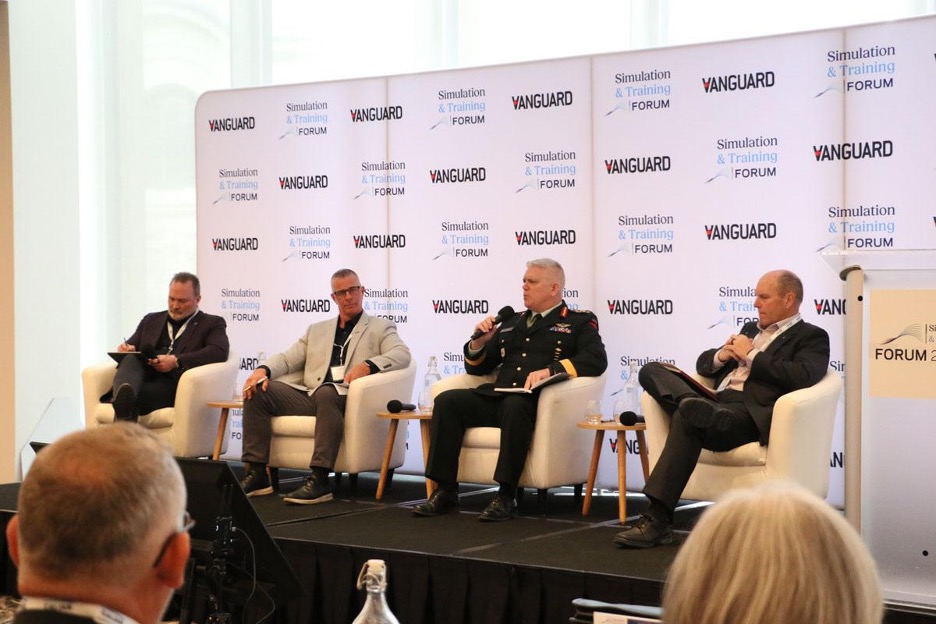
Chris Pogue, President of Defence and Space at Calian, made the case for Canadian industrial capacity as a readiness issue, not a procurement one. He cited Ukraine’s experience as the clearest proof of what is possible: a thousand new businesses formed after the 2022 invasion, building autonomous systems in garages and basements, flying over three million missions. “Had Ukraine not been able to react with a thousand new businesses, they probably wouldn’t be there today.” On what that means for Canada, he didn’t mince words. “If we don’t build Canadian capacity and Canadian industrial capacity, then readiness will die. No matter what training we do, we will not have the capacity in Canada to support it, because when the battle starts, things are going to need to change fast.”
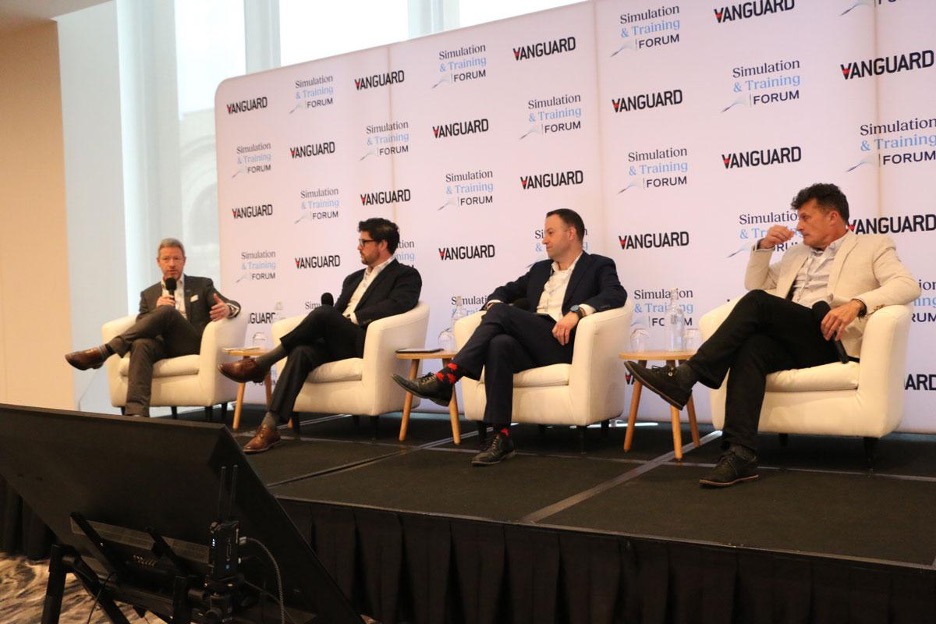
Panel three surfaced the structural barriers with equal clarity. Scott Arbuthnot of CogSim Technologies pointed to a practical constraint: simulation capabilities need a designated institutional owner before they can be acquired, and for capabilities that don’t fit neatly into existing program offices, finding that owner takes time. His suggestion was to contract simulation as a service rather than acquiring hardware. Hugo Hodgett of H2 Analytics argued the tools to move faster already exist. “There are things that we can do right now for relatively small dollar amounts that exist within policy and within the existing frameworks.” The policy framework, he noted, is considerably more flexible in a training and experimentation environment than most people assume. The opportunity is there.
The Sovereign Capability Question
The closing fireside returned to the forum’s central question. Vice-Admiral Ron Lloyd (Ret’d), 35th Commander of the Royal Canadian Navy, argued that the barriers discussed throughout the day trace back to a single underlying problem. Canada’s high-level policy commitments, the Defence Industrial Strategy, the Defence Investment Agency, the spending commitments, are ambitious. But the operational rules that govern how industry actually engages with government, procurement processes, security clearance requirements, contracting thresholds, have not changed to match. For simulation and training companies trying to get capabilities into the hands of the CAF, that gap is not abstract. It is the difference between a capability that gets used and one that does not. The path forward, in his view, is clear. “Once we start changing that foundation upon which all these capital P policies are articulated, then I’ll begin to have confidence that that’s actually going to take place.”
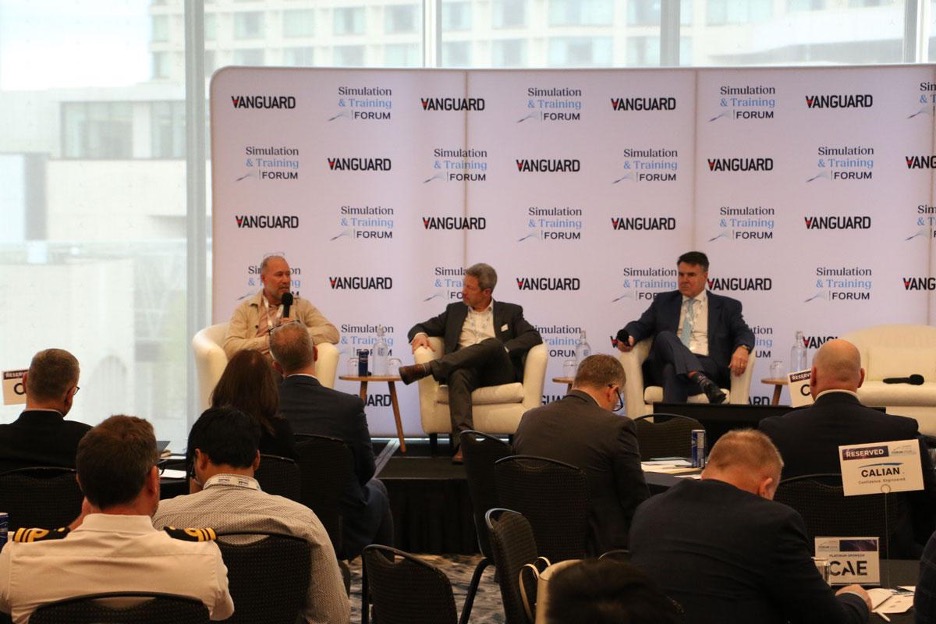
Jeff Tasseron, Director, Strategy and Innovation, CAE Defence & Security Canada, who moderated the session, put the responsibility back on industry. In his view, operators at the tactical level should not be expected to know what technology can deliver. That is industry’s job. The obligation is on companies in this space to put the art of the possible in front of the people who need it. He was optimistic about what that could mean for Canada. “Training and simulation being identified as a Canadian core capability, if we can find a way to show these strong signals, to prove things out, and to roll these kinds of things out into other ecosystems and other sectors, there’s a real potential to grow this sector broadly from Canada to the rest of the world.”
The stakes of getting it right are clear. The DIS has named training and simulation as a sovereign capability area in which Canada already leads. That is not a minor designation. It signals that Canada has a competitive position in a global market, the expertise, the companies, and the institutional knowledge, that other nations are actively trying to build. The question is whether Canada chooses to build on it. Master of Ceremonies, Colonel Andre Dupuis (Ret’d), President, SSCL, closed the day by drawing out what that choice demands. “The word sovereign carries weight. It implies ownership of outcomes. We should act accordingly.”
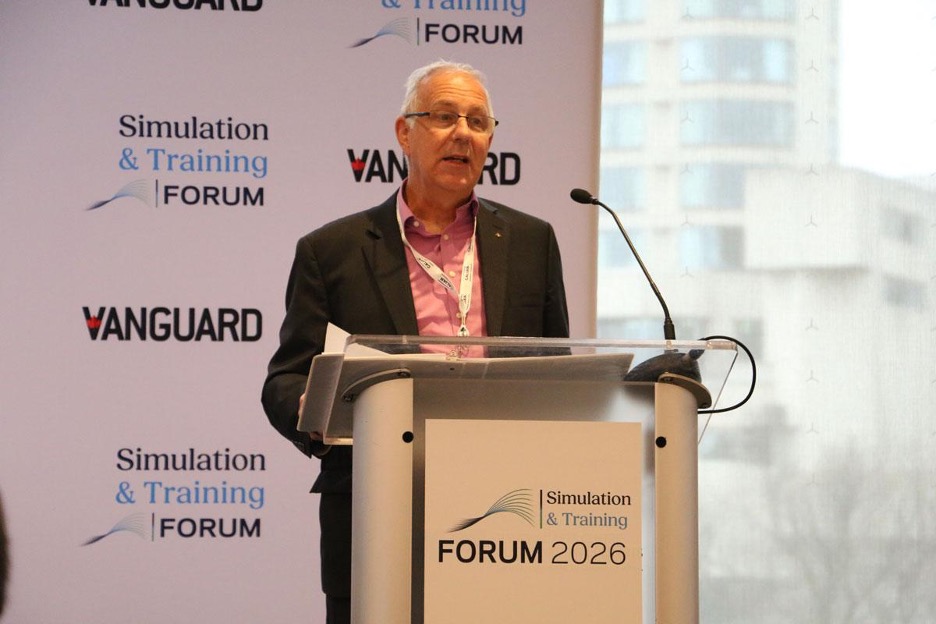
The inaugural forum brought together participants from across government, the Canadian Armed Forces, and industry for a day of substantive conversation that the sector has needed for some time. The ground has been laid. The relationships are in the room. The second annual forum will build on both.