

The defence space in Canada is changing rapidly, and it’s not happening in a vacuum. Our NATO and Asia-Pacific allies are taking defence more seriously in the face of threats to peace and prosperity. The German defence minister recently said that war could come to Europe as soon as 2029, which is only three years away.
In Canada, we are well on our way to reaching the new 3.5 per cent of GDP defence spending target. The government reached the two per cent target in March of this year and, based on his speech at CANSEC, Prime Minister Mark Carney is committed to keeping the pressure on.
These investments will include everything from large programs for submarines and fighter jets, to digital integration programs to realize the vision of a digitally enabled force.
Strategic partner framework
Announced by the prime minister at CANSEC, the strategic partner framework was formally released after the event. The principles reflected in the framework align with the big themes we saw in the Defence Industrial Strategy.
Canada has named its key sovereign capability areas. It will use the build-partner-buy framework to buy from Canadian companies first—wherever it can—and it wants the relationship between industry and government to be more collaborative.
Other key elements that will help build the industry are included too. There is an emphasis on developing intellectual property (IP), driving innovation and R&D, and integrating small and medium enterprises (SMEs) into solutions and supply chains. Industry Canada’s recent State of the Industry report shows that over 90 per cent of companies in the defence sector have fewer than 500 employees, making the SME sector essential to building the defence industrial base.
Skills development and retention are both included too. Engaging in long-term thinking about the human capital necessary for the defence sector is essential Without people, capabilities and solutions will not be developed and delivered.
Delivering on the Defence Industrial Strategy
Calian has been a Canadian defence company for over 40 years and knows this sector well. Where we have long-term programs and projects with DND, we are looking at how to integrate more technology into our solutions.
We have created proprietary systems for developing and delivering large complex military training exercises, managing military healthcare, and advanced manufacturing capability for defence, space and GNSS applications. We are upping our game across that portfolio by leveraging AI and LLMs and looking at ways to integrate quantum. Calian recently announced partnerships with Canadian AI companies as well as a quantum research hub with two Canadian partners.
Through the VENTURES program Calian is working with SMEs that have proven technology and are facing challenges with pursuits and scaling. This a common challenge with SMEs. Many are laser-focused on getting their capability to TRL 9—which makes sense. The challenge is connecting that capability with a program where it becomes part of an in-service solution. VENTURES connects SMEs with funding and pursuit help from Calian. We have signed three partners to the VENTURES program so far, and we are in talks with many others. This is a permanent part of who we are and will support the development of the defence industrial base over the long term.

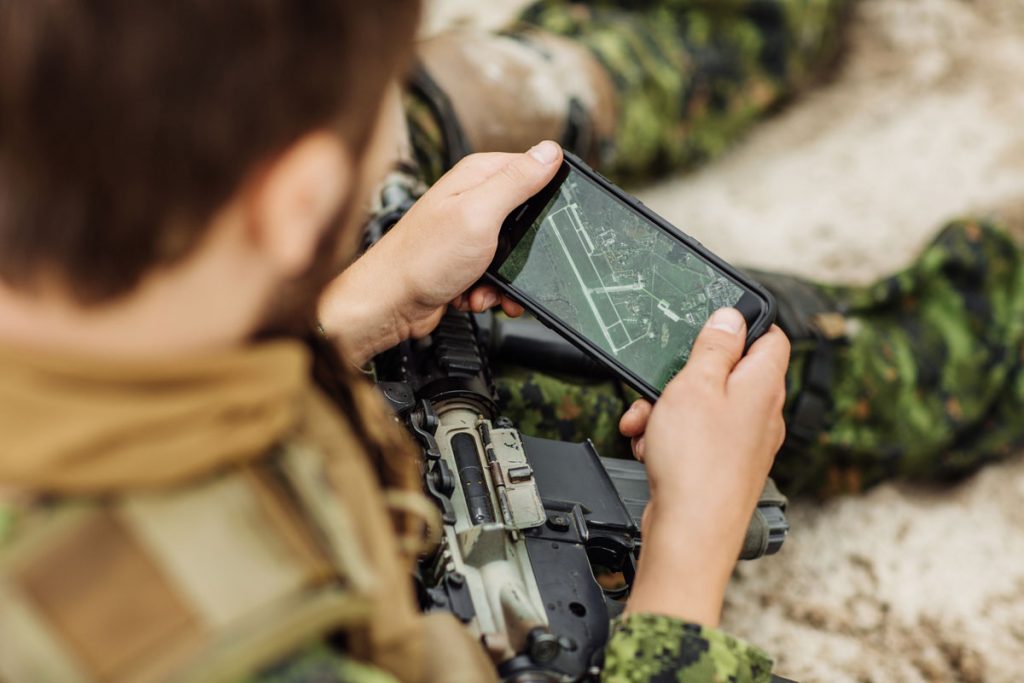
Top defence priorities for Calian
A strong part of Calian’s legacy is as a defence training and simulation company. For almost three decades, we have been a training partner to the CAF. We have trained over 250,000 CAF personnel in that time and 50,000 NATO member personnel in the last decade. We are now working on next-generation solutions for military training.
Our vision for military training is to accelerate the digital integration of training and operational systems so that military personnel can train as they will fight.
New systems—sensors, command-and-control technology, AI-enabled decision support, quantum sensors—are being developed faster than militaries can integrate them. This challenge is likely to become tougher going forward because technology is always evolving. What made sense two years ago may not make sense next year, so speed and flexibility are key.
Our next-generation approach is to build a digital ecosystem where any kind of training system can be connected. Modern systems and capabilities are increasingly digital, software-enabled and interconnected. Connecting training, simulation, mission rehearsal, experimentation and readiness activities into a single ecosystem will lower technological barriers to interoperability, generate readiness faster and drive continuous adaptation to a changing global environment. Taken together, this will enable our military personnel to train as they will fight in realistic, immersive environments.
System of systems platform
To deliver next-generation training, Calian is developing a digital system-of-systems platform called ATHORA that will serve as the integration and orchestration environment. ATHORA is not the training system: it is the enabling environment that allows diverse capabilities, systems and technologies to connect to each other.
ATHORA will deliver a technology platform that will enable the connection of data feeds, ISR sensor data and any data stream from operational and command and control systems. This is a challenge that militaries have faced since digital systems became available for military use. Proprietary standards are often a barrier to integration. ATHORA will lower that barrier and enable interoperability.
To deliver ATHORA, Calian has announced a partnership with Evertz Microsystems—a Canadian company that is a global leader in real-time video and television broadcasting. They manage large, high-fidelity datasets for commercial customers, and there are clear defence applications for this technology and expertise.
Benefits for military training
Calian’s next generation training capability will not replace anything the CAF has in service today, any training systems or solutions it is planning on acquiring, or other capital programs. Calian’s next-generation approach will be the integration platform that connects all the pieces together in a single training environment. This will deliver a “train-as-you-will-fight” experience by connecting the real systems that personnel will use on operations—voice radios, ISR sensors, command and control systems, etc.
This approach is not one system. It is one environment that delivers agility and integration of existing systems. This provides the ability to build an environment with the same systems that personnel will use for a particular operation, and the ability to reconfigure if the operational need changes.
The clear benefit is maximum agility and realism in delivering training. By integrating the actual systems that personnel will use, the experience they gain in training will match the expectation on operations. The Calian approach will narrow the gap between training and operations, building and sustaining readiness faster than using any existing approach or technology.