
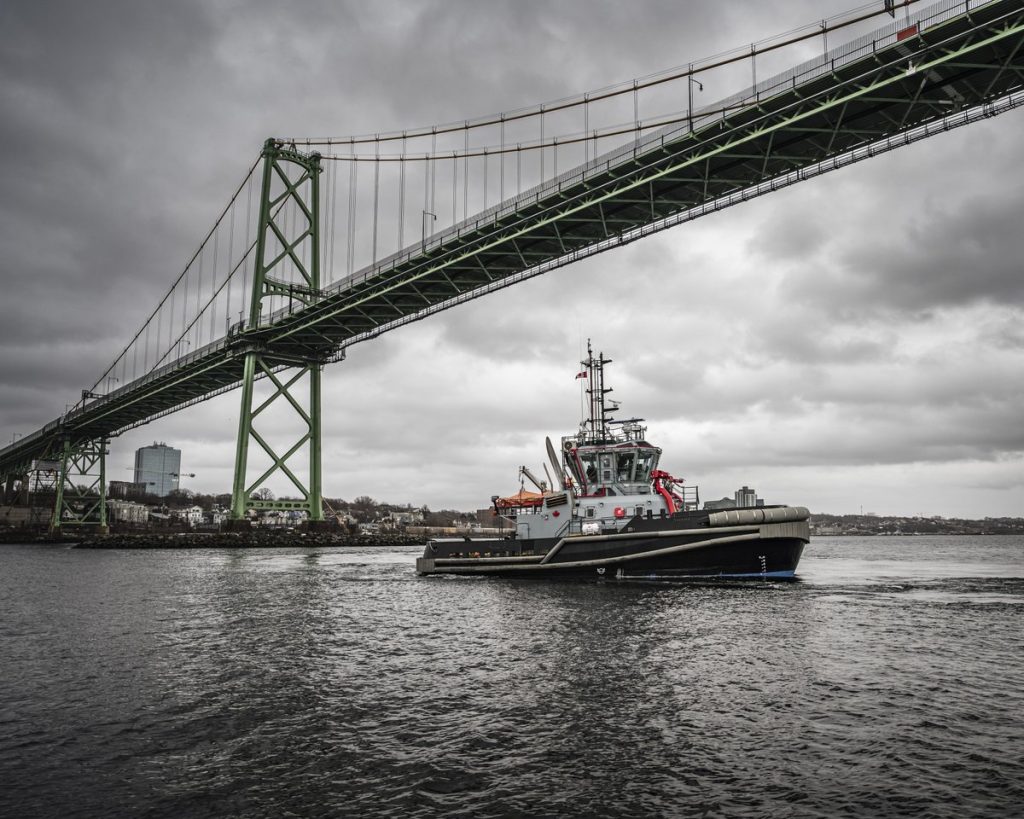
At Canadian Forces Base Halifax, the arrival of a small but powerful new vessel is quietly reinforcing the operational backbone of the Royal Canadian Navy (RCN).
In January 2026, the Department of National Defence formally accepted Canadian Forces Auxiliary Vessel (CFAV) Canso, the third Naval Large Tug built to support Canada’s growing naval fleet. Delivered after a journey of more than 1,000 nautical miles from the shipyard at Ocean Industries Inc. in Île-aux-Coudres, Quebec, the vessel marks a key milestone in the steady modernization of Canada’s maritime support infrastructure.
The tug’s delivery also underscores a reality often overlooked in discussions about naval capability: a modern navy depends on far more than its largest warships.
“The strength of our naval fleet is not defined by its largest warships alone. The security of our oceans depends on the steadfast contribution of every vessel that keeps our fleet moving and our sailors safe. Our Naval Large Tugs are fundamental to that mission—guiding ships through narrow waterways, ensuring safe passage home, and supporting our sailors as they head out on deployment,” stated the Honourable David J. McGuinty, Minister of National Defence.
CFAV Canso will officially transfer to the Royal Canadian Navy once crew training is completed, expected in March 2026. When it enters full service, it will become the first Naval Large Tug assigned to the East Coast fleet.
The Unsung Enablers of Naval Operations
Naval Large Tugs play a critical role in supporting the day-to-day operations of the RCN. Their responsibilities include harbour berthing, coastal towing operations, and harbour firefighting—functions that are essential to maintaining fleet readiness and operational safety.
These capabilities become increasingly important as the RCN expands its fleet through several major modernization programs, including the Harry DeWolf-class Arctic and Offshore Patrol Vessels, the Protecteur-class Auxiliary Oiler Replenishment ships, and the upcoming River-class destroyers. As these new vessels enter service, harbour infrastructure and support capabilities must evolve alongside them.
Rear-Admiral Josée Kurtz, Commander Maritime Forces Atlantic and Commander Joint Task Force Atlantic, emphasized the operational value of the new tug for the East Coast fleet.
“The arrival of Canadian Forces Auxiliary Vessel (CFAV) Canso strengthens Maritime Forces Atlantic’s ability to safely support naval operations on the East Coast. Naval Large Tugs are essential to fleet readiness, enabling warships to manoeuvre safely in harbour and operate effectively. As the Royal Canadian Navy modernizes its fleet, reliable harbour and towing support becomes increasingly critical. Though operating behind the scenes, CFAV Canso will play a vital role in sustaining operations and supporting the RCN’s long-term mission in the Atlantic.”
Expanding a National Capability
The Naval Large Tug program is part of Canada’s National Shipbuilding Strategy, which aims to renew the country’s naval and coast guard fleets while strengthening domestic shipbuilding capacity.
In August 2024, two of the vessels—CFAV Haro and CFAV Barkerville—were delivered to the RCN’s West Coast fleet in Esquimalt, British Columbia. The program will continue to expand on the Atlantic side of the country. A second East Coast tug, CFAV Stella Maris, is scheduled to arrive in Halifax in November 2026.
Government leaders visiting CFB Halifax highlighted the collaborative effort required to bring the vessels into service.
“On behalf of the Minister of National Defence, I would like to extend my sincere appreciation for the work of our dependable defence industry, our innovative engineers, our dedicated technicians, and our professional crew for their seamless collaboration in materializing the Royal Canadian Navy’s future fleet and helping strengthen our maritime capabilities,” conveyed the Honourable Lena Metlege Diab, Minister of Immigration, Refugees and Citizenship.
The government has also expanded the scope of the project. In December 2025, the Department of National Defence amended the contract with Ocean Industries Inc., increasing its value by $81 million for a total contract value of $213.45 million. The amendment will fund the construction of two additional Naval Large Tugs, bringing the total fleet to six vessels.
According to Stephen Fuhr, Secretary of State for Defence Procurement, the expansion ensures long-term operational support for the RCN.
“Built under the National Shipbuilding Strategy, the Naval Large Tugs are an important investment to support the navy’s future capabilities and Canada’s marine industry. With today’s acceptance into the fleet of Canadian Forces Auxiliary Vessel Canso and the announcement of two additional tugs to be built, bringing the total to six, we’re making sure our sailors have the advanced and reliable vessels they need to protect Canada’s interests at home and abroad for decades to come.”
Honouring Canada’s Waterways
Like their predecessors, the new tugs follow the RCN’s long-standing naming convention of drawing inspiration from Canada’s coastal geography. The two newly announced vessels will continue that tradition.
CFAV Sansum is named after Sansum Narrows in British Columbia, reflecting the coastal waters where the vessel will serve. CFAV Belle Isle takes its name from the Strait of Belle Isle, located between Newfoundland and Labrador—an area historically significant for navigation in Atlantic Canada. Naming the vessels after straits reflects a symbolic connection between waterways and tugs: both guide vessels safely through narrow passages and help ensure safe maritime navigation.
Strengthening Fleet Readiness
Once all six vessels are delivered, the RCN will operate three Naval Large Tugs on the East Coast and three on the West Coast. This distribution will create redundancy in harbour support operations, allowing fleets to maintain operational readiness even when vessels undergo maintenance or repair.
For Canada’s defence leadership, the program represents more than just infrastructure—it reflects a broader commitment to supporting the sailors and crews who operate the country’s naval forces.
“As the Royal Canadian Navy welcomes another new Naval Large Tug into the fleet, I would like to congratulate the team at Ocean Industries Inc. for its hard work and dedication to this important project. The Government will continue to work with Canadian shipyards to provide the navy with modern ships while generating economic benefits for Canada,” assured the Honourable Joël Lightbound, Minister of Government Transformation, Public Works and Procurement.
The program also contributes to Canada’s industrial base. Expanding the project will sustain between 40 and 60 Canadian jobs at the Ocean Industries shipyard while reinforcing domestic shipbuilding capability.
While the vessels themselves may rarely make headlines, their contribution is foundational.
Operating quietly in the background of Canada’s naval operations, the Naval Large Tugs ensure that the country’s warships can safely depart, manoeuvre, and return home—an essential role in sustaining the Royal Canadian Navy’s evolving fleet.