
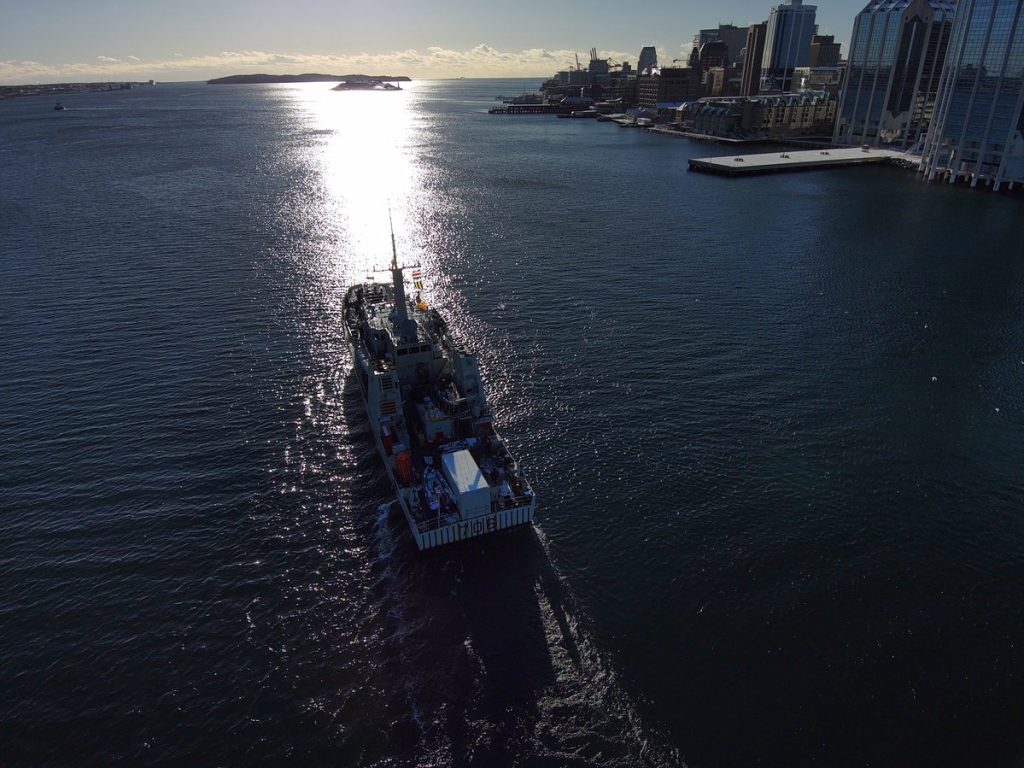
In the warm blue waters of the Caribbean Sea, a familiar Canadian silhouette is once again on the move. His Majesty’s Canadian Ship (HMCS) Yellowknife has begun a seven-week deployment on Operation CARIBBE, marking another chapter in Canada’s long-standing commitment to multinational efforts aimed at disrupting illicit narcotics trafficking and strengthening maritime security across the hemisphere.
Launched in 2006, Operation CARIBBE represents Canada’s enduring contribution to United States-led multinational counter-drug operations in the Caribbean Sea and eastern Pacific Ocean. The mission focuses squarely on detecting, tracking, and interdicting vessels involved in the movement of illegal narcotics—work that directly supports regional stability and helps prevent harmful substances from reaching North American communities, including those in Canada.
During this deployment, HMCS Yellowknife will conduct boarding and maritime interdiction operations in close coordination with partner nation surface ships and maritime patrol aircraft. These integrated activities are designed to lawfully disrupt the transit of illicit trafficking vessels, demonstrating how coordinated naval presence and intelligence sharing can translate into tangible results on the water.
Rear-Admiral Josée Kurtz, Commander Maritime Forces Atlantic and Commander Joint Task Force Atlantic, emphasized the broader significance of the mission and Canada’s role within it:
“Canada’s contribution to Operation CARIBBE underscores our strong commitment to working alongside regional partners to combat the flow of dangerous narcotics throughout the Americas. The deployment of His Majesty’s Canadian Ship Yellowknife demonstrates our nation’s resolve to this mission, reinforcing collaboration with allies to disrupt illicit networks and enhance security across the region.”
At its core, Operation CARIBBE is about interoperability—ensuring that Canadian sailors can seamlessly integrate with allied and partner forces to produce a collective effect that is far greater than the sum of its parts. Each deployment strengthens professional relationships, sharpens tactical skills, and deepens Canada’s ability to operate effectively within multinational task groups.
For the sailors aboard HMCS Yellowknife, this mission builds on recent operational experience. The vessel has only just returned from Operation REASSURANCE, where it contributed to NATO’s assurance and deterrence activities in Europe. That momentum now carries into the Caribbean, where the crew is prepared to apply hard-earned expertise in a new operational environment.
Lieutenant-Commander Jeffrey Smith, Commanding Officer of HMCS Yellowknife, highlighted both the pride and the purpose driving the crew forward:
“The crew of His Majesty’s Canadian Ship Yellowknife is proud to represent Canada on this mission and contribute to a safer maritime environment. Having recently returned from Operation REASSURANCE, Yellowknife is ready to work in close coordination with partner nations to detect and interdict vessels engaged in illegal trafficking. This deployment is an opportunity to apply our skills again while making a real difference in reducing the harmful impacts of the drug trade.”
Operation CARIBBE is a distinct and separate mission that works with the United States Coast Guard to fulfill its law-enforcement mandate to interdict illicit trafficking vessels. It is unrelated to other U.S. operations in the region, underscoring its specific focus on counter-narcotics activity and regional maritime security.
As HMCS Yellowknife settles into its patrol area, the ship and its crew become part of a persistent international effort that rarely makes headlines but consistently delivers results. Each boarding, each patrol, and each coordinated operation contributes to dismantling criminal networks that profit from instability and human suffering.
From the deckplates of a Canadian patrol vessel to the broader multinational task force, Operation CARIBBE illustrates how sustained partnerships, professional seamanship, and shared resolve continue to make a measurable difference—one interdiction at a time.