
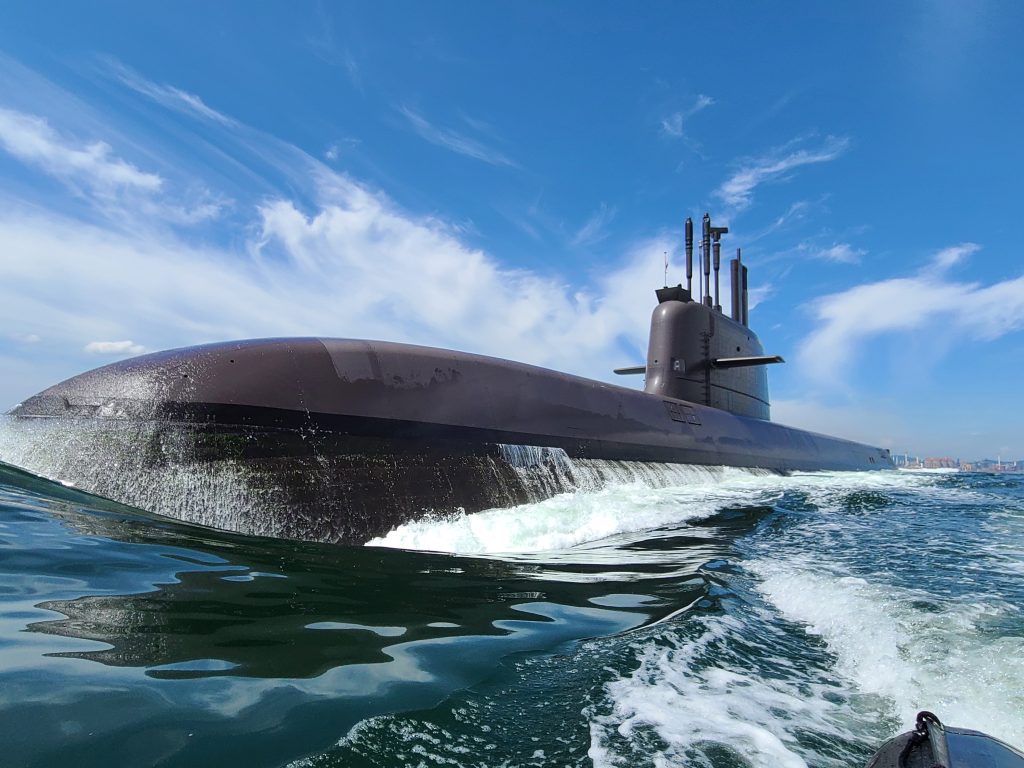
South Korea and Canada have been deepening their strategic relationship for years, driven by shared interests in Indo-Pacific security, supply chain resilience, and advanced technology cooperation. Hanwha Ocean — one of the world’s largest naval shipbuilders — is now looking to anchor that relationship in something concrete: a permanent research, engineering and training centre in Canada called the Hanwha Arctic & Defence Innovation Centre, or HADIC.
Hanwha Ocean has already been investing in its North American presence, acquiring the Philly Shipyard in the United States and establishing Hanwha Ocean Americas LLC as the foundation for a broader Western Hemisphere strategy. Earlier this year, Hanwha Defence Canada established an office in Ottawa and appointed Glenn Copeland as CEO. HADIC represents the next phase of that commitment: a long-term institutional anchor in Canada built around the Korea-Canada bilateral partnership, not around the lifecycle of any one procurement. The centre is designed to endure and to expand — a platform for decades of joint innovation rather than a project office with an expiry date.
What distinguishes HADIC from a typical industrial benefits pledge is its structure. The centre integrates three functions — R&D, engineering, and workforce training — under a single institutional framework, ensuring that research does not stall at the whitepaper stage but progresses through technology maturation, platform integration, and operational deployment in Canada. HADIC would work alongside Canadian partners, including the National Research Council, Defence Research and Development Canada, OSI Maritime Systems, Novarc Technologies, and universities such as the University of British Columbia, the University of New Brunswick, Dalhousie University, and the University of Toronto. This network would also be broadened with organizations such as the Vector Institute, Mila, Amii, Larus Technologies, COVE, the University of Victoria, Simon Fraser University, the British Columbia Institute of Technology, and Memorial University of Newfoundland, executing joint programs aligned with Canada’s most pressing priorities: Arctic operations, autonomous systems, digital transformation, and modernization.
On the research side, planned work includes AI-enabled polar navigation, intelligent unmanned icebreaking platforms, and Arctic-hardened naval technologies — the kinds of capabilities Canada requires for NORAD modernization and the “Our North, Strong and Free” policy framework. These are not aspirational talking points. Hanwha Ocean maintains 400 researchers across five dedicated R&D centres and brings a track record that includes the world’s first LNG-powered container ship, the first Arctic-class LNG carrier, and more than 200 LNG carrier deliveries.
The engineering pillar goes further than most foreign shipbuilders have been willing to offer. HADIC would transfer ship design philosophies, engineering standards, and systems-integration know-how directly into Canada’s industrial base, while supporting the co-design of surface combatants, unmanned platforms, and icebreakers, as well as design-for-performance-improvement programs and advanced engineering services, rebuilding the kind of sovereign design capability that allows a country to modify, upgrade, and evolve complex naval and maritime platforms on its own terms rather than depending indefinitely on foreign design authority.
The workforce dimension may carry the most immediate significance. Canada’s Shipbuilding sector is short on skilled tradespeople, and the gap is widening. HADIC’s training program is designed to move approximately 580 people per year through hands-on instruction in welding, electrical systems, piping, construction methods, and quality management — the skilled, high-paying positions that sustain a shipbuilding industrial base over the long term. These are not temporary roles tied to a single build contract. They represent the foundation of a self-sustaining workforce pipeline.
The investment envelope is considerable. Hanwha Ocean has outlined a total planned commitment of approximately $1 Billion over 18 years across R&D, engineering, and workforce development. That scale of investment — backed by a company with 31,000 employees and a 5-square-kilometre shipyard — is not something Canada sees often from an international defence partner.
HADIC reflects a clear conviction on Hanwha Ocean’s part: that the Korea-Canada defence relationship has room to grow well beyond any single program, and that the most credible way to demonstrate it is to establish a permanent presence. For a country navigating an increasingly contested Arctic, a thinning industrial base, and an accelerating global submarine race, a partner prepared to make that level of lasting investment warrants serious consideration.