
For me context is the key, from that comes the understanding of everything — Kenneth Noland
I have always thought that everyone understood the importance of context to all of their conclusions, decisions and subsequent actions. In a recent note from the International Centre of Complex Project Management (ICCPM), I learned that there is much more to this subject.
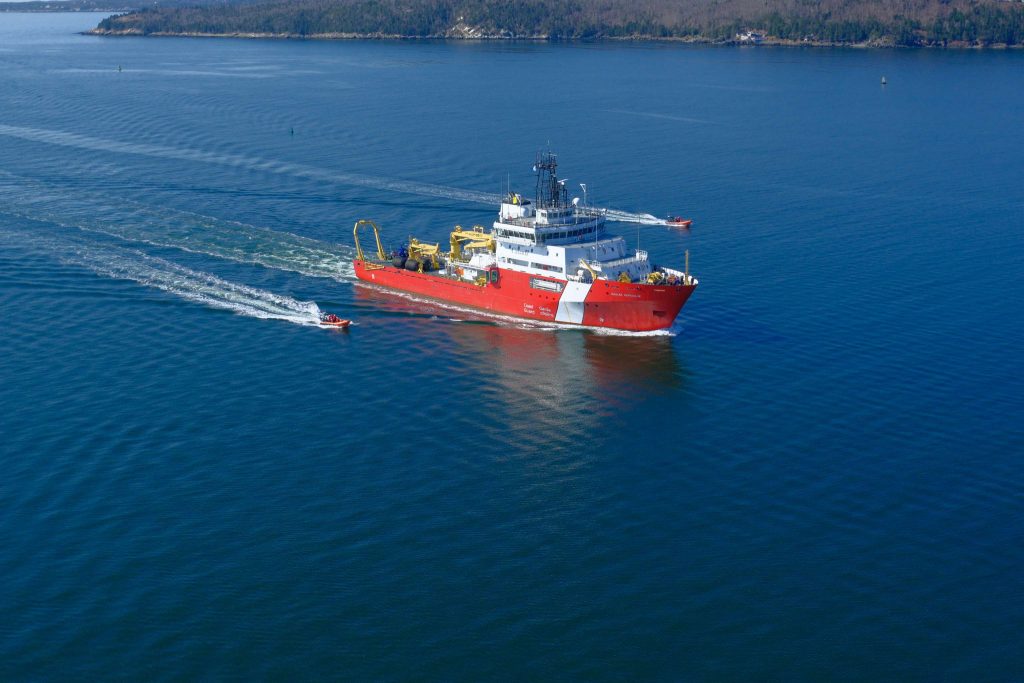
This importance of context was reemphasized for me when reading an article by Murray Brewster, where he quoted from an interview with Vice-Admiral Angus Topshee, Commander of the Royal Canadian Navy (RCN). Apparently, the Admiral sees no reason outside of war to arm Canada’s fleet of Coast Guard ships, stating that there are ways civilian vessels can be quickly equipped to defend themselves, as was done in WWII. The Admiral doesn’t “see any real reason to go through fundamentally changing the character of the Coast Guard and arming it, unless there’s a compelling reason to do so.”
The article went on to suggest that when addressing legislation before Parliament regarding the Canadian Coast Guard (CCG), there has been a question about why the RCN’s desire is that the vessels be assigned a surveillance role without being armed.
Clearly, there are different opinions about the context faced today by the RCN. I have recently suggested in another article that there is a need for the RCN to pursue National Shipbuilding Strategy 2.0 to move towards a ‘wartime footing’. In the same article and in a paragraph about the CCG, I suggested that “every vessel in the government’s fleet should be considered for the potential to contribute to the Navy’s continental defence missions through upgraded capabilities.” Left unstated, I meant arming appropriate Coast Guard vessels.
To be clear, the Admiral is the expert regarding maritime threats to Canada and the readiness required to deter and defeat them if necessary. I retired from the RCN as a marine engineer, so it would be presumptuous of me to ‘cross his bow’.
Nevertheless, we have seen discussions about building a 300,000-person Supplementary Reserve, a significant growth in the budget for the Canadian Armed Forces, the deteriorating geopolitical landscape in the last few years, a renewed focus on the Arctic that is seen by many as ‘the soft underbelly of North American defence’ and the current government’s creation of a Defence Investment Agency (DIA) and a Defence Industrial Strategy (DIS).
Add to that context the U.S. Administration both in the last month and as seen by our Prime Minister as rupturing the world order that Canada has relied upon for decades and the related focus on greater sovereignty in Canada’s defence industries.
This context also exhibits uncertainty as the only certain feature of finance, economics, migration, demographics and technological advances in our interconnected and volatile world. Our decision-makers must make sense of this proverbial witch’s brew that is characterized by some as compounding poly-crises.
Perhaps then I can be forgiven for misreading this context by concluding that readiness to adopt a wartime footing was the current intent of our government.
Defining Context
It is interesting that the academics who have studied this subject appear not to have settled on a single definition. For the purpose of this note, I have selected the following: the circumstances and phenomena that have existed in the external environment in the past and present, and that which could exist in the future, including situational opportunities and constraints that affect the occurrence and meaning of behaviour and events.
Dissecting this mouthful, it is all the ‘stuff’ in the external environment of an individual or organization that can influence them. The ‘context awareness’ that people and organizations have when dealing with any subject can dramatically alter how that ‘stuff’ influences their actions. Furthermore, as recently highlighted in an essay by Dan Gardner, few consider the related past, present and possible future contexts. Finally, the weight each assigned to the potential impact of factors in their assessment of these three contexts related to a decision can differ widely.
Complexity in Risk and Opportunity Analysis
For weapon and sensor system procurement and installation in naval warships, and perhaps in Coast Guard vessels, it is easy to view decisions based on standard risk analysis. In reality, agreement on the details of all three context scenarios is essential to risk probability and impact analysis. And defining these contexts is a complex task.
Consider the many factors of the context influencing a decision to arm Coast Guard ships. The culture of the Coast Guard was never a warrior culture since its establishment in 1962. The Coast Guard has just been transferred to the Department of National Defence (DND), though as a Special Operating Agency. The Coast Guard in the past, the present and likely in the future will retain a significant presence in Canada’s Arctic. The Arctic is a Canadian area of responsibility shared under NORAD with the USA and makes that nation an interested and influential stakeholder. There are a limited number of other surveillance systems in the Arctic but efforts are in train to expand them. Foreign naval adversaries could contest our ownership of our Arctic territory for many reasons in the medium to long term. Naval adversaries could wish to eliminate Canadian surveillance platforms to avoid detection. The RCN’s capabilities in the Arctic and those of the Canadian Army are limited but are expected to grow. Canada’s present sovereign industrial capability to provide effective medium-to-long-range weapons, ammunition and expanded third line maintenance support is limited. Many other Nordic nations have traditionally armed their Coast Guards. Many methods of defending Coast Guard assets against likely threats exist, but their ease of installation and availability vary. Coast Guard crews could be augmented with RCN crew members to operate and maintain fitted defensive systems, but the RCN’s personnel establishment is below authorized strength and may be challenged to meet approved requirements for quite some time. Coast Guard seagoing staff did not join the RCN and may choose to cease their employment if their vessels are armed; already adjusting to the transition into DND, adding arming their vessels may be overwhelming. Influential stakeholders appear to be divided regarding arming the Coast Guard.
On the opportunity side, Canada’s readiness for a potential conflict and its deterrence could be increased if the Coast Guard was armed. As well, the ability to defend oneself as a member of the crew of a Coast Guard vessel would be greater than at present if faced with armed adversaries. Alternatively, the Royal Canadian Air Force might be tasked to defend Coast Guard vessels if additional air assets were available to operate off all three coasts.
There are of course nuances to the decision-making that might become apparent along the way. For example, Canada could install appropriate weapon systems now in various Coast Guard vessels and perhaps not commission these weapons systems until needed. Alternatively, Canada could modify vessels as fitted-for-but-not-with weapon and sensor systems and purchase such equipment for warehousing. These approaches could accommodate options ranging from space for various uncrewed autonomous systems to missiles capable of remote targeting and firing.
The RCN and Coast Guard can add many more situational factors of importance to further benefit decision-making on this issue. The CCG arming decision is a complex endeavour fraught with risks — both foreseeable and emergent. And we are only looking at context.
Context in Weapon Systems Platform Acquisition Projects
I have employed the question of arming the Coast Guard as an example of how context matters. It is equally important in every stage of weapon systems platform acquisition projects, which within years will all be under the DIA’s purview.
I mention this because during a decade of involvement with a portfolio of such complex projects for the RCN and the Canadian Army, I have observed what happens — both before contract award and once under contract — when leaders have failed context awareness when making important decisions.
Here are a few of my conclusions regarding context:
- There is no such thing as having too much context awareness, but prioritizing its potential influence is important. Typically, context that is within the project boundaries can be of most significance, while remembering that such boundaries must be flexible.
- When setting up project risk treatment systems and considering all manner of future scenarios, establishing indicators to deliver consistent intelligence about early signals of context transitions is prudent. This approach can trigger useful mitigation interventions. And recognizing the outsized impact media can have on context, these transitions are more common than many think and potentially damaging, especially when government transparency is fleeting rather than continual.
- When facing crises, it becomes of paramount importance to shake down assumptions about context baked into project narratives and culture, the typical project blind spots. Finding ground truth from knowledgeable sources is essential.
Essentially this means that an experienced and well-resourced risk treatment team with diverse backgrounds can be instrumental in determining context-related concerns. On occasion, a major campaign may be needed to reshape the context through repetition of a narrative based on the truth. However, these can become a critically detrimental factor in the evolving context if exposed as manipulative.
So What
When in the business of national security, context takes on a special quality. The emergence of the next pandemic will unavoidably include all of the contextual factors of the COVID-19 crisis. The pending decision to buy either more F-35s or Gripen jet fighters will become part of the context regarding mixed air fleets in the future, perhaps influencing many other weapon systems platform acquisitions in train that could include U.S. content. The same is true of context cases in the past, when governments have made procurement decisions based on partisan political considerations that have subsequently proven to be ill-advised.
I have posited that context awareness must include relative past, present and potential future ‘stuff’. This requires intense curiosity, comprehensive research and broad consultation when the subject involved is of strategic importance, along with smothering one’s biases. It requires recognition of a bias to focus only on the current context, missing lessons learned in the past and ignoring the future scenarios in such an uncertain world. And if necessary to mitigate contextual risks, ‘nudging’ the current context is much safer than attempts to totally reshape it, as many believe occurred with the first foray to acquire the storied F-35 procurement.
As a final caution, I have learned the hard way regarding past, present and potential future contextual factors that one dismisses them out of hand at one’s peril. As Brené Brown said in a recent podcast, “any message taken out of context is dangerous.” Enough said.