
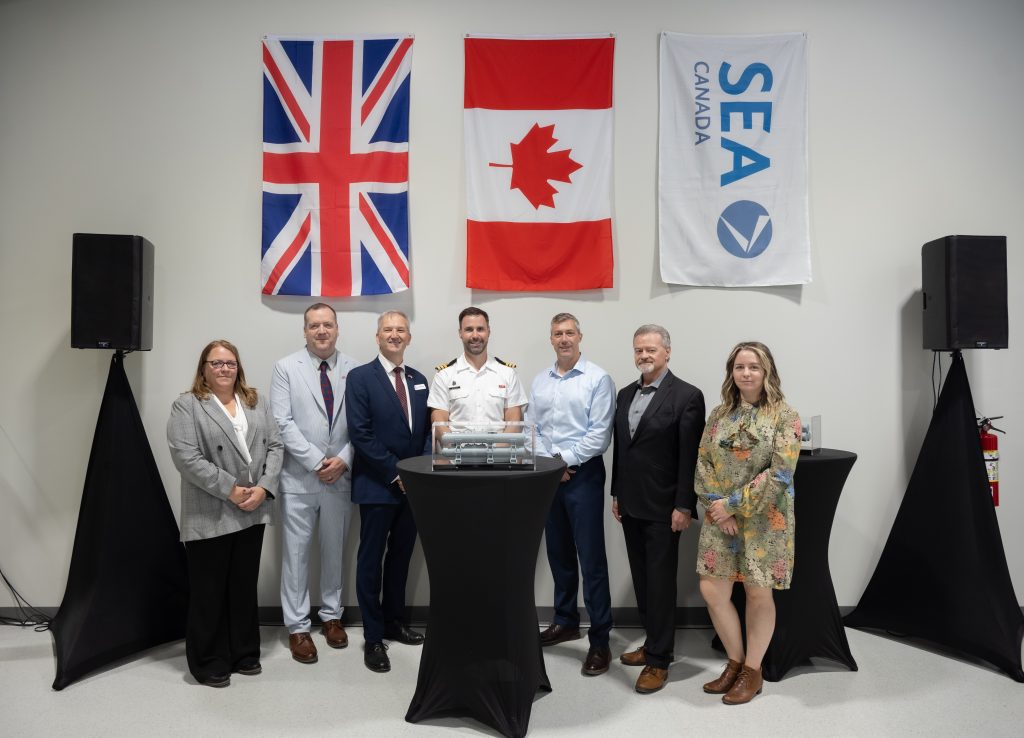
Canada’s next-generation surface combatant program continues to take shape—not just on the water, but across a growing domestic industrial ecosystem designed to deliver and sustain critical naval capabilities for decades to come.
In a significant step forward for the River-class Destroyer (RCD) program, Lockheed Martin Canada has awarded SEA Canada, part of SEA Group and Cohort plc, a multi-year contract to support the project’s implementation phase. The announcement reinforces a central theme underpinning Canada’s defence industrial strategy: building sovereign capability while strengthening domestic supply chains.
At the heart of the RCD program is Irving Shipbuilding Inc., leading construction efforts as part of Canada’s National Shipbuilding Strategy. Supporting this effort is a broad consortium of industry partners—among them Lockheed Martin Canada and now SEA Canada, whose role continues to expand from equipment provider to long-term capability partner.
From Equipment Delivery to Integrated Capability
SEA Canada’s contribution goes well beyond supplying hardware. Under this new contract, the company will deliver integrated logistic support (ILS), alongside installation, set-to-work, and acceptance activities for its Torpedo Launcher Systems. Just as critical, the company will provide training and hands-on instruction—ensuring that Canadian personnel can operate and sustain the systems effectively over their lifecycle.
This layered approach reflects a broader shift in defence procurement: capability is no longer defined solely by platforms or systems, but by the ability to sustain and evolve them domestically.
The contract builds directly on momentum established in 2024, when SEA Canada secured a $28 million CAD agreement to deliver its lightweight Torpedo Launcher Systems to the Royal Canadian Navy. Designed to be weapon-agnostic, the system can deploy a range of NATO-standard torpedoes—adding flexibility and interoperability to Canada’s future fleet.
Equally important is where that capability is being built. Production will take place at SEA Canada’s Ottawa facility, anchoring advanced manufacturing, technical expertise, and long-term sustainment capacity within Canada.
Strengthening Sovereign Capability
For SEA Canada, the contract represents both industrial growth and a deepening commitment to Canada’s sovereign defence objectives.
Keith Cunnane, General Manager at SEA Canada said, “Enabled by the advanced production technologies and systems in our Ottawa manufacturing facility, this contract will ensure that the Royal Canadian Navy’s River-class destroyers Canadian-built Torpedo Launcher Systems are fully supported from within Canada.
“As we continue to strengthen our relationship with Lockheed Martin Canada and enhance our sovereign supply chain to deliver innovative capabilities and ongoing ILS to the Royal Canadian Navy, we will further expand our Canadian team and technical capabilities.”
The emphasis on domestic production and support is not incidental. It aligns with a wider policy direction focused on ensuring that critical defence capabilities—particularly those tied to long-term fleet sustainment—can be maintained within Canada’s borders.
A Program Designed for Industrial Growth
From Lockheed Martin Canada’s perspective, partnerships like this are central to the long-term success of the RCD program.
Bob Campbell, Acting General Manager, Lockheed Martin Canada Rotary & Mission Systems said “Providing sovereign capabilities that support the growth of the Canadian defence sector, its businesses, talented individuals and capabilities is a core component of the River-class destroyer program. We look forward to working with SEA Canada to deliver its innovative Torpedo Launcher System and ongoing capability support for the Royal Canadian Navy.”
The collaboration highlights how major defence programs are increasingly structured to generate lasting economic and industrial benefits—supporting skilled jobs, advanced manufacturing, and technology development across the country.
Beyond Shipbuilding: Building a National Capability
While the River-class Destroyers will ultimately define the Royal Canadian Navy’s future fleet, the program’s impact extends far beyond shipyards and naval bases.
Contracts like this one demonstrate how Canada is leveraging major procurements to build enduring industrial capacity—developing not only platforms, but the systems, expertise, and workforce needed to sustain them over decades.
For SEA Canada, the implementation phase contract marks a transition from supplier to long-term partner in one of Canada’s most ambitious defence programs. For Canada, it is another step toward a more resilient, sovereign, and globally competitive defence industrial base.