
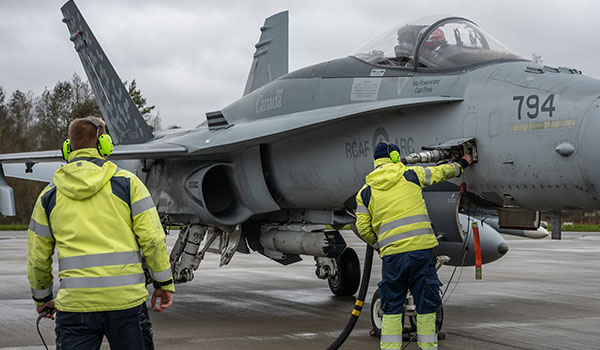
When the Royal Canadian Air Force (RCAF) touched down in Estonia this October for TARASSIS, a major Joint Expeditionary Force (JEF)-led rehearsal, it wasn’t just another multinational exercise. It was a proving ground—one that put Canada’s air power, adaptability, and strategic innovation under intense scrutiny across multiple European theatres. Operating from Ämari Air Base and deploying across Finland, Lithuania, and Latvia, the RCAF demonstrated just how far it has come in modernizing its approach to operations in NATO’s evolving security environment.
TARASSIS marked a decisive moment for Canada: a visible, tangible reaffirmation of its commitment to Allied readiness and deterrence, and a milestone in the RCAF’s adoption of Agile Combat Employment (ACE) and Agile Operations Employment (AOE)—two concepts that are fundamentally reshaping how air forces think, fight, and survive in contested airspace.
A New Era of Air Power: ACE and AOE in Practice
At its core, ACE is about dispersing combat air power—moving fighters to unexpected locations, operating from unconventional airstrips, and staying survivable and lethal even when traditional infrastructure is compromised. AOE complements this by preparing every RCAF member to operate with independence and versatility, ensuring operations can continue even with degraded communications, limited support, or reduced personnel footprints.
TARASSIS became the stage on which both concepts came alive.
Canadian aircraft launched sorties from multiple locations, maintained operational tempo under resource constraints, and showcased the adaptability needed to thrive in the complex, high-threat, multi-domain environments that define modern warfare.
The Unsung Engine Behind the Mission: RCAF Technicians
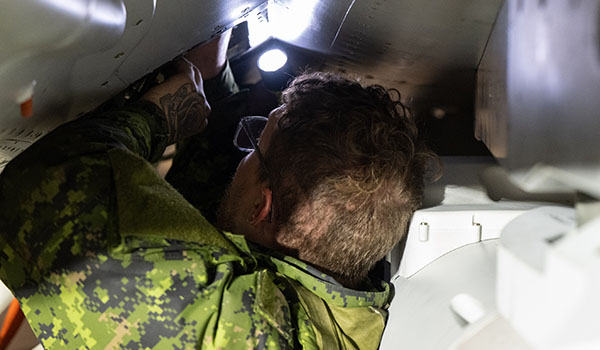
While fighter jets and tactical transports often dominate headlines, the beating heart of TARASSIS was the lean, highly skilled team of RCAF maintainers and support personnel deployed across Europe.
Working with significantly fewer staff than normal, these technicians embodied the ACE spirit—agile, resilient, and relentlessly mission-focused. Their ability to sustain aircraft under high operational tempo ensured Canada’s air assets remained ready for every sortie, proving once again that ground crews are the essential backbone of air power.
Historic Firsts: Highway Landings and Austere Operations
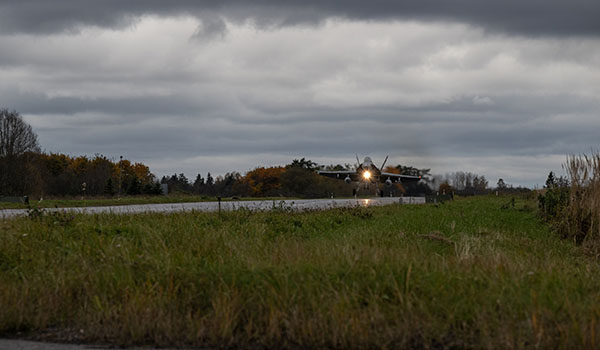
Perhaps the most headline-grabbing moment of TARASSIS came when CF-188 Hornets touched down on Estonia’s Jägala-Käravete Highway—the first highway landing in Canadian fighter history. This was no stunt. It was a strategic demonstration that Canadian fighters can launch and recover from unconventional, dispersed operating locations—key to surviving and prevailing in a contested theatre.
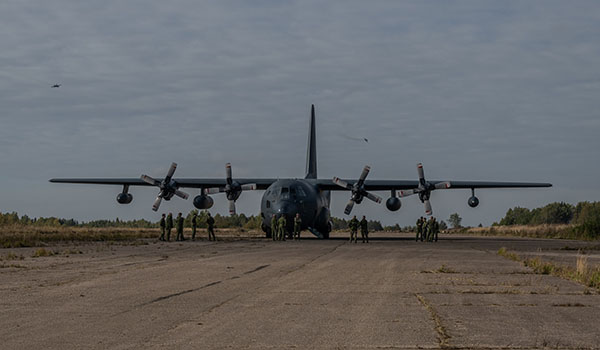
In Latvia, another milestone unfolded. A CC-130HT Hercules performed a tactical landing in an austere zone, enabling six CF-18s to deliver close air support in coordination with NATO Joint Terminal Attack Controllers from Multinational Brigade Latvia. Ensuring safe and effective operations were RCAF Tactical Air Traffic Controllers, who continue to deepen the command-and-control capabilities being refined through Operation REASSURANCE.
“This was about more than flying – it was about building trust, interoperability, and readiness,” said Lieutenant-Colonel Maxime Renaud, Commander, Air Task Force Cobra Warrior 25-2. “Our operations across NATO’s Airspace demonstrate Canada’s ability to lead and integrate in high-tempo, multinational environments.”
Forging Interoperability in the North
Across Finland’s skies, the RCAF flew joint defensive counter-air missions with the Finnish and Spanish Air Forces—interoperability in action. These missions were underpinned by another Canadian workhorse: the CC-130HT Hercules, providing the air-to-air refueling that allows fighters to extend their reach, remain on station, and maintain air superiority.
The Hercules’ role throughout TARASSIS underscored just how crucial tanker capability is to a modern air force, particularly one committed to NATO’s rapid-reaction posture.
Training That Strengthens the Alliance
Another standout moment came on the ground in Estonia, where RCAF members conducted hot-pit refueling training alongside Estonian Air Force technicians. By enabling Allies to refuel Canadian CF-18s under simulated austere conditions, the RCAF is helping build a NATO network capable of cross-servicing each other’s fleets—a capability that could make a decisive difference in future operations.
A Confident, Agile NATO Partner
As TARASSIS concluded, one message was unmistakable: the Royal Canadian Air Force is evolving—and excelling—in the face of modern operational challenges. Through ACE, AOE, and a relentless commitment to Allied integration, Canada is demonstrating that it is not only a reliable NATO partner but also a forward-leaning contributor to collective defence and deterrence.
TARASSIS was not simply an exercise. It was a glimpse of the RCAF’s future—one defined by agility, resilience, and readiness to operate wherever NATO needs it most.